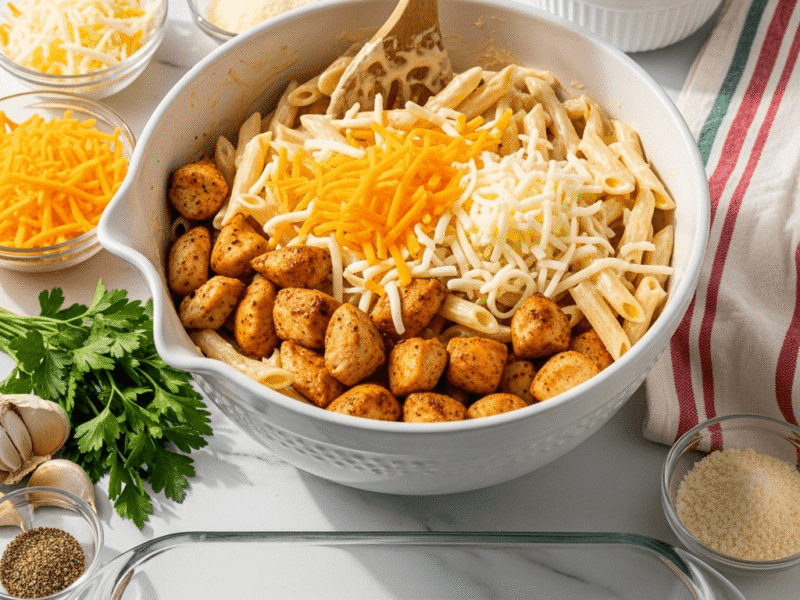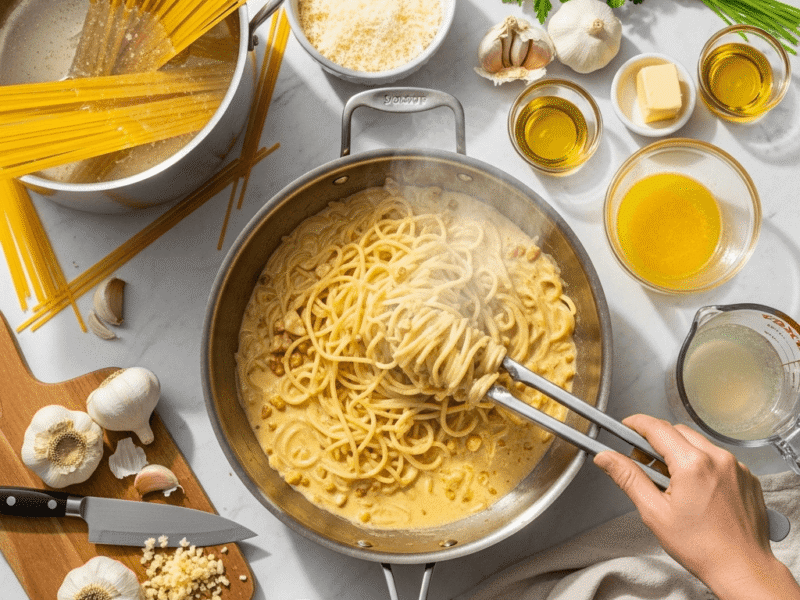

There’s something absolutely magical about Creamy Lemon Garlic Pasta—a dish that manages to be both incredibly elegant and wonderfully simple at the same time. This recipe features perfectly cooked pasta enveloped in a luscious, velvety cream sauce infused with bright lemon, aromatic garlic, and a whisper of Parmesan cheese that creates pure comfort in every single bite.
What makes this pasta so beloved by home cooks everywhere is its incredible versatility and the way it delivers restaurant-quality results without requiring any fancy techniques or hard-to-find ingredients. The combination of tangy lemon and rich cream creates a perfectly balanced sauce that’s neither too heavy nor too light—it’s that Goldilocks zone of pasta perfection that keeps you twirling your fork for just one more bite.
This dish is perfect for busy weeknight dinners when you need something special on the table fast, yet it’s impressive enough to serve when you’re hosting friends for a casual dinner party. It works beautifully as a light lunch, a romantic date-night meal, or as a side dish for grilled chicken or salmon. The best part? From boiling water to plated perfection, you’ll have this gorgeous pasta ready in about 20 minutes, making it an absolute lifesaver for those nights when time is short but your craving for something delicious is strong.
History / Background
While Creamy Lemon Garlic Pasta doesn’t have centuries of tradition behind it like carbonara or cacio e pepe, it represents a beautiful evolution of modern Italian-American cuisine that emerged in the latter half of the 20th century. The dish draws inspiration from several classic Italian preparations while embracing the American love affair with cream-based sauces.
Traditional Italian cuisine actually uses cream quite sparingly—you won’t find it in authentic carbonara or Alfredo (the real Roman version uses only butter and cheese). However, as Italian immigrants settled in America and opened restaurants, they adapted their recipes to suit American palates, which tended to prefer richer, creamier dishes. This is how cream-based pasta sauces became a staple of Italian-American cooking.
The addition of lemon to cream sauces is a stroke of genius that likely comes from Southern Italian coastal cooking, particularly from regions like Amalfi and Sicily, where lemons grow abundantly and are used liberally in local cuisine. The famous Amalfi Coast lemons, known as “sfusato amalfitano,” are prized for their intensely fragrant zest and balanced acidity. Italians have long known that lemon’s brightness cuts through rich foods beautifully, preventing cream sauces from feeling too heavy.
Garlic, of course, is a cornerstone of Italian cooking across all regions. The combination of garlic sautéed in butter or olive oil forms the aromatic foundation for countless Italian dishes. When you bring together garlic’s pungency, lemon’s brightness, and cream’s luxurious texture, you create a sauce that honors Italian cooking principles while being distinctly modern in its approach.
This particular style of pasta became increasingly popular in the 1990s and 2000s as home cooks sought recipes that felt special but weren’t intimidating to make. It represents the democratization of restaurant cooking—bringing those flavors that used to require a trip to a nice Italian restaurant right into your own kitchen with ingredients from your regular grocery store.
Today, Creamy Lemon Garlic Pasta has become a modern classic, shared millions of times across food blogs and social media, adapted endlessly, and loved for its perfect balance of sophistication and simplicity.
Why You’ll Love This Recipe
This Creamy Lemon Garlic Pasta isn’t just another pasta recipe floating around the internet—it’s a genuine game-changer that will become your go-to when you want to feel like you’re dining at an upscale Italian restaurant without leaving your kitchen. The silky cream sauce coats every strand of pasta while the lemon adds that bright pop that keeps each bite interesting and prevents the dish from feeling heavy.
Here’s why this recipe deserves a permanent spot in your rotation:
- Ridiculously Quick: From pantry to plate in 20 minutes—seriously, it takes longer to order and wait for delivery
- Minimal Ingredients: Uses simple, affordable ingredients you probably already have in your kitchen right now
- One-Pot Wonder: Everything comes together in minimal dishes, meaning less cleanup and more time enjoying your meal
- Impressive but Easy: Looks and tastes like you spent hours in the kitchen, but the technique is beginner-friendly
- Perfectly Balanced: The lemon brightens the cream, preventing that heavy, overly rich feeling you get with some pasta dishes
- Endlessly Customizable: Works as a base for adding proteins, vegetables, or herbs to suit your preferences
- Budget-Friendly: Feeds a family of four for under $15 with ingredients that won’t break the bank
- Light Enough for Summer: Unlike heavier cream sauces, the lemon makes this feel fresh and appropriate year-round
- Restaurant-Quality: Achieves that silky, emulsified sauce texture that makes restaurant pasta so special
- Crowd-Pleaser: Even picky eaters tend to love the familiar, comforting flavors with a bright twist
Ingredient Notes
Understanding each ingredient’s role helps you make smart substitutions and achieve the best possible results. Here’s what you need to know:
Pasta: Long pasta varieties work best here—linguine, fettuccine, spaghetti, or angel hair all create those beautiful twirls that catch the sauce. Linguine is my personal favorite because its flat shape holds onto the creamy sauce perfectly. Dried pasta is ideal for this recipe; fresh pasta cooks too quickly and can become mushy. Whatever you choose, always cook it al dente.
Heavy Cream: This is what creates that luxurious, velvety texture. Heavy cream (also called heavy whipping cream) has the highest fat content and won’t curdle when heated and combined with lemon juice. Half-and-half can work in a pinch but won’t be quite as rich. Avoid milk—it’s too thin and will curdle with the lemon acid.
Garlic: Fresh garlic cloves are absolutely essential here. You’ll need about 5-6 large cloves, minced or thinly sliced. Fresh garlic provides that aromatic punch that jarred minced garlic simply cannot replicate. The garlic infuses the butter and creates the aromatic foundation of the entire sauce.
Lemons: Fresh lemons are non-negotiable for both the juice and zest. You’ll need about 2-3 medium lemons to get enough juice and zest. The zest contains essential oils that provide intense lemon flavor without adding liquid, while the juice adds that bright acidity. Those plastic lemon-shaped bottles won’t give you the same fresh, vibrant flavor.
Butter: Adds richness and helps create an emulsified sauce that clings to the pasta. Unsalted butter is best so you can control the salt level. The combination of butter and cream creates that silky, restaurant-quality texture.
Parmesan Cheese: Freshly grated Parmesan adds nutty, salty depth and helps thicken the sauce slightly. Always buy a block and grate it yourself—the pre-grated stuff is coated with cellulose and doesn’t melt smoothly. Pecorino Romano works too if you prefer a sharper flavor.
Pasta Water: Don’t dump it all down the drain! The starchy water is liquid gold for adjusting your sauce consistency and helping it emulsify. The starch helps the sauce cling to the pasta beautifully.
Red Pepper Flakes (optional): A small pinch adds subtle warmth and complexity without making the dish spicy. It enhances the other flavors rather than overwhelming them.
Fresh Parsley or Basil: While optional, fresh herbs add a pop of color and a fresh, herbaceous note that complements the lemon beautifully. Parsley is more traditional, but basil adds a summery twist.
Equipment Needed
Having the right tools makes this simple recipe even easier. Here’s what you’ll need:
- Large Pot: For boiling the pasta—at least 6 quarts so the pasta has room to move freely
- Large Skillet or Sauté Pan: A 12-inch skillet is perfect for making the sauce and tossing everything together
- Colander: For draining the pasta (remember to reserve some pasta water first!)
- Measuring Cups and Spoons: For accurate ingredient measurements
- Microplane or Zester: Essential for zesting lemons—the fine zest distributes flavor throughout the sauce
- Citrus Juicer: Makes getting every drop of lemon juice much easier
- Wooden Spoon or Silicone Spatula: For stirring and tossing the pasta in the sauce
- Tongs: Perfect for tossing pasta with sauce and serving
- Sharp Knife: For mincing garlic
- Box Grater: For freshly grating Parmesan cheese
- Small Bowl or Measuring Cup: For reserving pasta water
- Garlic Press (optional): If you prefer pressed garlic over minced
Creamy Lemon Garlic Pasta Recipe
- Total Time: 20 minutes
- Yield: 4 servings 1x
- Diet: Gluten Free
Description
This Creamy Lemon Garlic Pasta is pure comfort food magic! Silky cream sauce infused with bright lemon and aromatic garlic coats every strand of perfectly cooked pasta. Ready in just 20 minutes with simple ingredients, this restaurant-quality dish is perfect for busy weeknights or impressive dinner parties.
Ingredients
- 1 lb linguine or fettuccine pasta
- 3 tablespoons unsalted butter
- 5-6 large garlic cloves, minced
- 1½ cups heavy cream
- Zest of 2 lemons
- Juice of 2 lemons (about ¼ cup)
- ½ cup freshly grated Parmesan cheese, plus more for serving
- 1 teaspoon salt, plus more for pasta water
- ½ teaspoon black pepper
- ¼ teaspoon red pepper flakes (optional)
- ½ cup reserved pasta water
- ¼ cup fresh parsley or basil, chopped (optional)
- Extra lemon slices for garnish
Instructions
- Cook the Pasta: Bring a large pot of salted water to a rolling boil (it should taste like the sea—about 1-2 tablespoons of salt). Add the pasta and cook according to package directions until al dente, usually 8-10 minutes. Before draining, reserve 1 cup of pasta water. Drain the pasta and set aside.
- Start the Sauce: While the pasta cooks, melt the butter in a large skillet over medium heat. Once the butter is melted and foamy, add the minced garlic. Sauté for 1-2 minutes until fragrant and just beginning to turn golden—watch carefully to prevent burning.
- Add the Cream: Pour in the heavy cream, stirring to combine with the garlic butter. Bring to a gentle simmer, then reduce heat to medium-low. Let it simmer gently for 2-3 minutes, stirring occasionally, until it thickens slightly.
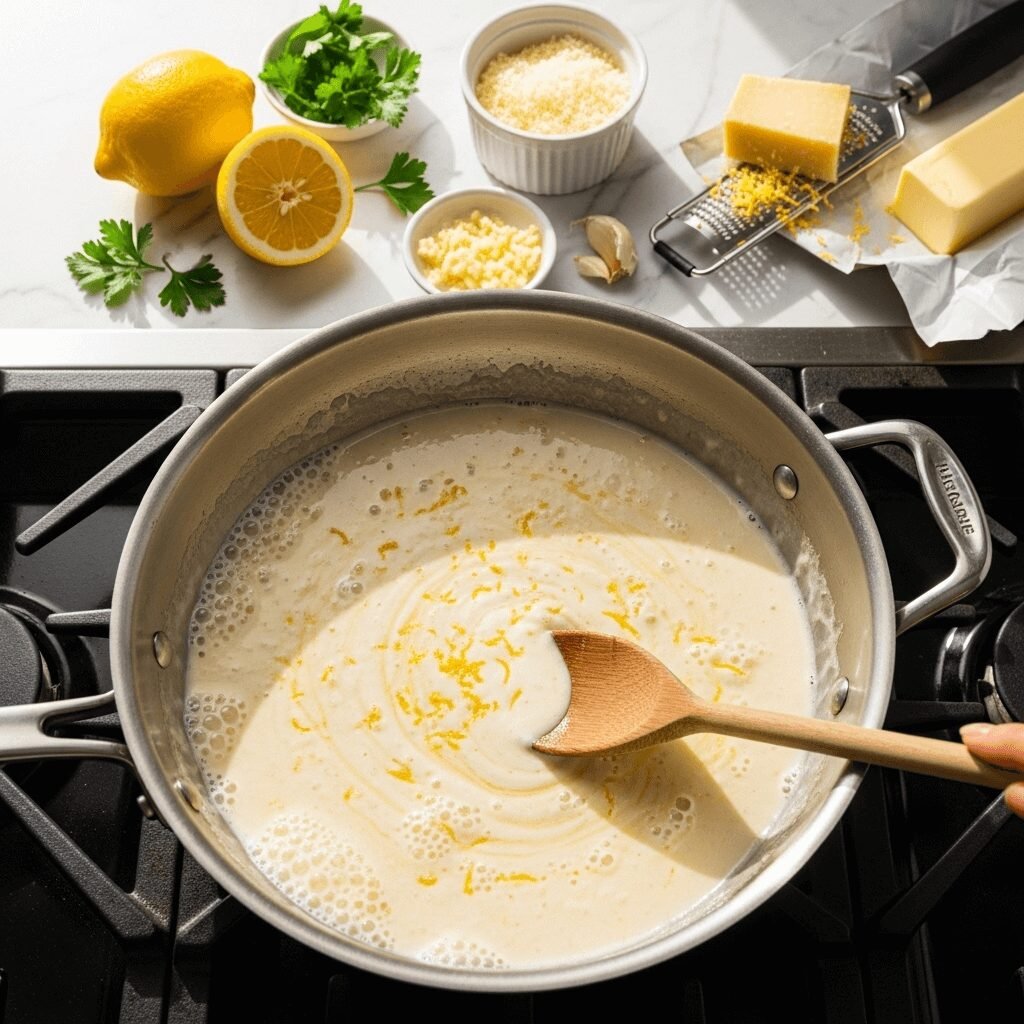
- Add Lemon: Stir in the lemon zest and lemon juice. The sauce may look slightly separated at first—this is normal. Continue stirring for another minute until it comes together. The acid from the lemon will thicken the cream slightly.
- Add Cheese and Seasoning: Remove the skillet from heat. Stir in the freshly grated Parmesan cheese, salt, black pepper, and red pepper flakes (if using). The residual heat will melt the cheese into a smooth, creamy sauce.
- Combine Pasta and Sauce: Add the drained pasta to the skillet with the sauce. Toss everything together using tongs, adding reserved pasta water a little at a time (start with ¼ cup) until the sauce reaches your desired consistency. The sauce should coat the pasta beautifully without pooling at the bottom.
- Final Touches: Return the skillet to low heat for 1 minute, tossing constantly, to help the sauce fully coat and cling to the pasta. This final step creates that glossy, emulsified finish.
- Serve: Divide the pasta among serving plates or bowls. Garnish with additional Parmesan, fresh chopped parsley or basil, lemon slices, and an extra crack of black pepper. Serve immediately while hot and creamy.
Notes
- Pasta Water is Key: Don’t skip reserving pasta water—the starch helps emulsify the sauce and adjust consistency perfectly.
- Room Temperature Cream: For the smoothest sauce, let your cream sit at room temperature for 15-20 minutes before cooking.
- Fresh Lemon Only: Bottled lemon juice lacks the bright, fresh flavor that makes this dish special.
- Don’t Overcook: The pasta continues to absorb sauce after plating, so serve immediately for best results.
- Adjust Lemon: Start with the juice of 1½ lemons and add more to taste—some prefer more tang, others less.
- Cheese Quality Matters: Pre-grated Parmesan contains anti-caking agents that prevent smooth melting.
- Prep Time: 5 minutes
- Cook Time: 15 minutes
- Category: Dinner
- Method: Stovetop
- Cuisine: Italian-American
Nutrition
- Serving Size: ¼ of recipe (approximately 2 cups)
- Calories: 645
- Sugar: 4g
- Sodium: 485mg
- Fat: 32g
- Saturated Fat: 19g
- Unsaturated Fat: 11g
- Trans Fat: 0g
- Carbohydrates: 72g
- Fiber: 3g
- Protein: 18g
- Cholesterol: 95
Nutrition information is approximate and will vary based on specific ingredients and portion sizes used. Values calculated without optional garnishes.
Tips & Variations
The beauty of this recipe is how easily it adapts to different tastes and what you have on hand. Here are some delicious ways to make it your own:
Add Protein: Transform this into a complete meal by adding grilled chicken breast, pan-seared shrimp, or sautéed scallops. For vegetarians, chickpeas or white beans add substance and protein. Cook proteins separately and add just before serving.
Load Up on Veggies: Sauté spinach, peas, asparagus, broccoli florets, or cherry tomatoes and fold them into the pasta. Roasted vegetables like zucchini or bell peppers also work beautifully. Add vegetables after the sauce is made.
Herb It Up: While parsley and basil are classic, fresh dill, chives, or thyme each bring unique flavors. Try a combination for more complexity. Add delicate herbs at the end to preserve their fresh flavor.
Lighten It Up: Use half-and-half instead of heavy cream for fewer calories (though the sauce won’t be quite as thick). Greek yogurt stirred in at the end adds tanginess and protein. Use whole wheat or chickpea pasta for added fiber.
Spicy Version: Double the red pepper flakes, add fresh minced jalapeño with the garlic, or finish with a drizzle of chili oil for those who like heat.
Seafood Twist: Add lemon and garlic’s best friend—capers and anchovies—for a puttanesca-inspired variation. The salty, briny flavors complement the cream beautifully.
Make It Dairy-Free: Use cashew cream (soaked cashews blended with water) instead of heavy cream, and nutritional yeast instead of Parmesan. Add a touch of miso paste for umami depth.
Sun-Dried Tomato Addition: Fold in chopped sun-dried tomatoes for sweet-tart pops of concentrated tomato flavor that contrast beautifully with the cream.
Pro Chef Tips
These professional techniques will elevate your pasta from delicious to absolutely extraordinary:
Salt Your Pasta Water Properly: The water should be as salty as the sea—about 1-2 tablespoons per gallon. This is your only chance to season the pasta itself, not just the sauce. Properly seasoned pasta makes a massive difference in the final dish.
Undercook Your Pasta Slightly: Pull the pasta from the water 1-2 minutes before the package directions suggest. It will finish cooking in the sauce, absorbing flavor while reaching perfect al dente texture.
The Emulsification Secret: When combining hot pasta with the sauce, add the pasta water gradually while constantly tossing. This creates an emulsion where the starchy water binds the fat and water together, creating that glossy, clingy sauce.
Temperature Matters: Remove the pan from heat before adding cheese and lemon juice. Too-high heat can cause the cheese to become grainy and the cream to separate. Residual heat is sufficient to melt the cheese smoothly.
Zest Before Juicing: Always zest your lemons before cutting and juicing them. It’s nearly impossible to zest a halved lemon effectively. Use a microplane for the finest, most evenly distributed zest.
The Tossing Technique: Professional chefs toss pasta by shaking the pan with a flick of the wrist. Home cooks can achieve similar results by using tongs to lift and drop the pasta repeatedly, ensuring every strand gets coated.
Finish in the Pan: That final minute of tossing pasta with sauce over low heat allows the pasta to absorb flavor and the sauce to reduce to the perfect consistency. Don’t skip this step.
Compound Butter Shortcut: Make lemon-garlic butter ahead (softened butter mixed with lemon zest, minced garlic, and herbs). Use this instead of plain butter for even more concentrated flavor with less effort.
Common Mistakes to Avoid
Learning what not to do is just as important as knowing the right techniques. Here are the pitfalls to watch for:
Dumping All the Pasta Water: This is by far the most common mistake. That starchy water is essential for creating the proper sauce consistency and helping everything emulsify. Always reserve at least 1 cup before draining—you can always discard what you don’t use.
Using Pre-Grated Cheese: The cellulose coating on pre-grated cheese prevents it from melting smoothly into your sauce, creating a grainy texture instead of silky smoothness. Always grate fresh from a block for the best results.
Adding Lemon to Boiling Cream: When the sauce is too hot, the acid in lemon juice can cause the cream to curdle and separate. Remove from heat or reduce to low before adding lemon to prevent this unfortunate scenario.
Overcrowding the Pan: If your skillet isn’t large enough to toss the pasta comfortably, use your pasta pot instead. Cramming too much pasta in too small a pan prevents proper coating and makes tossing difficult.
Burning the Garlic: Garlic goes from perfectly golden to burnt and bitter in seconds. Always cook over medium heat and add the cream before the garlic browns too much. Burnt garlic ruins the entire dish—there’s no fixing it.
Rinsing the Pasta: Never rinse pasta that’s going into a sauce. The starchy coating helps the sauce adhere. Only rinse pasta if you’re making a cold pasta salad.
Storage & Meal Prep
While this pasta is absolutely best served immediately, life happens and leftovers are sometimes unavoidable. Here’s how to handle them:
Refrigerator Storage: Transfer cooled leftover pasta to an airtight container and refrigerate for up to 3 days. The sauce will thicken considerably as it chills—this is normal as the fat solidifies.
Reheating Instructions: The best method is to reheat gently in a skillet over low heat, adding a splash of cream, milk, or pasta water to loosen the sauce. Stir frequently until warmed through, about 5-7 minutes. Microwave reheating works but can dry out the pasta—use 50% power and add liquid, stirring every 30 seconds.
Texture Changes: Reheated cream pasta will never be quite as silky as when freshly made. The pasta absorbs sauce as it sits, and the cream can separate slightly. Adding fresh cream when reheating helps restore the texture.
Individual Portions: If you know you’ll have leftovers, portion them into individual containers immediately after serving. This makes reheating easier and helps maintain better texture.
Refreshing Leftovers: Before serving reheated pasta, add a squeeze of fresh lemon juice and some freshly grated Parmesan to brighten the flavors that dull slightly during storage.
Make-Ahead & Freezer Notes
Cream-based pasta dishes are tricky for advance preparation, but here are your best options:
Make-Ahead Strategy: Honestly, this dish is so quick (20 minutes!) that making it fresh is your best bet. However, you can prep ingredients ahead—mince garlic, zest and juice lemons, grate cheese, and measure cream—storing everything in the fridge. When dinner time comes, you’ll cut your active time in half.
Sauce Ahead: You can make the sauce up to 2 hours ahead and keep it warm on the lowest heat setting, stirring occasionally. Cook pasta fresh and combine just before serving. The sauce thickens as it sits, so you’ll need extra pasta water to loosen it.
Freezing Not Recommended: Unfortunately, cream-based sauces don’t freeze well. The cream separates when frozen and thawed, creating a grainy, broken texture that’s unappealing. The lemon also becomes bitter after freezing. If you must freeze, the texture will be compromised.
Best Make-Ahead Alternative: Instead of freezing the finished dish, keep the ingredients stocked in your pantry and fridge. Pasta, cream, and Parmesan all have long shelf lives, making this an easy dish to prepare on demand.
Reheating from Cold: If you’ve refrigerated leftovers, bring them to room temperature for 15 minutes before reheating for more even warming and better texture results.
Serving Suggestions
Create a complete, restaurant-worthy meal by pairing your pasta with these complementary dishes and beverages:
Classic Pairings: A simple arugula or mixed greens salad with lemon vinaigrette provides a peppery, acidic contrast to the rich pasta. The bitterness of arugula particularly complements the cream beautifully.
Bread Options: Warm, crusty Italian bread, garlic bread, or focaccia are perfect for soaking up any sauce left in your bowl. Butter and garlic the bread for extra indulgence.
Protein Add-Ons: While delicious on its own, this pasta pairs beautifully with grilled chicken breast, pan-seared salmon, seared scallops, or grilled shrimp. The lemon in the pasta complements seafood especially well.
Vegetable Sides: Roasted asparagus, sautéed broccolini, roasted Brussels sprouts, or grilled zucchini add color and nutritional balance to your plate.
Wine Pairings: A crisp white wine like Pinot Grigio, Sauvignon Blanc, or unoaked Chardonnay complements the lemony cream sauce beautifully. The wine’s acidity cuts through the richness. For non-alcoholic options, sparkling water with lemon or a crisp white grape juice works nicely.
Complete Italian Menu: Start with a Caprese salad, serve this pasta as the first course (primi), follow with grilled fish or chicken (secondi), and finish with tiramisu or panna cotta for dessert.
Casual Family Dinner: Keep it simple with this pasta, a bagged salad, and some store-bought garlic bread for a delicious weeknight meal that feels special but doesn’t overwhelm.
FAQs Section
Can I use milk instead of heavy cream?
Whole milk can work in a pinch, but you’ll need to add a thickener since milk lacks cream’s fat content. Try mixing 2 tablespoons of flour into ¼ cup of the milk until smooth, then add to the pan with the remaining milk. The sauce won’t be quite as rich or silky, but it’s a workable substitute. The lemon juice may also cause milk to curdle more easily than cream.
Why did my sauce separate or curdle?
This usually happens when the sauce is too hot when you add the lemon juice, or if you used milk instead of cream. Cream’s higher fat content protects against curdling. To fix a separated sauce, remove from heat and whisk in a tablespoon of cold cream or add a splash of pasta water while whisking vigorously to re-emulsify.
Can I make this without garlic?
Yes, though garlic is a key flavor component. You could substitute with shallots for a milder allium flavor, or increase the lemon and herbs to compensate. Some people use garlic-infused oil for a subtle garlic flavor without the texture of minced garlic.
How do I prevent the pasta from being too dry?
Always reserve pasta water and don’t be shy about using it. The sauce should look slightly looser than you want when mixing—the pasta will continue absorbing sauce. If it looks dry, add more pasta water a tablespoon at a time. Serve immediately, as the pasta continues soaking up sauce as it sits.
What’s the best pasta shape for this sauce?
Long, flat pasta shapes like linguine, fettuccine, and pappardelle work best because they have more surface area for the cream sauce to cling to. Spaghetti works too. Short shapes like penne can be used but won’t coat quite as well. Avoid delicate shapes like angel hair, which can become mushy.
Can I add vegetables directly to this recipe?
Absolutely! Tender vegetables like spinach, peas, or cherry tomatoes can go directly into the sauce. For heartier vegetables like broccoli, asparagus, or bell peppers, blanch or sauté them separately first, then add to the finished pasta. Adding raw, hard vegetables to the cream sauce will result in undercooked veggies and a watery sauce.
Is there a way to make this healthier?
Use whole wheat or chickpea pasta for added fiber and protein. Substitute half-and-half or a mixture of Greek yogurt and cream for fewer calories. Load up on vegetables. Use less butter and cheese. Reduce portion sizes and serve with a large salad. These modifications will change the texture and richness but create a lighter version.
Conclusion
This Creamy Lemon Garlic Pasta is everything a weeknight dinner should be—quick, delicious, comforting, and just fancy enough to make you feel like you’ve created something special. The bright lemon cuts through the rich cream in the most perfect way, creating a sauce that’s indulgent without being heavy, sophisticated without being complicated.
Whether you’re cooking for yourself, your family, or unexpected guests, this recipe delivers every single time. It’s become one of my most-made recipes for good reason—the flavor-to-effort ratio is simply unbeatable. Twenty minutes of easy cooking yields a restaurant-quality dish that would cost $25 at a nice Italian restaurant.
The best part is how this recipe serves as a blank canvas for your creativity. Add whatever proteins, vegetables, or herbs you love, adjust the lemon to your taste, and make it completely your own. It’s forgiving, flexible, and always delicious.
Now it’s your turn to experience this pasta magic! I’d absolutely love to hear how it turns out for you. Did you add any special touches? What did your family think? Drop a comment below with your feedback and any creative variations you tried. And please, don’t forget to save this recipe to your Pinterest boards—you’ll want to come back to it again and again (trust me, it becomes addictive!).
Happy cooking, and here’s to many more delicious pasta nights in your kitchen!