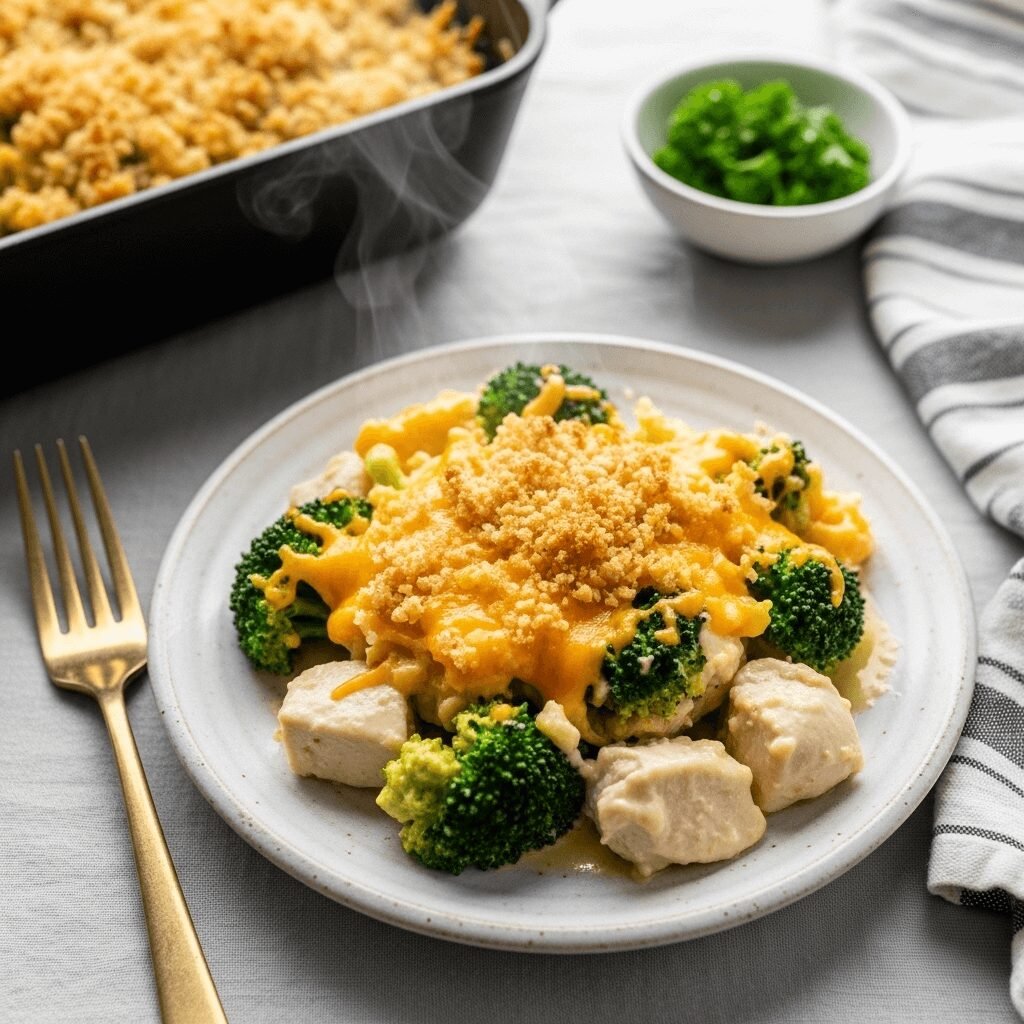

There’s something truly magical about a casserole that brings the whole family together around the dinner table, and this Cheesy Broccoli Chicken Casserole is exactly that kind of dish. It’s the ultimate comfort food that combines tender chicken, vibrant broccoli florets, and a rich, creamy cheese sauce that’s absolutely irresistible. This one-dish wonder is perfect for busy weeknights when you need something satisfying on the table fast, yet special enough to serve at Sunday family dinners or casual gatherings with friends.
What makes this casserole truly stand out is how it effortlessly balances nutrition with indulgence. You’re getting protein from the chicken, vitamins and fiber from the broccoli, and that soul-satisfying cheesiness that makes everyone come back for seconds. It’s the kind of recipe that busy parents rely on because it’s simple to prepare, uses everyday ingredients you probably already have in your pantry, and most importantly, kids actually eat their vegetables when they’re smothered in this creamy, cheesy goodness. Whether you’re meal prepping for the week ahead or need to bring a crowd-pleasing dish to a potluck, this casserole checks all the boxes.
History / Background
The casserole as we know it today has deep roots in American home cooking, particularly gaining massive popularity in the 1950s when one-dish meals became a symbol of efficient, modern homemaking. The word “casserole” actually comes from the French word for “saucepan,” but Americans truly made this cooking method their own. During the post-war era, casseroles became beloved because they could stretch ingredients to feed large families, minimize cleanup, and could be prepared ahead of time – qualities that are just as valuable today as they were seventy years ago.
Chicken and broccoli casseroles specifically emerged as part of the “cream of” soup casserole trend, where condensed soups became the quick sauce base for busy home cooks. However, this recipe elevates that concept by using a homemade cheese sauce that’s just as easy but infinitely more flavorful than canned soup. The combination of chicken and broccoli isn’t just delicious – it’s also a nod to the classic Chinese-American dish, chicken with broccoli, reimagined through an American comfort food lens.
This particular style of casserole became a church potluck and covered-dish dinner staple across the South and Midwest, where hearty, filling meals that could feed a crowd were essential. Today, it’s experiencing a renaissance as home cooks rediscover the joy of simple, satisfying meals that don’t require fancy techniques or hard-to-find ingredients. It’s the kind of recipe that gets passed down through generations, with each family adding their own special twist.
Why You’ll Love This Recipe
This Cheesy Broccoli Chicken Casserole is about to become your new go-to dinner recipe, and once you make it, you’ll understand why it’s earned a permanent spot in so many recipe boxes across America. It’s the perfect marriage of convenience and comfort, delivering restaurant-quality flavor with minimal effort. The creamy cheese sauce coats every piece of tender chicken and broccoli, creating a dish that’s both wholesome and utterly indulgent.
Here’s why this recipe will become your new favorite:
- Incredibly easy to make – With just simple steps and no complicated techniques, even beginner cooks can nail this recipe on their first try
- Budget-friendly – Uses affordable, everyday ingredients that won’t break the bank, making it perfect for feeding families without overspending
- One-dish wonder – Everything cooks together in one baking dish, which means minimal cleanup and more time to relax after dinner
- Sneaks in vegetables – Even picky eaters will devour their broccoli when it’s covered in this creamy, cheesy sauce
- Make-ahead friendly – Assemble it earlier in the day or even the night before, then just pop it in the oven when you’re ready
- Freezer-friendly – Double the batch and freeze half for those nights when cooking from scratch just isn’t happening
- Customizable – Easily adapt it to your family’s preferences by swapping proteins, vegetables, or cheese varieties
- Crowd-pleaser – Perfect for potlucks, church dinners, or feeding a hungry crowd because everyone loves a good casserole
- Balanced nutrition – Packs protein, vegetables, and calcium into one satisfying dish that actually feels like a complete meal
Ingredient Notes
Understanding your ingredients is the key to casserole success, and this recipe uses simple, wholesome components that work together beautifully. Here’s what you need to know about each element and how you can customize them to suit your preferences.
Chicken: Boneless, skinless chicken breasts or thighs work perfectly here. Breasts give you leaner meat, while thighs add more flavor and stay juicier. You can use pre-cooked rotisserie chicken to save time, or cook fresh chicken breasts by poaching, baking, or even using leftover grilled chicken. About 3 cups of cooked, diced chicken is what you’re aiming for.
Broccoli: Fresh broccoli florets are ideal, but frozen broccoli works beautifully too and saves prep time. If using frozen, make sure to thaw and drain it well to avoid excess moisture in your casserole. You’ll need about 4 cups of florets. Don’t skip blanching fresh broccoli briefly – it keeps the color vibrant and ensures even cooking.
Cheese: Sharp cheddar is the star here, providing that classic cheesy flavor everyone craves. You’ll need about 2-3 cups of shredded cheese. Always shred your own from a block rather than buying pre-shredded – it melts smoother and tastes fresher because pre-shredded cheese contains anti-caking agents. Feel free to mix in Monterey Jack, Colby, or Gruyere for different flavor profiles.
Cream Sauce Base: Heavy cream or half-and-half creates that luxurious, velvety sauce. For a lighter version, you can use whole milk, though the sauce will be slightly thinner. Chicken broth adds savory depth, while butter forms the base of your roux that thickens everything.
Flour: All-purpose flour thickens the sauce to the perfect consistency. For a gluten-free version, use cornstarch or a gluten-free flour blend, though you may need to adjust the quantity slightly.
Seasonings: Garlic powder, onion powder, salt, black pepper, and a pinch of paprika create layers of flavor without overwhelming the dish. Fresh garlic can replace garlic powder if you prefer – use 3-4 cloves, minced.
Optional Topping: Breadcrumbs or crushed crackers mixed with melted butter create an irresistible golden, crunchy topping that contrasts beautifully with the creamy casserole beneath.
Equipment Needed
Having the right tools makes cooking so much easier and more enjoyable. Here’s everything you’ll need to make this casserole from start to finish:
- 9×13-inch baking dish – The standard casserole size that feeds 6-8 people perfectly
- Large pot – For blanching broccoli and cooking chicken if starting from raw
- Medium saucepan – For making the creamy cheese sauce
- Whisk – Essential for creating a smooth, lump-free sauce
- Wooden spoon or silicone spatula – For stirring and mixing ingredients
- Sharp knife and cutting board – For dicing chicken and cutting broccoli
- Measuring cups and spoons – For accurate ingredient measurements
- Box grater – If shredding your own cheese (highly recommended!)
- Mixing bowls – For organizing and combining ingredients
- Aluminum foil – To cover the casserole if the top browns too quickly
- Oven mitts – Safety first when handling hot dishes
Nutrition information is approximate and will vary based on specific ingredients used and portion sizes.
Tips & Variations
The beauty of this casserole is how easily you can adapt it to suit your family’s tastes or dietary needs. Here are some fantastic ways to customize this recipe:
Protein Swaps: Try using turkey, ham, or even cooked pork instead of chicken. Leftover Thanksgiving turkey makes this casserole absolutely phenomenal. For a vegetarian version, omit the chicken and double the broccoli, or add chickpeas and mushrooms for protein.
Cheese Options: Experiment with different cheese combinations like smoked gouda for a deeper flavor, pepper jack for heat, Swiss for nuttiness, or a Mexican cheese blend for a southwestern twist. Just keep the total amount of cheese the same.
Low-Carb/Keto Version: Skip the flour and breadcrumb topping. Make the sauce with a cornstarch slurry or just reduce the cream mixture longer until thickened. Use cauliflower rice at the bottom for extra bulk if desired.
Add More Veggies: Bell peppers, mushrooms, cauliflower, carrots, or spinach all work wonderfully mixed in with or in place of some of the broccoli. Just make sure any added vegetables are pre-cooked and well-drained.
Crunchy Topping Variations: Instead of breadcrumbs, try crushed cornflakes, Ritz crackers, French fried onions, or even crushed potato chips for different textures and flavors.
Herb Additions: Fresh thyme, rosemary, or dill can add wonderful aromatic notes. Stir them into the cheese sauce or sprinkle fresh herbs on top before serving.
Pro Chef Tips
Taking your casserole from good to absolutely exceptional comes down to these professional-level techniques that make all the difference:
Season in Layers: Don’t just season the sauce – season your chicken before cooking it, and taste your sauce before combining everything. Building flavor at each stage creates depth that single-step seasoning can’t achieve.
Don’t Overcook the Broccoli: Blanching the broccoli just until bright green and slightly tender is crucial. It will continue cooking in the oven, so starting with crunchy broccoli ensures it won’t turn mushy in the final dish.
Use Block Cheese: Pre-shredded cheese contains cellulose to prevent clumping, which also prevents it from melting smoothly. Shredding your own cheese takes two extra minutes but creates a silkier, more luxurious sauce.
Room Temperature Ingredients: Let your milk and cheese sit at room temperature for 15 minutes before making the sauce. This prevents the temperature drop that can cause the sauce to seize or become grainy.
Proper Roux Cooking: Don’t rush the roux stage. Cooking the flour and butter together for a full 1-2 minutes eliminates that raw flour taste and ensures your sauce will thicken properly without lumps.
Pasta Water Trick: If your sauce seems too thick, add a splash of the pasta cooking water (or in this case, the broccoli blanching water) rather than more milk. It contains starch that helps the sauce cling to ingredients better.
Let It Rest: That 5-minute rest after baking isn’t optional – it allows the sauce to thicken slightly as it cools, making for much neater servings and preventing a soupy mess when you cut into it.
Common Mistakes to Avoid
Even experienced cooks can run into issues with casseroles. Here are the most common pitfalls and how to avoid them:
Watery Casserole: This usually happens when frozen broccoli isn’t drained properly or when vegetables release moisture during baking. Always squeeze thawed frozen broccoli in a clean kitchen towel to remove excess water, and ensure fresh broccoli is well-dried after blanching.
Grainy Cheese Sauce: Overheating causes cheese proteins to separate and become grainy. Once you add the cheese, keep the heat on low and remove from heat as soon as it’s melted. Never let a cheese sauce boil after adding cheese.
Dry, Overcooked Chicken: Adding already-dry chicken will result in a disappointing texture. If using pre-cooked chicken, make sure it’s still moist. Consider slightly undercooking chicken breasts if cooking them specifically for this casserole, since they’ll continue cooking in the oven.
Bland Flavor: This happens when you don’t season enough or only season the sauce. Remember that cheese dulls other flavors, so your sauce should taste slightly over-seasoned before adding it to the casserole. It will taste perfectly balanced in the final dish.
Burning Top Before Center Heats Through: If your casserole top is browning too quickly while the center is still cold, cover it loosely with foil and continue baking. This is especially important if baking from refrigerated or frozen state. You can also start the casserole covered, then remove the foil for the last 10 minutes to brown the top.
Storage & Meal Prep
This casserole is a meal prepper’s dream because it stores beautifully and actually tastes even better the next day as the flavors meld together.
Refrigerator Storage: Allow the casserole to cool completely to room temperature, then cover tightly with plastic wrap or aluminum foil, or transfer portions to airtight containers. It will keep in the refrigerator for 4-5 days. The cheese sauce may thicken as it cools, which is completely normal.
Reheating from Refrigerated: For best results, bring the casserole to room temperature for 20-30 minutes before reheating. Cover with foil and reheat in a 350°F oven for 20-25 minutes until heated through. For individual portions, microwave on medium power in 90-second intervals, stirring between, until hot throughout.
Portioning for the Week: Divide the casserole into individual containers right after it cools. This makes grabbing lunch or dinner throughout the week incredibly easy. Each portion reheats beautifully in the microwave in just 2-3 minutes.
Reheating Tips: Add a splash of milk or chicken broth when reheating to restore creaminess if the sauce has thickened too much. Avoid reheating on high heat, which can cause the cheese sauce to separate or the edges to dry out.
Make-Ahead & Freezer Notes
This casserole is incredibly freezer-friendly and perfect for make-ahead meal planning, which makes it ideal for new parents, busy professionals, or anyone who loves having homemade meals ready to go.
Make-Ahead Assembly: You can completely assemble the casserole up to 24 hours before baking. Simply follow all the steps through transferring to the baking dish, then cover tightly and refrigerate. When ready to bake, let it sit at room temperature for 20 minutes, then add 5-10 minutes to the baking time since you’re starting from a cold casserole.
Freezing Before Baking: This is my favorite method! Assemble the entire casserole in a disposable aluminum pan (or a freezer-safe dish), but don’t add the breadcrumb topping yet. Cover with a layer of plastic wrap, then a layer of aluminum foil, and label with the date. Freeze for up to 3 months. To bake from frozen, remove plastic wrap, cover with foil, and bake at 375°F for 60-70 minutes, removing foil for the last 15 minutes and adding the breadcrumb topping if using.
Freezing After Baking: You can also freeze the casserole after baking and cooling completely. Wrap very well in plastic wrap and foil, or cut into portions and store in freezer containers. Thaw overnight in the refrigerator before reheating. This method is great if you want to make a double batch and freeze half for later.
Best Thawing Method: Transfer from freezer to refrigerator 24 hours before you plan to serve. This gradual thawing prevents condensation and maintains the best texture. If you’re short on time, you can thaw in the microwave on the defrost setting, but the oven method produces superior results.
Freezer-Friendly Tips: The cheese sauce freezes beautifully, but breadcrumb toppings can become soggy. Add fresh breadcrumb topping when reheating for best texture. Make sure everything is cooled completely before freezing to prevent ice crystals from forming.
Serving Suggestions
This casserole is hearty enough to serve as a complete meal, but pairing it with complementary sides elevates your dinner into something really special. Here are some perfect accompaniments:
Fresh Salads: A crisp green salad with a tangy vinaigrette cuts through the richness beautifully. Try a Caesar salad, simple mixed greens with lemon vinaigrette, or a cucumber and tomato salad.
Bread Options: Warm, crusty bread for soaking up every bit of that cheesy sauce is essential. Garlic bread, dinner rolls, buttermilk biscuits, or even cornbread muffins all work wonderfully. French bread or a rustic sourdough are also excellent choices.
Simple Vegetables: Keep the sides simple since the casserole is already hearty. Roasted asparagus, green beans almondine, glazed carrots, or sautéed spinach add color and nutrition without competing with the main dish.
Grains and Starches: While the casserole is filling on its own, some families like to serve it over rice, quinoa, or egg noodles to stretch it further. Mashed potatoes or roasted sweet potatoes also complement the flavors nicely.
Light Soups: A cup of tomato soup or a light vegetable broth-based soup makes a nice starter that rounds out the meal without being too heavy.
Beverages: This rich dish pairs well with crisp white wines like Chardonnay or Sauvignon Blanc, light beers, iced tea, or sparkling water with lemon.
FAQs Section
Can I use frozen broccoli instead of fresh?
Absolutely! Frozen broccoli works perfectly and actually saves time. Just make sure to thaw it completely and squeeze out as much moisture as possible using a clean kitchen towel. Excess water from frozen vegetables is the number one cause of watery casseroles, so this step is crucial. You can also give it a quick sauté in a dry pan to evaporate any remaining moisture.
What’s the best way to cook chicken for this casserole?
The easiest method is using rotisserie chicken from the grocery store – it’s already seasoned and cooked perfectly. If cooking from scratch, poaching chicken breasts in seasoned water for 15-18 minutes yields very moist meat. Baking at 375°F for 20-25 minutes also works well. You can even use leftover grilled chicken. The key is making sure the chicken is fully cooked before adding it to the casserole since the baking time isn’t long enough to cook raw chicken safely.
Can I make this casserole dairy-free?
Yes, with some substitutions! Use dairy-free butter, plant-based milk (unsweetened almond or oat milk work best), and dairy-free cheese shreds. The sauce won’t be quite as rich and creamy as the traditional version, but it’s still delicious. You might want to add an extra tablespoon of flour to help thicken the sauce since dairy-free milk is typically thinner than regular milk.
How do I know when the casserole is done baking?
The casserole is ready when it’s bubbling around the edges, the top is golden brown, and the center reaches 165°F on an instant-read thermometer. You should see the cheese sauce actively bubbling up around the sides. If the top is browning too quickly but the center isn’t hot yet, cover with foil and continue baking.
Can I add rice or pasta to make it heartier?
Definitely! Adding 2 cups of cooked rice or 2-3 cups of cooked pasta (shells or penne work great) makes this casserole stretch to feed even more people. Mix it in with the chicken and broccoli before adding the cheese sauce. You might want to add an extra ½ cup of milk to the sauce to account for the starch absorbing liquid. This turns it into more of a chicken-broccoli-rice casserole that’s even more filling.
My cheese sauce turned out lumpy. How can I fix it?
If you catch lumps while making the sauce, immediately start whisking vigorously. If that doesn’t work, use an immersion blender to smooth it out. You can also strain the sauce through a fine-mesh sieve, though you’ll lose some of the cheese chunks. The most common causes are adding liquid too quickly to the roux, not whisking constantly, or using pre-shredded cheese. For next time, add liquids gradually while whisking continuously, and always use block cheese that you shred yourself.
Can I use cream of chicken soup instead of making the sauce from scratch?
While you can use two cans of cream of chicken soup mixed with 1 cup of milk for a shortcut version, the homemade sauce tastes significantly better and isn’t much more work. The canned soup version will be saltier and less flavorful, but it works in a pinch. If using canned soup, reduce or eliminate any additional salt in the recipe and taste before adding the cheese.
Conclusion
There you have it – everything you need to create the most incredible Cheesy Broccoli Chicken Casserole that’ll have your family asking for it again and again! This recipe truly embodies everything we love about home cooking: it’s comforting, practical, delicious, and brings people together around the table. Whether you’re feeding picky eaters, meal prepping for busy weeknights, or need a dish that’ll impress at your next potluck, this casserole delivers every single time.
The beauty of this recipe is that once you’ve mastered the basic technique, you can customize it endlessly to suit your family’s preferences. Maybe you’ll add mushrooms next time, or try that pepper jack cheese for a spicy kick, or even throw in some crispy bacon because everything’s better with bacon, right? That’s the joy of casserole cooking – it’s flexible, forgiving, and always delicious.
I’d absolutely love to hear how your Cheesy Broccoli Chicken Casserole turns out! Did you add your own special twist? Did your kids actually eat their vegetables? Drop a comment below and let me know, and if you loved this recipe as much as I think you will, please share it on Pinterest so other busy home cooks can discover it too. Your support helps me keep creating these detailed, tested recipes that make home cooking easier and more enjoyable for everyone.
Now, preheat that oven, grab your ingredients, and get ready to make the coziest, cheesiest, most satisfying casserole dinner. Happy cooking, friends!
Print
Cheesy Broccoli Chicken Casserole Recipe
- Total Time: 55
- Yield: 8 servings 1x
- Diet: Gluten Free
Description
This Cheesy Broccoli Chicken Casserole is the ultimate comfort food combining tender chicken, fresh broccoli, and a rich, creamy cheese sauce baked to golden perfection. It’s easy, family-friendly, and perfect for busy weeknights or meal prep!
Ingredients
For the Casserole:
- 3 cups cooked chicken breast, diced (about 1.5 lbs raw)
- 4 cups fresh broccoli florets (or 16 oz frozen, thawed and drained)
- 2½ cups sharp cheddar cheese, shredded (divided)
- ½ cup onion, finely diced
- 3 cloves garlic, minced
For the Cheese Sauce:
- 4 tablespoons unsalted butter
- ¼ cup all-purpose flour
- 2 cups whole milk or half-and-half
- 1 cup chicken broth
- 1 teaspoon garlic powder
- 1 teaspoon onion powder
- ½ teaspoon paprika
- ¾ teaspoon salt (adjust to taste)
- ½ teaspoon black pepper
- ¼ teaspoon dry mustard (optional, adds depth)
For the Topping (optional):
- 1 cup panko breadcrumbs
- 3 tablespoons melted butter
- ¼ cup grated Parmesan cheese
- Fresh parsley, chopped (for garnish)
Instructions
- Preheat and Prep: Preheat your oven to 375°F (190°C). Lightly grease a 9×13-inch baking dish with butter or cooking spray and set aside.
- Prepare the Broccoli: If using fresh broccoli, bring a large pot of salted water to a boil. Add broccoli florets and blanch for 2-3 minutes until bright green and slightly tender. Drain and immediately transfer to an ice bath to stop cooking. Drain well and pat dry. If using frozen broccoli, ensure it’s completely thawed and well-drained.
- Cook the Chicken: If your chicken isn’t already cooked, season raw chicken breasts with salt and pepper. You can either bake them at 375°F for 20-25 minutes until cooked through, or poach them in simmering water for 15-18 minutes. Once cooked, let cool slightly and dice into bite-sized pieces.
- Make the Cheese Sauce: In a medium saucepan over medium heat, melt the butter. Add the diced onion and cook for 3-4 minutes until softened. Add minced garlic and cook for another 30 seconds until fragrant. Sprinkle in the flour and whisk constantly for 1-2 minutes to create a roux – it should be golden and smell slightly nutty.
- Add Liquids: Gradually pour in the milk and chicken broth, whisking constantly to prevent lumps. Continue whisking until the mixture begins to thicken, about 4-5 minutes. The sauce should coat the back of a spoon.
- Add Cheese and Seasonings: Reduce heat to low. Stir in 2 cups of the shredded cheddar cheese, reserving ½ cup for topping. Add garlic powder, onion powder, paprika, salt, pepper, and dry mustard if using. Stir until the cheese is completely melted and the sauce is smooth and creamy. Taste and adjust seasonings as needed.
- Combine Everything: In a large mixing bowl, combine the diced chicken and blanched broccoli. Pour the cheese sauce over the top and gently fold everything together until well coated.
- Transfer to Baking Dish: Pour the mixture into your prepared baking dish, spreading it evenly. Sprinkle the remaining ½ cup of cheddar cheese over the top.
- Prepare the Topping: If using the breadcrumb topping, mix panko breadcrumbs with melted butter and Parmesan cheese in a small bowl. Sprinkle this mixture evenly over the cheese layer.
- Bake: Place the casserole in the preheated oven and bake uncovered for 25-30 minutes, until the casserole is bubbling around the edges and the top is golden brown. If the top is browning too quickly, cover loosely with aluminum foil for the last 10 minutes of baking.
- Rest and Serve: Remove from the oven and let the casserole rest for 5 minutes before serving. This allows the sauce to set slightly and makes serving easier. Garnish with fresh chopped parsley if desired.
Notes
- Using Rotisserie Chicken: This is a fantastic time-saver! One rotisserie chicken typically yields about 3 cups of shredded meat, which is perfect for this recipe.
- Make It Lighter: Substitute half-and-half with whole milk and reduce cheese to 2 cups total for a lighter version that’s still delicious.
- Rice Addition: Some families love adding 2 cups of cooked white or brown rice to make it even heartier. Mix it in with the chicken and broccoli before adding the sauce.
- Veggie Variations: Cauliflower, green beans, or asparagus can replace or supplement the broccoli.
- Spicy Kick: Add ½ teaspoon cayenne pepper or diced jalapeños to the cheese sauce for heat.
- Prep Time: 20 minutes
- Cook Time: 35 minutes
- Category: Dinner
- Method: Baking
- Cuisine: American
Nutrition
- Serving Size: 1/8 of casserole (approximately 1.5 cups)
- Calories: 420
- Sugar: 4g
- Sodium: 680mg
- Fat: 24g
- Saturated Fat: 14g
- Unsaturated Fat: 8g
- Trans Fat: 0g
- Carbohydrates: 18g
- Fiber: 2g
- Protein: 32g
- Cholesterol: 105mg