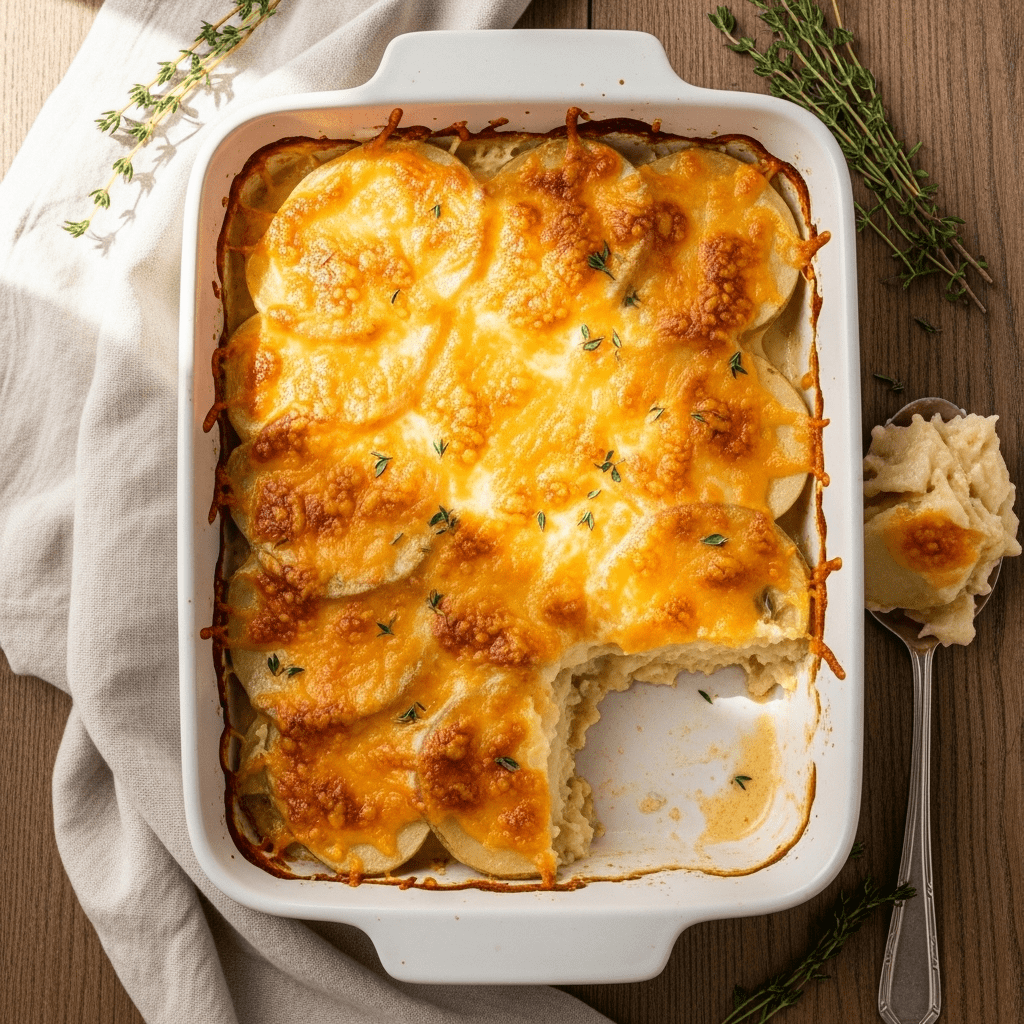

There’s something absolutely magical about slicing into a bubbling dish of cheesy scalloped potatoes—those perfectly tender potato slices swimming in a rich, creamy sauce, topped with a golden, crispy cheese crust that makes everyone at the table lean in a little closer. This classic comfort food dish transforms humble potatoes into something truly spectacular, making it the perfect side dish for holiday dinners, Sunday suppers, or any time you want to impress your family and friends without spending hours in the kitchen.
Cheesy scalloped potatoes are the ultimate crowd-pleaser that bridges the gap between everyday comfort food and special occasion elegance. Unlike their cousin, au gratin potatoes (which traditionally use breadcrumbs), scalloped potatoes rely on a luscious cream sauce that bakes into the tender potato layers, creating that irresistible, spoon-able texture we all crave. Whether you’re serving this alongside a holiday ham, roasted chicken, or a beautiful prime rib, these potatoes will absolutely steal the show.
What makes this recipe particularly special is how it balances simplicity with sophistication. You don’t need fancy culinary skills or hard-to-find ingredients—just good quality potatoes, cream, cheese, and a little patience while the oven works its magic. The result? A dish that looks and tastes like you spent all day preparing it, when in reality, most of the work is just slicing potatoes and layering ingredients.
History / Background
The story of scalloped potatoes takes us back to 19th century England, where the term “scalloped” originally referred to the scallop-edged baking dishes used to prepare the food, rather than the seafood. These decorative dishes were popular among Victorian-era cooks who loved presenting food in elegant serving vessels. The technique of layering thinly sliced potatoes with cream and baking them until tender became a staple of British and American home cooking, particularly as potatoes became more affordable and accessible to working-class families.
In America, scalloped potatoes gained tremendous popularity during the early 1900s, especially in the Midwest and Northeast regions where potato farming thrived. Farm families appreciated how this dish could feed a crowd without requiring expensive ingredients, yet still felt special enough for Sunday dinner after church. The addition of cheese—creating what many now call “cheesy scalloped potatoes” or sometimes “potatoes au gratin”—became increasingly common in American kitchens during the mid-20th century as processed cheese products became widely available.
Interestingly, there’s been ongoing debate about the difference between scalloped potatoes and potatoes au gratin. Traditional French gratin dauphinois uses only cream, garlic, and potatoes, while American scalloped potatoes often include a béchamel sauce. When cheese entered the picture, the lines became even more blurred. Today, most home cooks use the terms somewhat interchangeably, with “cheesy scalloped potatoes” referring to any layered potato casserole with a creamy cheese sauce.
This dish became a holiday table staple particularly around Easter and Christmas, when families gathered for large celebratory meals. Cookbooks from the 1950s and 60s featured countless variations, cementing scalloped potatoes as an essential part of American comfort food culture. What began as a practical way to stretch ingredients has evolved into a beloved tradition that brings warmth and nostalgia to dining tables across the country.
Why You’ll Love This Recipe
This cheesy scalloped potatoes recipe is everything you want in a comfort food side dish—creamy, cheesy, and utterly satisfying. It’s the kind of recipe that’ll have your family asking you to make it again and again, and it’s surprisingly straightforward once you get the hang of it.
Here’s why this recipe deserves a permanent spot in your cooking rotation:
- Restaurant-Quality Results at Home – Achieve that perfectly creamy texture and golden top without culinary school training
- Make-Ahead Friendly – Assemble hours in advance and bake when ready, perfect for stress-free entertaining
- Feeds a Crowd – One dish serves 8-10 people, making it ideal for family gatherings and potlucks
- Budget-Friendly Ingredients – Uses pantry staples and affordable potatoes to create an impressive side dish
- Versatile for Any Occasion – Dress it up for holidays or serve alongside weeknight dinners
- Customizable Flavor Profile – Easy to adapt with different cheeses, herbs, or add-ins to suit your taste
- Guaranteed Compliments – This is the dish people will be talking about long after dinner ends
- Perfect Texture Every Time – My tested method ensures tender potatoes in a creamy sauce, never watery or undercooked
- Kid-Approved – Even picky eaters love these cheesy, comforting potatoes
- Impressive Presentation – Looks beautiful straight from the oven to the table
Ingredient Notes
Understanding your ingredients is the key to scalloped potato success. Here’s what you’ll need and why each component matters:
Russet Potatoes – These starchy potatoes are my top choice because they absorb the cream beautifully and become wonderfully tender. Their high starch content also helps thicken the sauce naturally. You can substitute Yukon Golds for a buttery flavor and creamier texture, though they’ll be slightly less fluffy. Avoid waxy potatoes like red potatoes, as they don’t absorb the cream as well.
Heavy Cream – This is what creates that luxurious, velvety sauce. The high fat content prevents curdling and creates a smooth texture. Half-and-half can work in a pinch, but your sauce won’t be quite as rich. For a lighter version, you can use a combination of whole milk and heavy cream, though I recommend at least 1 cup of heavy cream for the best results.
Sharp Cheddar Cheese – Provides that classic tangy cheese flavor that defines this dish. Sharp cheddar melts beautifully and has enough personality to stand up to the cream. Freshly shredded cheese melts better than pre-shredded varieties, which contain anti-caking agents. Gruyère, Fontina, or a combination of cheeses can create more complex flavors.
Butter – Used to grease the pan and add richness to the sauce. Don’t skip this step—it prevents sticking and adds flavor.
All-Purpose Flour – Thickens the cream sauce and helps create that perfect consistency. For a gluten-free version, use cornstarch or a gluten-free flour blend.
Garlic – Fresh minced garlic adds aromatic depth. Garlic powder can substitute in a pinch (use 1 teaspoon), but fresh is always better.
Onion – Thinly sliced onion adds sweetness and complexity. Yellow or white onions work best. You can omit if you have onion-averse family members, but you’ll miss some flavor depth.
Fresh Thyme – This herb pairs beautifully with potatoes and cheese. Dried thyme works too (use 1 teaspoon), or substitute with rosemary for a different flavor profile.
Salt and Pepper – Essential for seasoning each layer. Don’t undersalt—potatoes need generous seasoning to shine.
Whole Milk – Used along with cream for a slightly lighter sauce while maintaining creaminess.
Equipment Needed
Having the right tools makes this recipe smooth and enjoyable. Here’s what you’ll need:
- 9×13-inch Baking Dish – The standard size for this recipe; a deep casserole dish works beautifully
- Mandoline Slicer – Makes uniform 1/8-inch potato slices quickly (use the hand guard for safety!)
- Sharp Chef’s Knife – If you don’t have a mandoline, a good knife and steady hand work fine
- Large Saucepan – For making the cream sauce
- Whisk – Essential for a smooth, lump-free sauce
- Cutting Board – For prep work
- Measuring Cups and Spoons – Accuracy matters in baking
- Box Grater or Food Processor – For shredding cheese
- Aluminum Foil – To cover during baking
- Oven Mitts – This dish gets HOT!
- Cooling Rack – Lets the dish rest properly after baking
Cheesy Scalloped Potatoes Recipe
- Total Time: 1 hour 40 minutes
- Yield: 8-10 servings 1x
- Diet: Vegetarian
Description
Layers of tender potato slices baked in a rich, creamy cheese sauce until golden and bubbly. This classic cheesy scalloped potatoes recipe is the ultimate comfort food side dish perfect for holidays, family dinners, and special occasions.
Ingredients
- 4 pounds russet potatoes, peeled and sliced 1/8-inch thick
- 3 tablespoons unsalted butter, plus more for greasing
- 3 tablespoons all-purpose flour
- 3 cups heavy cream
- 1 cup whole milk
- 4 cloves garlic, minced
- 1 medium yellow onion, thinly sliced
- 3 cups sharp cheddar cheese, freshly shredded (divided)
- 2 teaspoons fresh thyme leaves (or 1 teaspoon dried)
- 1½ teaspoons salt (plus more to taste)
- ¾ teaspoon black pepper
- ¼ teaspoon ground nutmeg (optional, but recommended)
- 2 tablespoons fresh parsley, chopped (for garnish)
Instructions
- Preheat and Prep: Preheat your oven to 375°F (190°C). Generously butter a 9×13-inch baking dish and set aside. Slice your potatoes uniformly using a mandoline or sharp knife—consistency is key for even cooking.
- Make the Cream Sauce: In a large saucepan over medium heat, melt 3 tablespoons of butter. Add the minced garlic and sauté for about 30 seconds until fragrant, being careful not to burn it. Sprinkle in the flour and whisk constantly for 1-2 minutes to create a roux—it should be lightly golden and smell nutty, not raw.
- Add the Dairy: Gradually pour in the heavy cream and milk while whisking continuously to prevent lumps. Keep whisking as the mixture heats and begins to thicken, about 5-7 minutes. It should coat the back of a spoon when ready.
- Season the Sauce: Stir in the thyme, salt, pepper, and nutmeg. Add 2 cups of the shredded cheddar cheese and whisk until completely melted and smooth. Taste and adjust seasoning—remember, this sauce needs to flavor all those potatoes, so don’t be shy with the salt. Remove from heat.
- Layer the Potatoes: Arrange one-third of the sliced potatoes in an overlapping layer in the prepared baking dish. Scatter half of the sliced onions over the potatoes. Pour one-third of the cream sauce over this layer, making sure to coat evenly.
- Continue Layering: Add another layer of potatoes (another third), the remaining onions, and another third of the cream sauce. Top with the final layer of potatoes and pour the remaining cream sauce over everything, gently pressing down to help the sauce seep between the layers.
- Add the Cheese Topping: Sprinkle the remaining 1 cup of shredded cheddar cheese evenly over the top. This will create that gorgeous golden, crispy cheese crust we’re after.
- Bake Covered: Cover the dish tightly with aluminum foil (spray the underside with cooking spray to prevent cheese from sticking). Bake for 45 minutes—this covered time allows the potatoes to steam and become tender.
- Finish Uncovered: Remove the foil and continue baking for an additional 30-35 minutes, until the top is golden brown and bubbly, and a knife easily pierces through the potatoes without resistance.
- Rest and Serve: Let the scalloped potatoes rest for 10-15 minutes after removing from the oven. This crucial step allows the sauce to set up and makes serving much easier. Garnish with fresh parsley and serve warm.
Notes
- Uniform Slicing: The key to evenly cooked scalloped potatoes is uniform thickness. A mandoline slicer makes this easy, but if using a knife, take your time.
- Don’t Skip the Resting Time: Those 10-15 minutes after baking allow the sauce to thicken considerably, preventing a soupy mess when serving.
- Cheese Temperature: Always use freshly shredded cheese at room temperature—it melts more smoothly into the sauce.
- Testing for Doneness: Insert a knife into the center of the dish; it should slide through easily with no resistance.
- Preventing Browning Too Quickly: If the top browns too fast, tent with foil for the remaining baking time.
- Prep Time: 25 minutes
- Cook Time: 1 hour 15 minutes
- Category: Side Dish
- Method: Baking
- Cuisine: American
Nutrition
- Serving Size: 1 cup (approximately 1/10 of recipe)
- Calories: 425
- Sugar: 4g
- Sodium: 485mg
- Fat: 28g
- Saturated Fat: 17g
- Unsaturated Fat: 9g
- Trans Fat: 0g
- Carbohydrates: 32g
- Fiber: 3g
- Protein: 12g
- Cholesterol: 95mg
Nutrition information is an estimate and may vary based on specific ingredients used.
Tips & Variations
Cheese Variations:
- Swap half the cheddar for Gruyère for a more sophisticated, nutty flavor
- Use smoked cheddar or gouda for a subtle smoky undertone
- Mix in Parmesan for extra umami and a crispier top
- Try Monterey Jack with jalapeños for a spicy kick
Vegetable Add-Ins:
- Layer in fresh spinach between potato layers for added nutrition
- Mix in roasted garlic cloves for deeper garlic flavor
- Add thinly sliced mushrooms for an earthy dimension
- Include crispy bacon bits between layers for meat lovers
Herb Modifications:
- Replace thyme with fresh rosemary for a more aromatic profile
- Add fresh sage leaves for a fall-inspired version
- Mix in chives or green onions for a milder onion flavor
Lighter Version:
- Use half heavy cream and half chicken or vegetable broth
- Reduce cheese to 2 cups total and use reduced-fat cheddar
- Substitute Greek yogurt for half the cream (add at the end to prevent curdling)
Fancy It Up:
- Top with crispy fried shallots before serving
- Drizzle with truffle oil for an elegant touch
- Add a breadcrumb and herb topping for extra crunch
Pro Chef Tips
The Potato Soak: After slicing, soak potatoes in cold water for 10 minutes, then drain and pat completely dry. This removes excess starch, preventing a gummy texture and helping achieve that perfect creamy consistency.
Temperature Matters: Use room temperature cream and cheese—cold ingredients can cause the sauce to break or become grainy. Pull them from the fridge 30 minutes before cooking.
Layer Strategy: Always start and end with potatoes, not onions. This prevents the onions from burning on top and ensures even cooking throughout.
The Nutmeg Secret: That pinch of nutmeg is a classic French technique that enhances the creaminess without being identifiable. It creates a subtle warmth that makes people wonder what makes your scalloped potatoes taste so special.
Sauce Consistency: Your cream sauce should be slightly thinner than you think it needs to be before baking—it will thicken considerably in the oven as the potatoes release starch.
Even Cheese Melt: Toss shredded cheese with a tiny bit of cornstarch (about ½ teaspoon) before adding to the sauce. This prevents the cheese from clumping and creates an ultra-smooth texture.
Common Mistakes to Avoid
Cutting Potatoes Too Thick: Thick slices won’t cook through in the allotted time and you’ll end up with crunchy potatoes in a burnt sauce. Stick to 1/8-inch thickness for perfect results. If your slices are thicker, you’ll need to add 15-20 minutes to the covered baking time.
Not Enough Seasoning: Potatoes are bland and need generous seasoning. Season the sauce well and consider sprinkling a bit of salt between layers. Underseasoned scalloped potatoes are the most common disappointment.
Using Pre-Shredded Cheese: The convenience isn’t worth it. Pre-shredded cheese contains cellulose to prevent caking, which prevents smooth melting and can make your sauce grainy or greasy. Always shred your own cheese for the creamiest results.
Skipping the Rest Time: Serving immediately after baking will result in a soupy, runny mess that doesn’t hold its shape. That 10-15 minute rest is non-negotiable—use this time to finish other dishes.
Overcrowding Layers: Gently overlapping is fine, but packing too many potatoes into the dish means they won’t cook evenly and the cream won’t distribute properly. If you have extra potatoes, save them for another use rather than cramming them in.
Storage & Meal Prep
Refrigerator Storage: Allow scalloped potatoes to cool completely before covering tightly with plastic wrap or transferring to an airtight container. They’ll keep in the refrigerator for 3-4 days. The sauce will thicken even more as it sits, but it’s still absolutely delicious.
Reheating Instructions: The oven is your best friend for reheating. Place portions in an oven-safe dish, cover with foil, and reheat at 350°F for 20-25 minutes until warmed through. For individual portions, the microwave works in a pinch—heat on 50% power in 1-minute intervals, stirring between, to prevent drying out. Add a splash of cream or milk if the sauce seems too thick.
Shelf Life: While scalloped potatoes are technically safe for 3-4 days, they’re truly best within the first 2 days when the texture is optimal. The potatoes can become softer and the sauce may separate slightly after that.
Portion Control: Consider dividing leftovers into individual portions before storing. This makes reheating easier and prevents repeatedly heating and cooling the entire dish, which can affect quality and food safety.
Make-Ahead & Freezer Notes
Advance Preparation: This is one of the best make-ahead dishes for holiday entertaining! Assemble the entire casserole up to 24 hours before baking. Cover tightly with plastic wrap and refrigerate. When ready to bake, remove from the fridge 30 minutes before baking to take the chill off, then follow the baking instructions as written. You may need to add 5-10 minutes to the covered baking time since it’s starting cold.
Freezer-Friendly Option: While I prefer this dish fresh, it can be frozen with some modifications. Underbake the casserole by about 15 minutes (until potatoes are just tender but not fully done), cool completely, then wrap tightly in plastic wrap followed by aluminum foil. Freeze for up to 2 months. Thaw overnight in the refrigerator before reheating.
Reheating from Frozen: You can also bake from frozen—cover with foil and bake at 350°F for about 90 minutes, then uncover and bake 15-20 minutes more until heated through and golden on top.
Best Make-Ahead Method: For absolute best results, prepare the cream sauce and slice the potatoes a day ahead, storing separately in the fridge. Assemble and bake the day of serving. This gives you a head start without compromising texture.
Serving Suggestions
Cheesy scalloped potatoes are wonderfully versatile and pair beautifully with numerous main dishes and sides:
Perfect Protein Pairings:
- Classic holiday ham (the ultimate combination!)
- Roasted prime rib or beef tenderloin
- Herb-roasted chicken or turkey
- Grilled pork chops or pork tenderloin
- Pan-seared salmon or other fish
- Meatloaf for a comforting weeknight dinner
Complementary Sides:
- Crisp green salad with vinaigrette (cuts the richness)
- Roasted Brussels sprouts or green beans
- Glazed carrots or honey-roasted root vegetables
- Cranberry sauce (especially for holiday meals)
- Dinner rolls or crusty bread
Complete the Meal:
- Pour a crisp white wine like Chardonnay or a light red like Pinot Noir
- Serve with sparkling water with lemon
- For dessert, keep it simple—the scalloped potatoes are so rich that a light dessert like fruit crisp or sorbet works perfectly
Occasions: This dish shines at Easter dinner, Thanksgiving, Christmas, Sunday suppers, potlucks, and any time you’re feeding a crowd or want to make a regular dinner feel special.
FAQs Section
Q: Can I use a different type of potato for this recipe? A: Yes! While russet potatoes are my first choice for their fluffy, starch-rich texture, Yukon Gold potatoes work beautifully and add a buttery flavor. They’ll be slightly creamier and less fluffy. Avoid waxy varieties like red potatoes, as they don’t absorb the cream sauce as well and can result in a less cohesive dish.
Q: Why are my scalloped potatoes watery? A: The most common cause is not letting them rest after baking. Those 10-15 minutes are essential for the sauce to thicken. Other causes include cutting potatoes too thick (they release more moisture), not making the cream sauce thick enough initially, or using too much liquid. If your dish seems watery before baking, don’t worry—it will thicken considerably as the potatoes release starch during cooking.
Q: Can I make this recipe dairy-free or vegan? A: Absolutely! Use full-fat coconut cream or cashew cream in place of the heavy cream, dairy-free butter, and nutritional yeast or vegan cheese for the cheese. The texture won’t be quite as rich, but it’s still delicious. Make sure to thicken your dairy-free cream sauce well with flour or cornstarch.
Q: How do I prevent the top from burning before the potatoes are cooked? A: This is why we bake covered for the first 45 minutes—it allows the potatoes to steam and become tender without the top browning. If your cheese is browning too quickly during the uncovered baking time, simply tent with foil while the potatoes finish cooking.
Q: Do I need to peel the potatoes? A: For traditional scalloped potatoes, yes—peeling creates that classic smooth texture and appearance. However, if you prefer to leave the skins on for added nutrition and texture, that works too! Just scrub them very well and slice thinly. The peel will add a slightly different texture and appearance.
Q: Can I double this recipe for a larger crowd? A: Yes! Use two 9×13-inch baking dishes rather than trying to fit everything in one larger dish. The baking time should remain approximately the same, though you may need an extra 5-10 minutes. Rotating the pans halfway through ensures even cooking.
Q: What’s the difference between scalloped potatoes and au gratin potatoes? A: The terms are often used interchangeably in American cooking, but traditionally, au gratin potatoes include cheese and breadcrumbs, while scalloped potatoes are made with just cream and no cheese. This recipe is technically a hybrid—cheesy scalloped potatoes—which combines the best of both worlds: the creamy layers of scalloped potatoes with the cheese-forward flavor of au gratin.
Conclusion
There’s a reason cheesy scalloped potatoes have earned their place as a beloved classic in American home cooking—they deliver incredible comfort and satisfaction in every creamy, cheesy bite. This recipe takes a traditional favorite and ensures foolproof results every single time, whether you’re cooking for a holiday crowd or just want to make Tuesday night dinner feel special.
The beauty of this dish lies in its simplicity and versatility. Once you master the basic technique, you’ll find yourself coming back to it again and again, perhaps trying different cheese combinations or adding your own creative touches. It’s the kind of recipe that becomes part of your family’s tradition, the dish that people specifically request, and the side that mysteriously disappears first at potlucks.
I hope this detailed guide gives you the confidence to create perfect scalloped potatoes that’ll have everyone at your table asking for seconds (and the recipe!). Whether it’s your first time making this classic or you’re a seasoned pro looking for tips to elevate your technique, I’d love to hear how it turns out for you.
Ready to make these incredible cheesy scalloped potatoes? Save this recipe to your Pinterest boards so you’ll have it ready for your next dinner! Drop a comment below and let me know if you tried any variations—I love hearing about your cooking adventures. And don’t forget to share a photo of your beautiful, golden, bubbly creation—tag me so I can see your delicious results!
Happy cooking, friends! 🧀🥔