
Prepare to fall absolutely in love with the most elegant, impressive dish you’ll ever make at home – this Creamy Lemon Shrimp Risotto! Imagine plump, perfectly cooked shrimp nestled in the creamiest, most luxurious risotto you’ve ever tasted, with bright lemon notes and delicate aromatics dancing through every single spoonful. This isn’t just dinner – it’s a restaurant-quality experience that you can create right in your own kitchen, and trust me, once you taste it, you’ll be making it again and again!
What makes this recipe so incredibly special is the stunning harmony of flavors and textures. The risotto is impossibly creamy and velvety without feeling heavy, the shrimp add sweet, succulent protein and that touch of luxury, while the fresh lemon provides essential brightness that keeps every bite feeling light and fresh despite the richness. It’s the kind of dish that looks and tastes like you spent hours in the kitchen, but secretly only takes about 35 minutes from start to finish!
This Creamy Lemon Shrimp Risotto is perfect for so many special occasions! Serve it for romantic date nights at home when you want to seriously impress your partner, make it for anniversary dinners or Valentine’s Day celebrations, prepare it when hosting dinner parties where you want to wow your guests, enjoy it for special birthday dinners or milestone celebrations, or treat yourself to something extraordinary on a random Tuesday because you absolutely deserve it! While risotto does require your attention for about 25 minutes at the stove, the process is actually quite meditative and relaxing – and the compliments you’ll receive make every single stir completely worthwhile!
History / Background
The story of this dish is a beautiful tale of Italian tradition meeting coastal inspiration. Risotto itself has been a cornerstone of Northern Italian cuisine for centuries, with its origins deeply rooted in the rice-growing regions of Lombardy, Piedmont, and Veneto. Rice cultivation in Italy began in the 14th century when it was introduced through trade routes, but it took several hundred years for risotto to evolve into the creamy, sophisticated dish we know and adore today.
The traditional technique of slowly adding liquid to rice while stirring constantly developed in the 18th and 19th centuries as Italian cooks discovered something magical: Arborio, Carnaroli, and Vialone Nano rice varieties – with their uniquely high starch content – could create an incredibly creamy texture without adding any cream at all! This revolutionary cooking method, which releases the rice’s natural starches through gentle agitation and gradual absorption, became the hallmark of authentic Italian risotto preparation.
Classic risotto recipes were often beautifully simple. The famous Risotto alla Milanese featured saffron’s golden hue and delicate flavor, while Risotto al Nero used dramatic squid ink for striking visual impact. These traditional dishes showcased pure technique and quality ingredients rather than complex flavor combinations. The rice itself was always the star, with additions kept minimal but incredibly impactful.
Seafood risotto, particularly with shrimp, has deep roots in Italy’s coastal regions – especially along the Adriatic coast in Veneto and down through the Mediterranean coastline. Italian coastal communities have long combined their two greatest resources: the abundant rice fields of the Po River valley and the fresh seafood from surrounding waters. “Risotto ai Frutti di Mare” (seafood risotto) became a beloved staple in seaside towns, celebrating the marriage of land and sea.
The addition of lemon to seafood risotto is a natural evolution that reflects the bright, fresh flavors of Mediterranean and particularly Southern Italian cooking. Lemons grow prolifically along Italy’s southern coasts and in Sicily, where they’re used generously to enhance seafood’s natural sweetness and cut through rich, creamy sauces. The combination of lemon with shrimp is a classic pairing found throughout coastal Italian cuisine – from simple grilled shrimp with lemon (gamberoni al limone) to more elaborate preparations.
This modern Creamy Lemon Shrimp Risotto represents the beautiful evolution of Italian cooking as it has spread globally and adapted to contemporary tastes. It honors traditional Northern Italian risotto technique while embracing the bright, coastal flavors of the Mediterranean. The result is refined comfort food that feels both timeless and modern – elegant enough for special occasions yet approachable enough for confident home cooks to master. It’s Italian tradition meeting contemporary luxury on a single, beautiful plate.
Why You’ll Love This Recipe
This Creamy Lemon Shrimp Risotto isn’t just another dinner recipe to bookmark – it’s a transformative dish that will make you feel like a professional chef! The combination of sweet, tender shrimp, impossibly silky risotto, bright citrus, and aromatic garlic creates layers of sophisticated flavor that are absolutely mesmerizing. Even people who claim they’re intimidated by risotto or fancy cooking have been completely empowered by this recipe!
The magic lies in how something so elegant and restaurant-worthy can actually be quite straightforward when you understand the technique. Yes, it requires your presence at the stove, but the process is rhythmic and almost meditative – many people find it genuinely relaxing and therapeutic after a long day. Plus, there’s something deeply satisfying about creating something this beautiful and delicious with your own hands.
Here’s why this recipe absolutely deserves a permanent place in your special-occasion repertoire:
- Restaurant-quality elegance – Looks and tastes like it came from an upscale Italian trattoria, but costs a fraction
- Surprisingly approachable – Easier than you think with clear, detailed instructions that guide you every step
- Naturally impressive – Guaranteed to wow dinner guests and romantic partners without complicated techniques
- One-pot simplicity – Everything cooks in a single pot for remarkably easy cleanup
- Quick enough for weeknights – Just 35 minutes total, perfect when you want something special but don’t have hours
- Naturally gluten-free – Perfect for guests with dietary restrictions (just verify your broth is gluten-free)
- Protein-packed satisfaction – Succulent shrimp in every bite provides substantial, high-quality protein
- Lighter than you’d think – Despite the creaminess, there’s no heavy cream, making it surprisingly light
- Perfect portion control – Rich enough that reasonable servings feel completely satisfying
- Teaches valuable technique – Master risotto once and you’ve unlocked countless variations
- Bright, balanced flavors – The lemon keeps everything feeling fresh and prevents palate fatigue
- Customizable base – Easy to adapt with different seafood, proteins, or seasonal additions
- Special occasion worthy – Ideal for anniversaries, date nights, celebrations, or anytime you want to feel fancy
- Conversation starter – People will genuinely ask how you made something so incredible
Ingredient Notes
Arborio Rice: This short-grain Italian rice is absolutely essential for authentic, creamy risotto. Its high starch content is what creates that signature velvety texture that makes risotto so special and luxurious. You’ll need about 1½ cups, which serves 4 generously. Please don’t substitute with regular long-grain rice, jasmine, basmati, or instant rice – they simply won’t work and will leave you disappointed! Carnaroli rice (if you can find it) is actually considered even superior by Italian chefs, creating an even creamier texture, but Arborio is most widely available in American supermarkets and works beautifully every single time.
Shrimp: Large or jumbo shrimp (about 1 pound, peeled and deveined) are ideal for this dish. Look for 21-25 count or 26-30 count per pound – these sizes are substantial enough to stand out but still cook quickly without becoming rubbery. Fresh shrimp is wonderful, but high-quality frozen shrimp (thawed properly) works perfectly well and is often more affordable and accessible. If using frozen, thaw overnight in the refrigerator or quickly under cold running water. Tail-on or tail-off is your preference – tail-on looks more elegant, but tail-off is easier to eat. For best results, pat shrimp completely dry before cooking to achieve beautiful browning.
Seafood Stock or Chicken Broth: High-quality stock is crucial since it flavors every grain of rice. You’ll need about 5-6 cups total, kept warm throughout cooking. Seafood stock creates the most authentic coastal Italian flavor and amplifies the shrimp taste, but good chicken broth works beautifully too (many Italian cooks actually prefer it). Low-sodium is best so you control salt levels. Homemade stock is fantastic if you have it, but quality store-bought is perfectly acceptable. Keep it simmering gently in a separate pot throughout the cooking process – this is truly essential for proper risotto texture!
White Wine: Dry white wine (about ¾ cup) adds crucial acidity and complex depth that elevates this from good to restaurant-quality. Use something you’d actually enjoy drinking – Pinot Grigio, Sauvignon Blanc, dry Vermouth, or unoaked Chardonnay all work beautifully. The alcohol cooks off completely, leaving behind sophisticated flavor notes. If you prefer not to use wine, substitute with additional broth plus 2 tablespoons of fresh lemon juice or white wine vinegar for that essential acidity.
Parmesan Cheese: Real Parmigiano-Reggiano, freshly grated from a block, is absolutely non-negotiable for authentic flavor and silky texture. You’ll need about ¾ to 1 cup. The cheese adds nutty, salty richness and helps create that final luxurious creaminess. Pre-grated cheese contains anti-caking agents (cellulose) that prevent smooth melting and can make your risotto grainy instead of creamy. Take the extra three minutes to grate your own – the difference is dramatic!
Butter: Real, unsalted butter (about 4 tablespoons total) adds incredible richness and that glossy, silky finish that makes risotto irresistible. We use it at the beginning for sautéing aromatics and at the end for “mantecatura” – the traditional Italian technique of vigorously stirring in cold butter and cheese off the heat to create ultimate creaminess and that professional shine.
Garlic: Fresh garlic cloves (4-5, minced) provide aromatic foundation and depth throughout the dish. Fresh garlic is essential here – garlic powder simply cannot replicate the complex, sweet, slightly sharp flavor of fresh cloves. The garlic mellows beautifully as it cooks, becoming sweet and fragrant rather than harsh or overpowering.
Lemons: Fresh lemon juice and zest (from 2 large lemons) are absolutely crucial for this recipe. The zest provides intense, pure lemon flavor without acidity, while the juice adds that essential brightness and tang that cuts through richness perfectly. This dish truly sings with citrus – it’s what makes it special! Always use fresh lemons, never bottled juice. The difference in flavor and freshness is night and day.
Shallots or Onion: Finely diced shallots (2-3) create the traditional aromatic base for risotto. Shallots are slightly sweeter and more delicate than onions, which is why they’re preferred in classic Italian risotto. However, finely diced yellow onion (about 1 cup) works perfectly well if shallots aren’t available. White onions can also substitute successfully.
Fresh Herbs: Fresh parsley and optional fresh basil add gorgeous color and bright, herbal notes. Flat-leaf Italian parsley (¼ cup chopped) is traditional and provides the best flavor – it brightens everything beautifully. Fresh basil adds a lovely aromatic quality that complements the lemon wonderfully, though it’s optional.
Olive Oil: Good quality olive oil helps cook the shrimp and starts the risotto base. Use regular olive oil for cooking rather than expensive extra virgin, since you’ll be heating it. Save the fancy finishing oils for drizzling at the end if desired.
Optional Additions: Heavy cream (2-3 tablespoons) can be stirred in at the end for extra decadence, though traditional risotto doesn’t use cream – the creaminess comes entirely from the rice’s starch. A splash of white wine while cooking the shrimp adds extra flavor. Red pepper flakes add gentle heat that complements seafood beautifully.
Equipment Needed
To create this restaurant-worthy Creamy Lemon Shrimp Risotto, you’ll need these essential kitchen tools:
- Large, heavy-bottomed pot or Dutch oven (at least 4-quart capacity with wide surface area for even cooking)
- Medium saucepan (for keeping broth warm throughout cooking process)
- Large skillet or sauté pan (for cooking shrimp separately)
- Wooden spoon or silicone spatula (for comfortable, constant stirring)
- Sharp chef’s knife (for mincing garlic and shallots)
- Cutting board (preferably separate ones for seafood and vegetables)
- Measuring cups and spoons (for accurate ingredient quantities)
- Ladle (for gradually adding warm broth – this is key!)
- Box grater or microplane (for freshly grating Parmesan and zesting lemons)
- Citrus juicer (optional but very helpful for extracting maximum lemon juice)
- Small prep bowls (for organizing ingredients mise en place style)
- Tongs (for easily turning and removing shrimp)
- Whisk (for final vigorous stirring during mantecatura)
- Plate or bowl (for resting cooked shrimp)
- Paper towels (for patting shrimp dry before cooking)
- Timer (helpful for tracking cooking time and testing doneness)

Creamy Lemon Shrimp Risotto Recipe
- Total Time: 45 minutes
- Yield: 4 servings 1x
- Diet: Gluten Free
Description
This Creamy Lemon Shrimp Risotto features succulent shrimp and impossibly creamy Arborio rice infused with garlic, Parmesan, and fresh lemon. Restaurant-quality Italian elegance made at home!
Ingredients
For the Shrimp:
- 1 lb large shrimp (21-25 count), peeled and deveined
- 2 tablespoons olive oil
- 2 cloves garlic, minced
- Salt and pepper to taste
- Optional: pinch of red pepper flakes
For the Risotto:
- 5-6 cups seafood stock or chicken broth, kept warm
- 3 tablespoons butter, divided
- 1 tablespoon olive oil
- 2-3 shallots (or 1 medium onion), finely diced
- 4-5 cloves garlic, minced
- 1½ cups Arborio rice
- ¾ cup dry white wine
- ¾ to 1 cup freshly grated Parmesan cheese
- Zest of 2 lemons
- Juice of 2 lemons (about ⅓ cup)
- 2 tablespoons butter (for finishing)
- ¼ cup fresh parsley, chopped
- Salt and pepper to taste
- Optional: 2-3 tablespoons heavy cream
- Extra Parmesan, lemon wedges, and parsley for serving
Instructions
- Warm the broth: Pour seafood stock or chicken broth into a medium saucepan and bring to a gentle simmer over low heat. Keep it warm throughout the entire cooking process – this is absolutely crucial for proper risotto texture and cannot be skipped. Cold broth will interrupt the cooking process and prevent creamy results.
- Prep the shrimp: Pat shrimp completely dry with paper towels – this is important for achieving good browning rather than steaming. Season generously with salt and pepper on both sides.
- Cook the shrimp: Heat 2 tablespoons olive oil in a large skillet over medium-high heat until shimmering. Add shrimp in a single layer (don’t overcrowd – work in batches if necessary). Cook for 2-3 minutes on the first side until pink and starting to curl. Flip and add minced garlic and optional red pepper flakes. Cook another 1-2 minutes until shrimp are just cooked through and opaque (internal temperature of 120-125°F – they’ll finish cooking later). Don’t overcook! Remove to a plate and set aside. Shrimp will continue cooking from residual heat.
- Start the risotto base: In a large, heavy-bottomed pot or Dutch oven, melt 2 tablespoons butter with 1 tablespoon olive oil over medium heat. Once butter melts and stops foaming, add finely diced shallots. Sauté for 3-4 minutes, stirring frequently, until softened, translucent, and fragrant but not browned.
- Add aromatics: Add minced garlic to the shallots. Cook for 1 minute, stirring constantly, until wonderfully fragrant but not browned (burnt garlic is bitter). Your kitchen should smell absolutely amazing at this point!
- Toast the rice: Add Arborio rice to the pot. Stir continuously for 2-3 minutes, coating every single grain with the butter and oil. The rice should become slightly translucent at the edges and smell toasted and nutty. This crucial step is essential for proper texture and helps the rice absorb liquid evenly while maintaining structure.
- Deglaze with wine: Pour in the white wine and stir constantly. The liquid will sizzle dramatically and steam – this is perfect! Keep stirring until the wine is almost completely absorbed by the rice, about 2-3 minutes. Use this opportunity to scrape up any flavorful bits from the bottom of the pot.
- Begin adding broth: Using a ladle, add about one cup of warm broth to the rice. Stir frequently (but not constantly – every 30-45 seconds is fine) until the liquid is almost completely absorbed. You’ll know it’s time to add more when you can draw a clear line through the rice with your spoon and it doesn’t immediately fill with liquid.
- Continue the gradual process: Keep adding broth one ladle at a time (about ½ to ¾ cup), stirring frequently and waiting until each addition is mostly absorbed before adding more. This slow, gradual process releases the rice’s starch and creates that signature creamy texture. Continue for about 18-22 minutes total. Don’t rush this part – it’s where the magic happens!
- Test for doneness: After about 18 minutes, start tasting the rice frequently. It should be creamy and tender but still have a slight pleasant firmness in the very center (al dente) – not crunchy or raw-tasting, but with just a tiny bit of gentle resistance when you bite down. If it’s still too firm, continue adding broth and cooking until you reach the perfect texture. Different rice brands can vary slightly in cooking time.
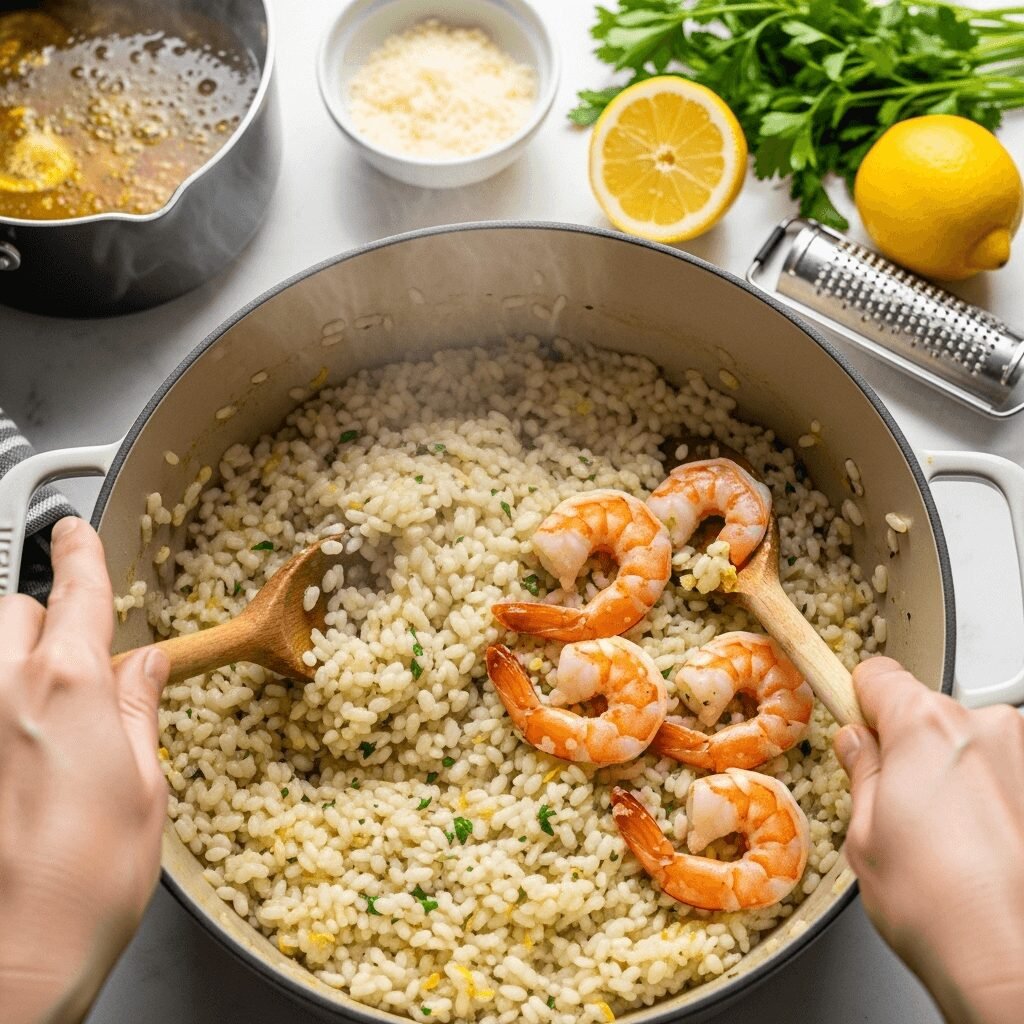
- Add lemon and shrimp: Once the rice reaches perfect al dente doneness, stir in the lemon zest and about half the lemon juice (you can adjust to taste). Gently fold in the cooked shrimp along with any accumulated juices from the plate. Mix gently and let warm through for about 2 minutes. The residual heat will finish cooking the shrimp perfectly without making them rubbery.
- Finish with cheese and butter (mantecatura): Remove the pot from heat. This next step is crucial! Add remaining 2 tablespoons cold butter, grated Parmesan cheese, and remaining lemon juice. Stir vigorously and energetically for 1-2 minutes – this Italian technique called “mantecatura” creates an emulsion that makes the risotto incredibly creamy, glossy, and luxurious. The risotto should be loose enough to flow slowly like lava when you tilt the pot, not stiff or dry. If too thick, stir in a bit more warm broth.
- Final seasoning and serve: Taste and adjust seasonings, adding more salt, pepper, or lemon juice as needed. The risotto should taste bright, savory, perfectly balanced, and luxurious. Stir in optional heavy cream if desired for extra decadence. Mix in fresh chopped parsley, reserving some for garnish. Serve immediately in shallow bowls, topped with extra Parmesan, a drizzle of quality olive oil, fresh parsley, and lemon wedges on the side. Present beautifully and serve right away!
Notes
- Timing is everything: Risotto must be served immediately – it continues absorbing liquid and becomes thick and gluey if left sitting
- Keep broth warm: Always maintain warm broth temperature; cold broth shocks the rice and ruins texture
- Don’t overcook shrimp: Slightly undercook shrimp initially since they’ll finish cooking in the hot risotto
- Stir frequency: Frequent stirring (every 30-45 seconds) is needed, but not literally constant every-second stirring
- Perfect consistency: Risotto should be “all’onda” (wavy) – flowing slowly when tilted, not standing stiff
- Wine substitute: Replace wine with additional broth plus 2 tablespoons lemon juice or white wine vinegar
- Make it creamier: Stir in 2-3 tablespoons heavy cream or mascarpone at the end for ultimate decadence
- Seafood variations: Try scallops, lobster, or mixed seafood instead of or in addition to shrimp
- Prep Time: 15 minutes
- Cook Time: 35 minutes
- Category: Dinner
- Method: Stovetop
- Cuisine: Italian
Nutrition
- Serving Size: 1/4 of recipe (approximately 2 cups)
- Calories: 580
- Sugar: 3g
- Sodium: 920g
- Fat: 18g
- Saturated Fat: 9g
- Unsaturated Fat: 8g
- Trans Fat: 0g
- Carbohydrates: 65g
- Fiber: 2g
- Protein: 35g
- Cholesterol: 200mg
Nutrition information is approximate and calculated using standard ingredient measurements. Values may vary based on specific brands, portion sizes, and ingredient substitutions used.
Tips & Variations
The beauty of this Creamy Lemon Shrimp Risotto is how wonderfully versatile it is! Here are fantastic ways to make this recipe completely your own:
Luxe Seafood Version: Add scallops along with the shrimp for ultimate indulgence. Or try lobster tail meat for special celebrations. Mixed seafood (shrimp, scallops, mussels, and clams) creates a spectacular “Risotto ai Frutti di Mare.”
Asparagus Addition: Fold in blanched asparagus tips during the last 5 minutes of cooking for gorgeous green color and fresh spring flavor that pairs perfectly with lemon and shrimp.
Peas and Mint: Stir in frozen peas (they cook instantly in the hot risotto) and fresh mint along with the parsley for a beautiful English garden-inspired variation.
Tomato Twist: Add ½ cup of halved cherry tomatoes when you add the shrimp. They’ll burst and create pockets of sweet-tart juice throughout. Sun-dried tomatoes also work beautifully.
Spicy Kick: Add ½ teaspoon red pepper flakes with the garlic, or finish with a drizzle of chili oil. The heat complements seafood wonderfully and adds exciting complexity.
Extra Creamy Decadence: Stir in 3-4 tablespoons of mascarpone cheese or cream cheese along with the Parmesan for unbelievable richness and tang.
Herb Variations: Try fresh basil, tarragon, or dill instead of or in addition to parsley. Basil is especially lovely with lemon, while tarragon adds elegant, anise-like notes.
White Wine Butter Sauce: Reserve some of the white wine and reduce it with butter, garlic, and lemon to create a sauce to drizzle over the finished risotto for restaurant-level presentation.
Bacon Enhancement: Cook 3-4 strips of bacon until crispy, crumble, and sprinkle on top. The smoky, salty crunch adds wonderful contrast and makes it feel even more indulgent.
Lighter Version: Use all olive oil instead of butter (except for the final mantecatura – that butter is essential!), reduce Parmesan to ½ cup, and skip the optional cream. Still delicious with fewer calories.
Pro Chef Tips
Want to elevate your Creamy Lemon Shrimp Risotto from homemade to Michelin-star quality? Here are professional secrets:
The warm broth rule is sacred: This cannot be overstated – it’s the single most important technical point! Cold broth shocks the rice, stopping starch release and creating uneven texture. Keep that broth at a gentle simmer in a separate pot throughout cooking. This one tip makes the biggest difference between good and spectacular risotto.
Don’t over-stir obsessively: While risotto needs frequent attention, you don’t need to stir literally every single second for 25 minutes. Stir well when adding each ladle of broth, then stir every 30-45 seconds until absorbed. Over-stirring can actually break rice grains and create gluey texture rather than creamy.
Master “all’onda” consistency: Perfect risotto should be “all’onda” – Italian for “like a wave.” When you tilt the plate, risotto should flow slowly in waves, not sit there in a stiff mound. It should be slightly loose and pourable, almost soupy-looking. Many home cooks make it too thick. If this happens, simply stir in warm broth to loosen.
Toast the rice properly: That 2-3 minute toasting step before adding wine is crucial. You’re not browning the rice, but rather coating every grain with fat and slightly drying the exterior. Rice should become translucent at edges and smell toasted. This creates better texture and helps rice absorb liquid evenly.
Cook shrimp in batches: Don’t crowd the pan when cooking shrimp. Overcrowding creates steam instead of searing, resulting in gray, rubbery shrimp instead of golden, caramelized ones. Cook in a single layer with space between each shrimp.
Slightly undercook the shrimp: Since shrimp will be added back to hot risotto, cook them to about 80% done initially. They’ll finish cooking from residual heat without becoming rubbery. Overcooked shrimp are chewy and disappointing.
The mantecatura is magic: This Italian technique of vigorously stirring in cold butter and cheese off the heat creates an emulsion that makes risotto incredibly creamy and glossy. Don’t skip it! Stir energetically for 1-2 minutes to incorporate air and create that restaurant-quality shine. This is what separates good risotto from transcendent risotto.
Layer the lemon: Add lemon zest before juice. Zest provides intense lemon flavor without acidity, while juice adds brightness. Adding them separately creates more complex, layered citrus notes throughout the dish rather than one-dimensional lemon flavor.
Use the shrimp cooking oil: Don’t discard the garlic-infused oil from cooking the shrimp! Drizzle it over individual servings for extra flavor and that glistening, professional appearance.
Plate immediately and beautifully: Serve in wide, shallow bowls rather than deep ones. Arrange shrimp on top artfully rather than mixing them in completely. This creates restaurant-level presentation that makes people pull out their phones for photos!
Common Mistakes to Avoid
Even with detailed instructions, there are common pitfalls that can prevent perfection:
Adding broth too quickly: This is the number one mistake! Dumping in all the broth at once or adding too much too fast creates rice soup, not creamy risotto. The slow, gradual addition and absorption releases the starch that creates creaminess. Be patient – this is literally the entire technique!
Using the wrong rice: Long-grain rice, jasmine, basmati, or instant rice will absolutely NOT work for risotto. You must use short-grain, high-starch Italian rice like Arborio or Carnaroli. The starch content is what creates creamy texture. This is genuinely non-negotiable.
Not keeping broth warm: Adding cold broth to hot rice causes temperature shock that stops the cooking process and prevents proper starch release. Temperature fluctuation also means uneven cooking. Always keep broth at a gentle simmer in a separate pot!
Overcooking the shrimp initially: Shrimp cook incredibly fast and continue cooking from residual heat. If you fully cook them during the initial searing, they’ll be overcooked and rubbery by the time they’re stirred into hot risotto. Slightly undercook them – they should still have a tiny translucent center.
Walking away from the pot: Risotto genuinely needs your attention and presence! While you don’t need constant every-second stirring, you must stay nearby, stir frequently, and monitor absorption. Walk away to scroll through your phone, and you risk burnt stuck rice or a watery mess.
Adding cheese while still on heat: Parmesan should always be added off the heat during mantecatura. Adding it while rice is still on the burner can make cheese seize up and become stringy or grainy rather than melting smoothly into luxurious creaminess.
Making it too thick: Risotto should be loose, creamy, and flow slowly when tilted – not standing up stiff like a mound of regular rice. Many home cooks make it way too thick. If this happens, stir in warm broth gradually until it reaches proper consistency. Remember: all’onda!
Storage & Meal Prep
While risotto is always best served fresh and immediately, here’s how to handle leftovers successfully:
Refrigerator Storage: Allow risotto to cool to room temperature (but don’t leave out more than 2 hours for food safety). Transfer to an airtight container and refrigerate for up to 3 days. The risotto will firm up considerably and look quite solid as rice continues absorbing liquid – this is completely normal.
Reheating Methods: Risotto never reheats to exactly the same creamy texture as fresh, but you can get close. The best method is in a skillet or saucepan over medium-low heat. Add ¼ to ⅓ cup warm seafood stock, chicken broth, or even water per serving and stir gently as it heats, about 5-7 minutes. The added liquid helps restore creaminess. Microwave reheating works but yields slightly less creamy results – use 50% power, heat in 1-minute intervals, adding a splash of broth and stirring between each interval.
Texture Changes: Reheated risotto will never be quite as luxuriously creamy as fresh because rice has absorbed all liquid and starches have set. However, adding broth while reheating and stirring vigorously can restore much of the original texture. The shrimp stay tender and flavorful even after refrigeration.
Shrimp Considerations: Reheated shrimp can become slightly tougher. If you know you’ll have leftovers, slightly undercook the shrimp even more initially, or remove some shrimp before mixing into risotto and add to individual portions when reheating.
Repurposing Leftovers: Turn leftover risotto into crispy arancini (Italian rice balls)! Form cold risotto into balls around a cube of mozzarella, coat in breadcrumbs, and fry until golden and crispy. This is actually a traditional Italian way to use leftover risotto and is absolutely delicious – many people make extra risotto specifically for this purpose!
Not Ideal for Traditional Meal Prep: While you can make risotto ahead, it’s genuinely not ideal for weekly meal prep in the way chicken and rice would be. The texture suffers significantly. This is more of a “make fresh when you want something special” recipe rather than a Sunday meal prep staple.
Make-Ahead & Freezer Notes
Planning ahead for entertaining? Here’s what you need to know:
Prep-Ahead Components: While you can’t fully make risotto ahead successfully, you can prep time-consuming components. Measure and organize all ingredients (mise en place). Peel and devein shrimp up to 24 hours ahead and refrigerate. Mince garlic and dice shallots, storing in separate airtight containers in the fridge. Grate cheese and zest lemons ahead. This makes actual cooking much faster and less stressful!
Partial Make-Ahead for Entertaining: You can cook risotto about 75% of the way (until rice is almost tender but still quite firm), spread it quickly on a baking sheet to stop cooking, then refrigerate for up to 24 hours. When ready to serve, return to the pot with warm broth and finish cooking for about 5-7 minutes. The texture won’t be quite as perfect as fresh, but it’s a workable compromise when hosting.
Freezing Cooked Risotto: Technically you can freeze cooked risotto for up to 2 months, but I’ll be honest – the texture suffers dramatically. The rice becomes mushy and that beautiful creaminess is lost. If you must freeze it, cool completely, portion into freezer-safe containers leaving ½ inch headspace, and freeze. Thaw overnight in refrigerator before reheating gently with added broth.
Better Freezing Option: Instead of freezing finished risotto, freeze cooked, seasoned shrimp separately in freezer bags (up to 3 months). Make completely fresh risotto when ready to serve and add the thawed shrimp. This gives you convenience without sacrificing risotto’s delicate texture.
Freezing Raw Shrimp: Raw shrimp freeze excellently! If you find a good sale, buy extra. Freeze in a single layer on a baking sheet until solid, then transfer to freezer bags. They’ll keep for 3-4 months. Thaw overnight in refrigerator or quickly under cold running water before cooking.
Reality Check: Risotto is genuinely meant to be enjoyed fresh and served immediately. While these make-ahead and freezing options work in a pinch for convenience, the incredible texture and cream
iness that make risotto special are truly best achieved by making it fresh. Since it only takes about 35 minutes total, plan your timing so you can cook it fresh when possible. The meditative stirring process is actually quite relaxing, and the results are absolutely worth it!
Best Strategy for Entertaining: Have all ingredients prepped and organized before guests arrive. Once you sit down for appetizers, excuse yourself about 35 minutes before you want to serve the main course. The actual hands-on work is minimal – mostly just stirring – so you can even chat with guests from the kitchen while you work. Present it hot and fresh for maximum wow factor!
Serving Suggestions
This elegant Creamy Lemon Shrimp Risotto is rich and satisfying, so it pairs best with lighter sides that provide contrast and balance:
Simple Salads: A crisp arugula salad with lemon vinaigrette echoes the citrus notes beautifully without competing. Classic Caesar salad adds satisfying crunch and familiar comfort. A simple mixed green salad with champagne vinaigrette provides delicate acidity that cuts through richness. Caprese salad with fresh mozzarella, heirloom tomatoes, and basil offers fresh, bright Mediterranean flavors.
Roasted or Grilled Vegetables: Roasted asparagus with Parmesan complements without overwhelming. Grilled zucchini and yellow squash add charred sweetness and beautiful color. Sautéed broccolini with garlic and lemon keeps the bright theme consistent. Roasted cherry tomatoes burst with sweet-tart juice that brightens every bite.
Bread Options: Crusty Italian bread or ciabatta is perfect for soaking up every drop of creamy risotto – don’t let a single bite go to waste! Garlic bread adds extra garlic punch if that’s your preference. Focaccia with rosemary or sea salt brings herbal, rustic notes. A warm baguette keeps things simple and classic, letting the risotto shine.
Italian-Themed Dinner Party: Start with bruschetta topped with tomatoes and basil or a light minestrone soup. Serve the risotto as the stunning main course with a simple arugula salad. Finish with classic tiramisu, silky panna cotta, or refreshing lemon sorbet that echoes the citrus theme. Your guests will feel like they’ve been transported to a coastal Italian trattoria!
Wine Pairings: A crisp, chilled white wine is absolutely perfect here. Pinot Grigio, Sauvignon Blanc, Vermentino, or an unoaked Chardonnay complement the lemon and seafood beautifully without overwhelming delicate flavors. Prosecco or other sparkling wine adds celebratory elegance. For those who prefer red (though unusual with seafood), a very light, chilled Pinot Noir can work. Non-alcoholic options include sparkling water with lemon, Italian soda, or white grape juice.
Romantic Date Night: This risotto is impressive enough to be the centerpiece of a romantic dinner at home! Serve with grilled asparagus, a wedge salad with blue cheese, crusty bread, and chilled white wine. Light some candles, put on soft music, and prepare to seriously impress your partner with your culinary skills!
Special Occasion Celebrations: This dish is perfect for anniversaries, Valentine’s Day, birthdays, or any milestone worth celebrating. The elegant presentation and luxurious flavors make people feel truly special and pampered.
Lighter Lunch Option: Serve smaller portions (about 1½ cups) with a large, fresh green salad for a satisfying but not overly heavy lunch. The protein from the shrimp makes it filling without feeling sluggish afterward.
Completing the Italian Experience: For a truly authentic Italian meal structure, serve the risotto as a “primo piatto” (first course) in smaller portions, followed by a simple grilled fish or meat as the “secondo piatto” (second course) with vegetables. This traditional Italian dining style allows you to savor each course separately.
FAQs Section
Q: Do I really need to stir risotto constantly for 25 minutes straight?
A: Not constantly every single second, but you do need to stir frequently and stay nearby! Stir well when you add each ladle of broth, then stir every 30-45 seconds or so until that addition is absorbed. This frequent stirring helps release the starch that creates creaminess and prevents sticking or burning. You can’t walk away and multitask in another room, but you also don’t need to literally never stop stirring for 25 minutes. Find a comfortable rhythm – many people find it actually quite meditative and relaxing! Put on some music or a podcast and enjoy the process.
Q: Can I use a different type of rice like jasmine or long-grain?
A: Unfortunately, absolutely not – and this is really important to understand! Arborio, Carnaroli, or Vialone Nano rice are the only options for authentic, creamy risotto. These specific Italian short-grain rice varieties have uniquely high starch content (specifically amylopectin) that creates the characteristic creamy, velvety texture when released through stirring. Long-grain rice, jasmine, basmati, or instant rice have completely different starch structures and will never achieve that creamy consistency no matter how perfectly you follow the technique. This is genuinely one ingredient where there’s no substitute that works. The good news? Arborio is widely available at virtually every grocery store and quite affordable!
Q: My shrimp turned out rubbery and tough. What did I do wrong?
A: Overcooked shrimp is the most common issue! Shrimp cook incredibly fast – we’re talking just 2-3 minutes per side. They’re done when they turn pink/orange and start curling into a C-shape. If they curl into tight circles (O-shape), they’re overcooked. For this recipe, slightly undercook the shrimp during initial cooking (cook to about 80% done, leaving a tiny translucent spot in the center) because they’ll finish cooking when added to the hot risotto. Also, make sure you’re not cooking them over heat that’s too high, which causes the exterior to toughen before the interior cooks. Medium-high heat is ideal. Finally, always pat shrimp completely dry before cooking – excess moisture creates steam instead of a nice sear.
Q: Can I make this recipe without wine? I don’t drink alcohol.
A: Absolutely yes! Replace the wine with an additional ¾ cup of broth plus 2 tablespoons of fresh lemon juice or white wine vinegar. The acid from the lemon or vinegar mimics the wine’s important role in brightening flavors and deglazing the pan to release flavorful browned bits. While wine does add a layer of complexity and depth, the dish is still absolutely delicious without it. The alcohol cooks off completely during cooking, but if you prefer not to use it for any reason, the substitution works beautifully!
Q: Why is keeping the broth warm so critically important? Can’t I just add cold broth?
A: Keeping broth warm is genuinely one of the most important technical points in making perfect risotto – it’s not just a suggestion! When you add cold broth to hot rice, you cause a dramatic temperature shock that interrupts the cooking process. The rice stops releasing starch properly, and you’ll end up with very uneven texture – some grains perfectly cooked and creamy, others undercooked and chalky, with an overall inconsistent result. Warm broth maintains the consistent cooking temperature needed for the rice to cook evenly while steadily releasing the starch that creates that signature creaminess. Keep the broth at a gentle simmer in a separate pot throughout cooking. This single tip makes an enormous difference in your final results!
Q: Can I use frozen shrimp instead of fresh?
A: Absolutely! High-quality frozen shrimp actually work perfectly well for this recipe and are often more affordable and convenient than fresh. Much of the “fresh” shrimp at grocery stores was actually previously frozen anyway. The key is thawing them properly – thaw overnight in the refrigerator for best results, or if you need them quickly, place sealed shrimp in a bowl under cold running water for about 15-20 minutes. Never thaw in warm water or the microwave, which can partially cook the exterior and make texture mushy. Once thawed, pat shrimp completely dry with paper towels before cooking – this is crucial for achieving good browning rather than steaming!
Q: My risotto turned out too thick and stiff like regular rice. How do I fix it?
A: This is actually super easy to fix and very common! Simply stir in warm broth (or even water in a pinch), a few tablespoons at a time, until you reach the desired consistency. Risotto should be loose, creamy, and flow slowly like lava when you tilt the plate – definitely not standing up in a stiff mound. The Italian term is “all’onda” (wavy). If your risotto firms up while sitting (which it will – it continues absorbing liquid even off heat), just add more liquid and stir to loosen it back up. This is also the fix for reheating leftover risotto. Many home cooks naturally make risotto too thick because they’re used to regular rice, but true risotto should be much looser and almost soupy-looking!
Q: How do I know when the risotto rice is perfectly done?
A: Perfect risotto rice should be “al dente” – tender and creamy throughout but with a slight pleasant firmness when you bite into the very center of a grain. It shouldn’t be crunchy or taste raw and starchy, but it also shouldn’t be completely soft and mushy like regular rice or baby food. Start tasting frequently at the 18-minute mark. When you bite down on a grain, there should be just a tiny bit of gentle resistance in the very center – almost imperceptible but there. The overall texture should be creamy and flowing, with individual grains still visible and distinct rather than broken down into mush. This perfect texture takes a bit of practice to recognize, but once you experience it, you’ll know exactly what to look for!
Conclusion
There you have it, friends – everything you need to know to create absolutely stunning, restaurant-quality Creamy Lemon Shrimp Risotto right in your own kitchen! This isn’t just dinner; it’s an experience, a celebration, a moment of culinary achievement that will have everyone at your table genuinely impressed. The combination of succulent shrimp, impossibly silky risotto, bright citrus, and aromatic garlic creates something truly magical that tastes like it came from an upscale Italian coastal restaurant.
The real beauty of this recipe lies in how it makes you feel accomplished and capable. Yes, risotto has an intimidating reputation, but once you understand the simple technique, you’ll realize it’s actually quite straightforward – just rice, warm broth, patience, and stirring. The process is rhythmic, almost meditative, and honestly quite relaxing once you get into the flow. There’s something deeply satisfying about standing at your stove, stirring slowly, watching ordinary rice transform into something extraordinary through your own hands and attention.
Best of all? You’ve just mastered a fundamental cooking technique that opens up endless possibilities! Once you’ve conquered risotto, you can adapt it infinitely – different proteins, seasonal vegetables, various cheeses and herbs. The technique remains the same while the flavor combinations are limited only by your imagination. You’ve genuinely leveled up your cooking skills!
Now it’s your turn to create kitchen magic! I would absolutely love to hear how your Creamy Lemon Shrimp Risotto turns out! Did your dinner guests shower you with compliments? Did you surprise yourself with how delicious it was? Did you make any creative variations? Drop a comment below sharing your experience – your feedback helps fellow home cooks and genuinely brightens my day!
📌 Please PIN this recipe to your Pinterest boards so you can find it easily whenever you need an impressive, special-occasion dinner! Save it to your “Date Night Recipes,” “Italian Cooking,” “Seafood Dinners,” “Special Occasion Meals,” “Impressive Dinner Party Recipes,” or “Restaurant Quality At Home” boards – wherever you keep your absolute favorites!
⭐ If you loved this recipe, please leave a 5-star rating! Your ratings help other home cooks discover delicious, reliable recipes like this one and support this blog tremendously. It takes just a moment and means the world to me!
Share your beautiful creations! Tag me on Instagram or Pinterest with photos of your gorgeous risotto – I absolutely love seeing your kitchen successes and sharing them with our wonderful cooking community! There’s nothing better than seeing these recipes come to life in your homes and on your tables.
Thank you for cooking with me today! Here’s to impressive dinners that look harder than they are, to the confidence that comes from mastering new techniques, to romantic date nights at home that rival any restaurant, and to the pure joy of creating something beautiful and delicious for the people you love. May your risotto always be creamy, your shrimp always be tender, and your lemon always be bright!