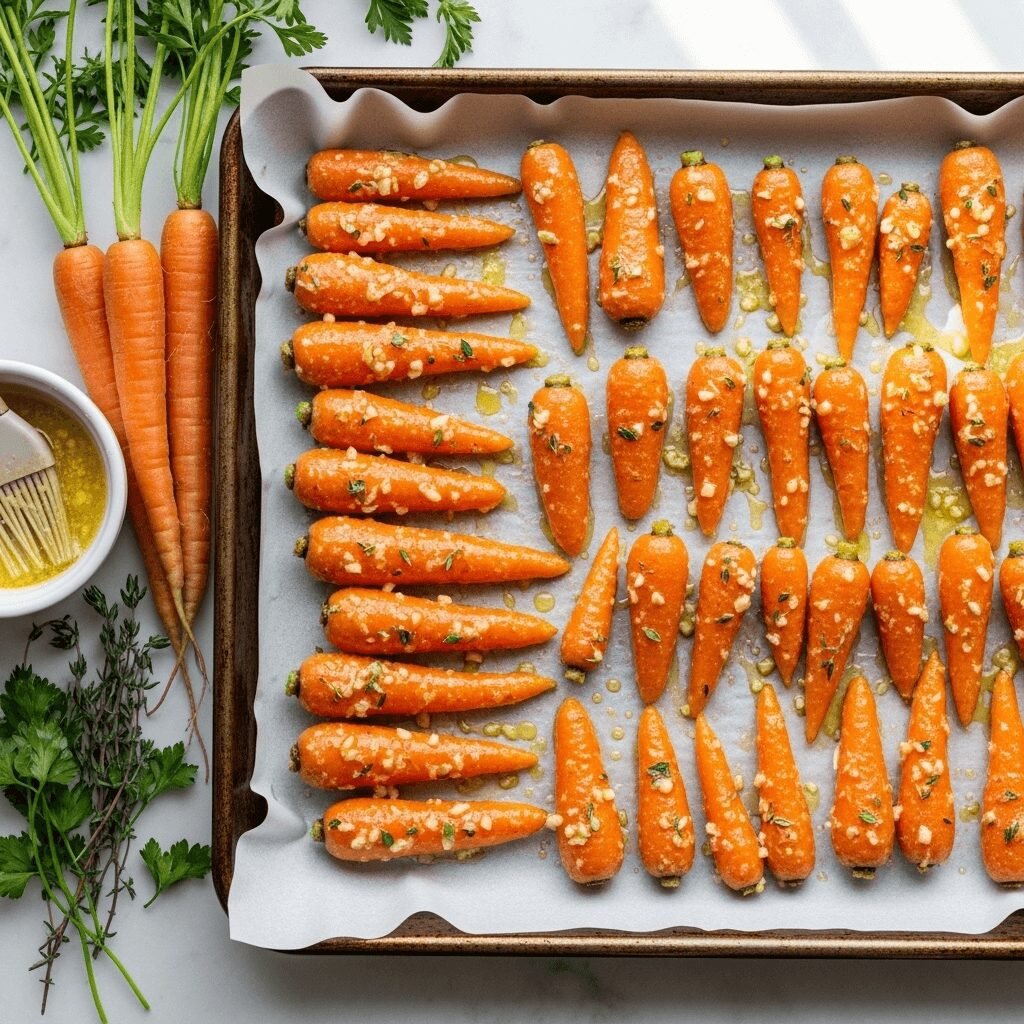

Get ready to transform humble carrots into the most crave-worthy side dish you’ll ever make! These Garlic Butter Roasted Carrots are about to change everything you thought you knew about this everyday vegetable. Imagine tender carrots with beautifully caramelized edges, coated in rich, garlicky butter and roasted until they’re sweet, golden, and absolutely irresistible. The natural sugars caramelize during roasting, creating a depth of flavor that’s simply impossible to achieve through boiling or steaming.
This recipe has become a Pinterest sensation and weeknight staple because it takes ordinary carrots and elevates them to restaurant-quality status with minimal effort. The combination of high-heat roasting and garlic butter creates magic—the carrots develop crispy, caramelized exteriors while staying tender and sweet inside. Fresh garlic infuses the butter with aromatic flavor, while optional herbs like thyme or parsley add freshness and visual appeal. The result? Carrots so delicious that even veggie skeptics ask for seconds!
What makes these garlic butter roasted carrots so special is their incredible versatility and crowd-pleasing appeal. They’re elegant enough for holiday dinners—think Thanksgiving, Christmas, or Easter—yet simple enough for Tuesday night meals. They pair beautifully with virtually any main course, from roasted chicken and grilled steak to baked salmon and pork chops. Plus, they’re naturally gluten-free, vegetarian, and can easily be made vegan, fitting seamlessly into almost any dietary preference.
Whether you’re looking for a foolproof side dish that always impresses, trying to get kids to eat more vegetables, or simply want to add color and nutrition to your dinner plate, these garlic butter roasted carrots are your answer. They’re proof that simple ingredients, when prepared properly, can create something truly extraordinary!
History / Background
Carrots have one of the most fascinating histories of any vegetable, with a journey spanning thousands of years and multiple continents. Originally cultivated in Persia (modern-day Iran and Afghanistan) around 5,000 years ago, early carrots were purple, yellow, or white—not the familiar orange we know today. These ancient carrots were primarily grown for their aromatic leaves and seeds rather than the roots, which were thin, tough, and bitter.
The orange carrot we recognize today didn’t appear until the 16th or 17th century in the Netherlands. Dutch growers selectively bred carrots to develop the sweet, crunchy, vibrant orange variety, possibly as a tribute to William of Orange who led the Dutch revolt against Spanish rule. This breeding created carrots with higher beta-carotene content (the orange pigment that converts to vitamin A), making them not only more visually appealing but also more nutritious. These Dutch carrots became the ancestor of virtually all modern orange carrot varieties.
Carrots spread throughout Europe and eventually to colonial America, where they became a staple crop due to their ease of cultivation, long storage life, and versatility. Throughout history, carrots have been prepared in countless ways—raw, boiled, steamed, stewed, pickled, and eventually roasted. However, roasting vegetables as a cooking method didn’t become popular in home kitchens until relatively recently.
For much of the 20th century, American home cooking relied heavily on boiling or steaming vegetables, often resulting in musty, overcooked, flavorless results that gave vegetables a bad reputation. The roasting revolution began in the 1990s and 2000s, driven by restaurant chefs who popularized high-heat roasting techniques that caramelized natural sugars and created complex, deep flavors. Food Network chefs like Ina Garten and Barefoot Contessa made roasted vegetables accessible to home cooks, demonstrating that simple preparation could yield spectacular results.
The addition of garlic butter to roasted vegetables represents the perfect marriage of French culinary technique (“beurre à l’ail” or garlic butter) with American comfort food sensibilities. French cuisine has long celebrated compound butters—butter mixed with herbs, spices, or aromatics—as a simple way to add luxurious flavor to vegetables, meats, and seafood. When home cooks discovered that tossing roasted vegetables with garlic butter created restaurant-quality results, it became an instant classic.
The rise of food blogs, Pinterest, and Instagram in the 2010s accelerated the popularity of beautifully roasted vegetables, including these garlic butter carrots. Home cooks discovered that roasted vegetables were not only delicious but also photogenic—those caramelized edges, vibrant colors, and glistening butter coating made them perfect for social media sharing. The simplicity of the recipe combined with consistently impressive results made garlic butter roasted carrots a viral sensation that continues to be one of the most pinned and searched vegetable recipes online.
Today, garlic butter roasted carrots represent the best of modern home cooking: taking a humble, affordable ingredient, applying proper technique (high-heat roasting), and finishing with simple but luxurious touches (garlic butter and fresh herbs) to create something that tastes like it came from an upscale restaurant. It’s comfort food that’s also healthy, proof that vegetables can be the star of the plate rather than an afterthought.
Why You’ll Love This Recipe
These garlic butter roasted carrots are about to become your new favorite vegetable side dish, and here’s exactly why they deserve a permanent spot in your dinner rotation. First and foremost, they’re absolutely delicious—the kind of vegetables that convert carrot skeptics into enthusiastic fans. The caramelization creates natural sweetness that’s balanced perfectly by savory garlic butter, making every bite addictively good.
Here’s why this recipe will become your go-to carrot preparation:
- Incredibly Easy: Requires just 5 ingredients and minimal prep—even beginner cooks can nail this recipe on the first try
- Hands-Off Cooking: Once carrots are in the oven, you’re free to prepare the rest of your meal with no stirring or monitoring required
- Perfectly Caramelized: High-heat roasting creates those coveted golden-brown edges and concentrated sweetness you can’t achieve any other way
- Restaurant-Quality: Tastes like something from an upscale restaurant but uses simple, everyday ingredients
- Budget-Friendly: Carrots are one of the most affordable vegetables year-round, making this an economical side dish
- Naturally Sweet: Roasting brings out carrots’ natural sugars, eliminating any bitter or bland flavors
- Versatile Side Dish: Pairs beautifully with any main course—chicken, beef, pork, fish, or vegetarian mains
- Holiday-Worthy: Elegant enough for Thanksgiving, Christmas, Easter, or any special occasion
- Kid-Approved: The sweet, buttery flavor makes vegetables appealing even to picky eaters
- Healthy & Nutritious: Packed with vitamin A, fiber, and antioxidants—guilt-free indulgence
- Diet-Friendly: Naturally gluten-free, vegetarian, and easily made vegan or dairy-free
- Meal Prep Champion: Reheats beautifully, making it perfect for weekly meal prep
- Beautiful Presentation: The vibrant orange color and caramelized edges make for gorgeous plating
The texture is absolutely perfect—tender enough to bite through easily but with a slight firmness that provides satisfying bite. Those caramelized edges add a subtle crispness that contrasts beautifully with the tender interior. And the garlic butter? It takes carrots from simple to spectacular, adding richness and aromatic depth that makes every bite irresistible!
Ingredient Notes
Let’s break down what makes these garlic butter roasted carrots so spectacularly delicious and why each ingredient matters:
Carrots: Fresh, whole carrots are ideal—they have better flavor and texture than baby carrots or pre-cut varieties. Choose medium-sized carrots (about ¾ inch diameter) for even cooking. Look for firm carrots with bright orange color and smooth skin. Substitution: Baby carrots work in a pinch (adjust cooking time to 20-25 minutes), rainbow carrots add beautiful color, or try parsnips for similar preparation.
Butter: Unsalted butter is essential for controlling saltiness and adds rich, creamy flavor that complements the sweet carrots. Real butter (not margarine) provides the best taste and helps achieve caramelization. Substitution: Olive oil for dairy-free/vegan (use 3 tablespoons), ghee for lactose-free, or vegan butter for plant-based diets.
Garlic: Fresh minced garlic is absolutely essential for that aromatic, savory flavor that defines this dish. The garlic mellows during roasting, becoming sweet and nutty. Substitution: Garlic powder in an emergency (1 teaspoon per 4 cloves fresh), but fresh garlic is vastly superior and worth the minimal extra effort.
Olive Oil: Used initially for roasting—helps prevent sticking and promotes even browning before the butter is added. Substitution: Avocado oil, vegetable oil, or any neutral cooking oil with high smoke point.
Fresh Herbs: Thyme and parsley are traditional and add freshness, color, and aromatic complexity. Substitution: Rosemary (use less—it’s stronger), dill (classic with carrots), cilantro for different flavor profile, or Italian seasoning blend.
Salt and Black Pepper: Essential for bringing out carrots’ natural sweetness and balancing flavors. Use quality sea salt or kosher salt for best results. Substitution: Any salt works; white pepper for milder flavor.
Optional Add-Ins: Honey or maple syrup (drizzle after roasting for extra sweetness), balsamic vinegar (adds tangy depth), lemon zest (brightens flavors), or Parmesan cheese (sprinkle before serving for savory richness).
Equipment Needed
You’ll need minimal equipment for this simple roasted vegetable recipe:
- Large Rimmed Baking Sheet (half-sheet pan, 18×13 inches): Essential for spreading carrots in a single layer. Rimmed edges prevent rolling and contain any drippings.
- Vegetable Peeler: For removing carrot skins (though you can skip this step if using organic carrots—just scrub well)
- Sharp Knife and Cutting Board: For trimming ends and cutting carrots into uniform pieces
- Large Mixing Bowl: For tossing carrots with oil and seasonings
- Small Saucepan or Microwave-Safe Bowl: For melting butter with garlic
- Measuring Spoons: For accurate butter, oil, and seasoning quantities
- Spatula or Tongs: For tossing carrots halfway through roasting
- Parchment Paper or Aluminum Foil (optional): Makes cleanup easier, though not required
That’s it! This is one of the simplest recipes in terms of equipment needs. If you have a baking sheet and a knife, you’re ready to make restaurant-quality roasted carrots!

Garlic Butter Roasted Carrots Recipe
- Total Time: 40 minutes
- Yield: 4-6 servings 1x
- Diet: Gluten Free
Description
Tender, sweet carrots roasted to caramelized perfection and tossed with rich garlic butter and fresh herbs. This simple yet elegant side dish transforms everyday carrots into something truly special with minimal effort and maximum flavor. Perfect for weeknight dinners or holiday celebrations!
Ingredients
- 2 lbs carrots (about 8-10 medium carrots), peeled
- 2 tablespoons olive oil
- ½ teaspoon salt
- ¼ teaspoon black pepper
- 3 tablespoons unsalted butter
- 4 cloves garlic, minced (about 1 tablespoon)
- 1 tablespoon fresh thyme leaves (or 1 teaspoon dried)
- 2 tablespoons fresh parsley, chopped (for garnish)
- Optional: 1 tablespoon honey or maple syrup
- Optional: Lemon zest for serving
Instructions
- Preheat the Oven: Preheat your oven to 425°F (220°C). Position the oven rack in the center. This high temperature is crucial for achieving caramelization and tender-crisp texture.
- Prep the Carrots: Peel carrots and trim off both ends. Cut carrots into uniform pieces—either 2-3 inch long sticks (about ½ inch thick) or diagonal slices (½ inch thick). Uniform size ensures even cooking. If carrots are very thick, cut them in half lengthwise first, then into pieces.
- Season: Place cut carrots in a large mixing bowl. Drizzle with olive oil and sprinkle with salt and black pepper. Toss thoroughly with your hands or a spoon until every piece is evenly coated with oil and seasonings.
- Arrange on Baking Sheet: Spread seasoned carrots in a single layer on a large rimmed baking sheet. Make sure pieces aren’t touching or overlapping—they need space to caramelize rather than steam. If they’re crowded, use two baking sheets.
- Roast: Place the baking sheet in the preheated oven and roast for 25-30 minutes, flipping carrots with a spatula or tongs halfway through (around the 12-15 minute mark). Carrots are done when they’re tender when pierced with a fork and have golden-brown, caramelized edges. Larger pieces may need a few extra minutes.
- Make Garlic Butter: While carrots roast, melt butter in a small saucepan over medium-low heat. Add minced garlic and thyme, cooking for 1-2 minutes until fragrant but not browned, stirring constantly. Remove from heat. If desired, stir in honey or maple syrup.
- Toss with Garlic Butter: Remove roasted carrots from the oven and immediately transfer to a serving dish or toss directly on the baking sheet. Pour the garlic butter mixture over the hot carrots and toss gently to coat every piece. The hot carrots will absorb the butter beautifully.
- Garnish and Serve: Sprinkle with freshly chopped parsley and optional lemon zest. Taste and adjust seasoning with additional salt and pepper if needed. Serve immediately while hot and enjoy!
Notes
- Uniform Size Matters: Cut carrots into similar-sized pieces so they cook evenly. Pieces that are too large will be undercooked while small pieces burn.
- Don’t Skip the Flip: Flipping carrots halfway through ensures even browning and caramelization on multiple sides.
- Fresh vs. Baby Carrots: If using baby carrots, leave them whole and reduce cooking time to 20-25 minutes. They’re convenient but less flavorful than whole carrots.
- Garlic Burning: Watch garlic closely when making the butter—burnt garlic tastes bitter. Cook just until fragrant (1-2 minutes max).
- Honey Variation: Adding honey creates a sweet glaze that’s especially kid-friendly. Drizzle after roasting rather than before to prevent burning.
- Make it Vegan: Simply replace butter with olive oil or vegan butter for a plant-based version.
- Prep Time: 10 minutes
- Cook Time: 25-30 minutes
- Category: Side Dish, Vegetable
- Method: Roasting,Baking
- Cuisine: American, French-inspired
Nutrition
- Serving Size: About ¾ cup (based on 6 servings)
- Calories: 125
- Sugar: 6g
- Sodium: 285mg
- Fat: 8g
- Saturated Fat: 4g
- Unsaturated Fat: 4g
- Trans Fat: 0g
- Carbohydrates: 13g
- Fiber: 4g
- Protein: 1g
- Cholesterol: 15mg
Garlic Butter Roasted Carrots – The Easiest, Most Flavorful Side Dish in Just 25 Minutes!
Introduction of Recipe
Get ready to completely transform the humble carrot into something absolutely spectacular! These Garlic Butter Roasted Carrots are about to become your go-to side dish for literally everything – and I mean everything. Imagine perfectly tender carrots with crispy, caramelized edges, coated in rich, golden garlic butter that makes every bite utterly irresistible. This isn’t just another vegetable side dish – it’s the kind of recipe that has people asking for seconds (and thirds!) and sneaking extra servings when they think no one’s looking.
What makes these roasted carrots so incredibly special is their perfect balance of simplicity and flavor. With just a handful of basic ingredients – fresh carrots, butter, garlic, and a few seasonings – you can create a side dish that tastes like it came from an upscale restaurant. The high-heat roasting brings out the carrots’ natural sweetness, caramelizing the edges while keeping the centers perfectly tender. The garlic butter? Pure magic. It seeps into every crevice, adding richness and that irresistible aromatic quality that makes everyone gather around the table.
These Garlic Butter Roasted Carrots are incredibly versatile and perfect for so many occasions! Serve them alongside your Sunday roast chicken or holiday turkey, bring them to Thanksgiving or Christmas dinner where they’ll steal the show, make them for busy weeknight dinners when you need something quick but impressive, add them to your meal prep rotation for healthy lunches all week, or prepare them for Easter dinner or special celebrations. They’re elegant enough for company yet simple enough for Tuesday night. At just 25 minutes from start to finish, they’re faster than most takeout and infinitely more delicious!
History / Background
Carrots have been cultivated for thousands of years, with archaeological evidence suggesting they were first domesticated in present-day Afghanistan around the 10th century. Interestingly, these early carrots were purple or yellow, not the vibrant orange we know today! The familiar orange carrot was actually developed by Dutch growers in the 16th and 17th centuries, possibly as a tribute to William of Orange during the Dutch struggle for independence.
For centuries, carrots were primarily used in savory dishes across Europe and Asia. They appeared in stews, soups, and simple boiled preparations. The technique of roasting vegetables, however, has much older roots – humans have been roasting foods over fire since discovering how to control flames hundreds of thousands of years ago.
The combination of roasted carrots with butter and garlic represents a beautiful marriage of French cooking techniques and universal flavor preferences. The French have long been masters of vegetable preparation, understanding that simple techniques like roasting, combined with quality butter and aromatics, can elevate humble ingredients into something extraordinary. “Carottes glacées” (glazed carrots) have been a classic French side dish for generations, typically finished with butter and sometimes honey.
The modern American version of roasted carrots gained tremendous popularity in the late 20th and early 21st centuries as home cooks rediscovered the joys of simple, wholesome cooking. The roasting method became especially popular as people moved away from over-boiled vegetables and embraced techniques that preserved flavor and texture while developing natural sweetness through caramelization.
Today’s Garlic Butter Roasted Carrots reflect our contemporary desire for recipes that are simultaneously simple, healthy, and incredibly flavorful. They honor traditional European techniques while embracing the American love for bold garlic flavor and the convenience of sheet pan cooking. This recipe represents the perfect evolution of vegetable cookery – respecting the ingredient’s natural qualities while enhancing them with complementary flavors in the most straightforward way possible.
Why You’ll Love This Recipe
These Garlic Butter Roasted Carrots are about to become your absolute favorite vegetable side dish, and once you taste them, you’ll understand why they’ve become a staple in kitchens across America!
The beauty of this recipe lies in its stunning simplicity – you get maximum flavor with minimal effort and just a handful of everyday ingredients. The carrots emerge from the oven with perfectly caramelized edges that are slightly crispy, while the centers remain tender and sweet. The garlic butter coating is aromatic, rich, and completely crave-worthy, turning an ordinary vegetable into something you’ll actually look forward to eating. Even confirmed veggie skeptics and picky kids have been known to devour these carrots!
Here’s why this recipe absolutely deserves a permanent spot in your cooking rotation:
- Ridiculously easy – Even beginning cooks can master this recipe on the first try
- Lightning fast – Just 25 minutes from start to finish, including prep time
- Minimal cleanup – Everything happens on one sheet pan for easy washing
- Budget-friendly – Carrots are incredibly affordable year-round, and you need just a few other ingredients
- Naturally healthy – Packed with vitamins, fiber, and beta-carotene, plus naturally gluten-free and vegetarian
- Universally loved – Even picky eaters and kids love the sweet, caramelized flavor
- Impressive presentation – Looks elegant and restaurant-quality with virtually no effort
- Versatile pairing – Complements literally any protein or main dish perfectly
- Meal prep friendly – Makes great leftovers that taste delicious reheated or even cold
- Customizable – Easy to adapt with different seasonings and flavor profiles
- Holiday approved – Perfect for Thanksgiving, Christmas, Easter, or any special occasion
- Foolproof technique – Hard to mess up, consistent results every single time
- Kid-approved veggie – Finally, a vegetable dish children will actually eat happily!
- Crowd-pleaser – Scales up easily to feed large gatherings without extra work
Ingredient Notes
Carrots: The star of the show! You’ll need about 2 pounds of fresh carrots. You can use regular whole carrots that you peel and cut yourself (more economical), pre-peeled “baby” carrots from bags (ultimate convenience), or those gorgeous rainbow carrots in various colors (most visually stunning). Look for firm carrots without cracks or soft spots. The sweetness intensifies dramatically during roasting, so even plain carrots become naturally sweet and delicious. Organic carrots often have slightly better flavor, but regular carrots work beautifully too.
Butter: Real, unsalted butter (about 4 tablespoons) is essential for authentic flavor and that gorgeous golden coating. Butter provides richness and helps the carrots caramelize beautifully. It also carries the garlic flavor perfectly, distributing it evenly across every carrot. Use unsalted so you can control the salt level yourself. While olive oil can substitute in a pinch, butter creates that restaurant-quality richness and helps achieve better browning. Don’t use margarine – it contains water and won’t give the same results.
Garlic: Fresh garlic cloves (4-5, minced) add that signature aromatic flavor everyone loves. Fresh garlic is absolutely essential here – garlic powder simply cannot replicate the complex, sweet, slightly sharp flavor of fresh cloves. The garlic mellows and sweetens as it roasts, becoming fragrant and delicious rather than harsh. Minced garlic from a jar works in a pinch, though fresh is always better.
Olive Oil: A tablespoon or two of good olive oil helps the carrots roast evenly and prevents sticking. It also withstands high heat better than butter alone (butter can burn at very high temperatures). The combination of butter and olive oil gives you the best of both worlds – incredible flavor plus proper roasting capability.
Fresh Herbs: Fresh parsley, thyme, or rosemary add beautiful color and aromatic complexity. Parsley is classic and brightens the dish, thyme adds earthy notes, and rosemary brings pine-like aromatics. Use what you have or prefer! Dried herbs can substitute (use about 1 teaspoon dried for every tablespoon fresh), but fresh herbs provide superior flavor and that restaurant-quality appearance.
Salt and Pepper: Essential for bringing out all the flavors! Kosher salt or sea salt works best. Black pepper adds gentle warmth and complexity. Don’t skip the seasoning – it’s what makes the difference between bland vegetables and spectacular ones.
Optional Add-ins: Honey or maple syrup (1-2 tablespoons) adds extra sweetness and helps with caramelization. Fresh lemon juice or zest brightens everything beautifully. Red pepper flakes add gentle heat. Parmesan cheese creates an irresistible savory crust. The basic recipe is perfect, but these additions let you customize to your taste!
Equipment Needed
Creating these perfect Garlic Butter Roasted Carrots requires minimal equipment – most of which you probably already have in your kitchen:
- Large rimmed baking sheet (half-sheet pan, approximately 13×18 inches) – essential for proper roasting without crowding
- Parchment paper or aluminum foil (optional but recommended) – makes cleanup incredibly easy
- Vegetable peeler (if using whole carrots that need peeling)
- Sharp chef’s knife (for cutting carrots into uniform pieces)
- Cutting board (large enough to work comfortably)
- Small microwave-safe bowl or small saucepan (for melting butter with garlic)
- Measuring spoons and cups (for accurate ingredient measurements)
- Large mixing bowl (for tossing carrots with seasonings)
- Silicone spatula or wooden spoon (for tossing and stirring)
- Oven mitts (for safely handling hot pans)
- Serving platter (for beautiful presentation)
- Microplane or garlic press (optional, for mincing garlic finely)
📋 Recipe Card
Prep Time: 10 minutes
Cook Time: 25 minutes
Total Time: 35 minutes
Yield: 6 servings
Category: Side Dish
Method: Roasting
Cuisine: American
Diet: Gluten-Free, Vegetarian
Description: These Garlic Butter Roasted Carrots feature tender, caramelized carrots coated in rich garlic butter with fresh herbs. The easiest, most flavorful side dish that pairs perfectly with any meal!
Ingredients
- 2 lbs fresh carrots, peeled and cut into 2-3 inch pieces (or baby carrots)
- 4 tablespoons unsalted butter, melted
- 2 tablespoons olive oil
- 4-5 cloves garlic, minced
- 1 teaspoon kosher salt (or to taste)
- ½ teaspoon black pepper
- 1 teaspoon fresh thyme leaves (or ½ teaspoon dried)
- 2 tablespoons fresh parsley, chopped (for garnish)
- Optional: 1 tablespoon honey or maple syrup
- Optional: Fresh lemon juice (1 tablespoon) and lemon zest
Instructions
- Preheat your oven: Set oven to 425°F (220°C). This high temperature is crucial for achieving caramelized, slightly crispy edges while keeping the centers tender. Line a large rimmed baking sheet with parchment paper or aluminum foil for easy cleanup (optional but highly recommended).
- Prepare the carrots: If using whole carrots, peel them thoroughly and cut into uniform 2-3 inch pieces, about ½ inch thick. Try to keep pieces relatively similar in size so they cook evenly – thicker pieces take longer while thin pieces may burn. If using baby carrots, you can use them whole if they’re small, or cut larger ones in half lengthwise for faster cooking and more caramelized surface area.
- Make the garlic butter: In a small microwave-safe bowl, melt the butter (about 30-40 seconds). Add minced garlic, olive oil, thyme, salt, and pepper. Stir well to combine. If you prefer, you can gently warm this mixture in a small saucepan over low heat for 1-2 minutes to mellow the raw garlic flavor slightly, but this is optional.
- Coat the carrots: Place prepared carrots in a large mixing bowl. Pour the garlic butter mixture over the carrots. If using honey or maple syrup, add it now. Toss everything together thoroughly using your hands or a spatula, making sure every single carrot piece is well-coated with the buttery garlic mixture. This even coating is key to uniform caramelization and flavor.
- Arrange on baking sheet: Spread the seasoned carrots in a single layer on your prepared baking sheet. This is important – don’t overcrowd! Carrots should have space between them. If they’re piled on top of each other, they’ll steam instead of roast and won’t develop those delicious caramelized edges. Use two pans if necessary.
- Roast the carrots: Place the baking sheet in the preheated oven. Roast for 20-25 minutes, stirring or flipping the carrots halfway through cooking (around the 12-minute mark). This ensures even browning on all sides. The carrots are done when they’re tender when pierced with a fork and have beautiful golden-brown caramelized edges. Thicker pieces may need an extra 5 minutes.
- Check for doneness: Pierce the thickest carrot piece with a fork – it should slide in easily with just slight resistance. The carrots should be tender but not mushy, with visible caramelization on the edges. If they’re still too firm, continue roasting in 3-5 minute increments, checking frequently.
- Finish and serve: Remove from oven and immediately transfer carrots to a serving platter or bowl. If desired, squeeze fresh lemon juice over the hot carrots and add lemon zest for brightness. Garnish generously with fresh chopped parsley. The herbs add beautiful color and fresh flavor. Serve immediately while hot for best results, though these are honestly delicious at room temperature too!
Notes
- Carrot size matters: Cut carrots into uniform pieces for even cooking. Inconsistent sizes mean some pieces burn while others stay raw.
- Don’t skip the flip: Turning carrots halfway through ensures even caramelization on all sides and prevents burning.
- High heat is essential: 425°F is ideal for caramelization. Lower temperatures will cook the carrots but won’t develop that delicious browning.
- Single layer is crucial: Overcrowded pans create steam instead of roasting, resulting in soggy carrots without caramelization.
- Adjust cooking time: Baby carrots or thin pieces cook faster (15-20 minutes), while thick-cut whole carrots need the full 25-30 minutes.
- Garlic burning: If your garlic starts burning before carrots are done, cover pan loosely with foil for remaining cooking time.
- Make it vegan: Substitute butter with additional olive oil or vegan butter for a plant-based version.
Nutrition Facts Table
Serving Size: About ⅔ cup (1/6 of recipe)
Calories: 135
Sugar: 6g
Sodium: 450mg
Fat: 9g
Saturated Fat: 5g
Unsaturated Fat: 4g
Trans Fat: 0g
Carbohydrates: 13g
Fiber: 4g
Protein: 1g
Cholesterol: 20mg
Nutrition information is approximate and calculated using standard ingredient measurements. Values may vary based on specific brands and portion sizes used.
Tips & Variations
The beauty of these Garlic Butter Roasted Carrots is how wonderfully adaptable they are! Here are fantastic ways to customize this recipe to your taste:
Honey Glazed Version: Add 2 tablespoons honey or maple syrup to the garlic butter mixture for extra sweetness and gorgeous caramelization. The natural sugars create an almost candy-like glaze that’s absolutely irresistible. This version is especially popular with kids!
Spicy Kick: Add ½ teaspoon red pepper flakes or a pinch of cayenne to the garlic butter for gentle heat that complements the sweetness beautifully. Drizzle with sriracha or hot honey after roasting for even more kick.
Parmesan Crusted: During the last 5 minutes of roasting, sprinkle ½ cup freshly grated Parmesan cheese over the carrots. Return to oven until cheese melts and becomes golden. The savory, nutty cheese creates an incredible crust!
Balsamic Glaze: Drizzle with balsamic glaze or reduction after roasting for sweet-tart complexity. The acidity balances the butter beautifully and adds sophisticated flavor.
Herb Garden: Experiment with different herb combinations – rosemary and thyme together are divine, dill adds brightness, sage brings earthy notes, or try Italian seasoning for easy complexity.
Citrus Burst: Add orange zest and a squeeze of orange juice along with or instead of lemon. The orange complements carrots’ natural sweetness perfectly. You can also try lime for a more unexpected twist.
Middle Eastern Inspired: Add ½ teaspoon cumin, ¼ teaspoon coriander, and a pinch of cinnamon to the garlic butter. Finish with toasted sesame seeds and a drizzle of tahini. Absolutely delicious!
Asian Fusion: Replace half the butter with sesame oil, add minced fresh ginger with the garlic, and finish with sesame seeds and sliced green onions. Drizzle with a tiny bit of soy sauce if desired.
Rainbow Carrots: Use colorful rainbow carrots (purple, yellow, white, and orange) for stunning visual appeal. They taste the same but look absolutely gorgeous on the table!
Root Vegetable Medley: Mix carrots with parsnips, sweet potatoes, or beets for a beautiful variety of flavors and colors. Adjust cooking time as needed since different vegetables cook at different rates.
Pro Chef Tips
Want to elevate your Garlic Butter Roasted Carrots from homemade to restaurant-quality perfection? Here are professional secrets from the pros:
Uniform sizing is everything: This cannot be stressed enough! Cut your carrots as uniformly as possible so they cook at the same rate. A mix of thick and thin pieces means some burn while others stay raw. If you have varying thicknesses, cut thicker pieces smaller and leave thinner pieces larger to equalize cooking times.
Pat carrots dry: If your carrots are wet from washing, pat them thoroughly dry with paper towels before tossing with the butter mixture. Excess moisture creates steam in the oven, which prevents proper caramelization and gives you soggy rather than crispy-edged carrots.
Room temperature carrots roast better: If time allows, let refrigerated carrots sit at room temperature for 15-20 minutes before roasting. Cold vegetables take longer to cook and don’t caramelize as well. This small step makes a noticeable difference in browning.
Use clarified butter for higher heat: If you want to roast at even higher temperatures (450°F) without burning the butter, use clarified butter (ghee) instead of regular butter. It has a higher smoke point and creates even better caramelization without burning.
Add garlic after roasting: For more intense, fresh garlic flavor, toss the roasted carrots with fresh minced raw garlic and melted butter immediately after they come out of the oven. This preserves the garlic’s sharp, pungent notes rather than mellowing them through roasting.
The convection secret: If your oven has a convection setting, use it! Convection roasting circulates hot air around the carrots, creating more even browning and better caramelization in less time. Reduce oven temperature by 25°F if using convection.
Don’t skimp on the pan: A heavy, sturdy baking sheet conducts heat better than thin, flimsy ones. Restaurant kitchens use heavy-duty sheet pans for a reason – they brown food more evenly and consistently. It’s worth investing in at least one quality half-sheet pan.
The finishing butter trick: Reserve 1-2 tablespoons of butter separately. After roasting, toss the hot carrots with this fresh butter for an extra layer of richness and glossy shine. This “finishing butter” technique is used in professional kitchens and makes vegetables look restaurant-perfect.
Timing the herbs: Delicate herbs like parsley should always be added after roasting to preserve their bright color and fresh flavor. Heartier herbs like thyme and rosemary can withstand the heat and actually develop deeper flavor when roasted.
The secret ingredient: a pinch of sugar: Professional chefs sometimes add just a tiny pinch of sugar (½ teaspoon) to the garlic butter. It accelerates caramelization and helps develop that gorgeous golden-brown color even faster. Don’t overdo it – you want subtle enhancement, not sweetness.
Common Mistakes to Avoid
Even with such a simple recipe, there are a few common pitfalls that can prevent perfection. Here’s what to watch out for:
Overcrowding the pan: This is the absolute number one mistake! When carrots are piled on top of each other or touching too much, they steam instead of roast. Steamed carrots are soft and pale, not caramelized and delicious. Always leave space between pieces – use two pans if necessary. The difference is dramatic!
Cutting carrots too thick: Carrots cut thicker than about ¾ inch will take forever to cook and may not get tender all the way through before the edges burn. Aim for ½ to ¾ inch thickness maximum. If you like chunky pieces, partially steam them first, then roast to finish with caramelization.
Forgetting to flip halfway through: If you don’t turn the carrots midway through roasting, you’ll get beautiful golden-brown bottoms but pale, uncaramelized tops. Take the 30 seconds to flip them – it makes a huge difference in overall flavor and appearance.
Roasting at too low a temperature: Lower oven temperatures (350°F or below) will eventually cook the carrots, but they’ll never develop those delicious caramelized edges and concentrated sweetness. The high heat (425°F) is essential for proper caramelization through the Maillard reaction.
Adding garlic too early in high-heat recipes: If you’re roasting at very high temperatures (450°F+), the garlic can burn and become bitter. Either add garlic only for the last 10-15 minutes of cooking, or reduce oven temperature slightly. Burnt garlic ruins the whole dish with bitter, acrid flavor.
Not seasoning adequately: Vegetables need generous seasoning to taste their best! Don’t be shy with salt and pepper. Under-seasoned carrots taste bland and boring no matter how well they’re cooked. Remember, you can always add more at the table if needed.
Using old, rubbery carrots: Fresh, firm carrots make all the difference. Old, bendy carrots that have lost moisture won’t caramelize properly and have less sweetness. Check carrots at the store – they should snap cleanly when bent, not bend like rubber!
Storage & Meal Prep
These Garlic Butter Roasted Carrots are fantastic for meal prep and actually taste great as leftovers!
Refrigerator Storage: Allow roasted carrots to cool completely to room temperature (but don’t leave out more than 2 hours for food safety). Transfer to an airtight container or resealable plastic bag and refrigerate for up to 5 days. The garlic flavor actually intensifies slightly as they sit, making leftovers especially delicious!
Reheating Methods: These carrots reheat beautifully several ways. The best method is in a 350°F oven for 8-10 minutes until warmed through – this preserves their texture best. Alternatively, reheat in a skillet over medium heat with a tiny bit of butter for 5-7 minutes, stirring occasionally. Microwave works in a pinch (1-2 minutes on high), though the texture won’t be quite as nice. They’re also delicious served cold or at room temperature in salads or grain bowls!
Meal Prep Tips: Roasted carrots are perfect for weekly meal prep! Make a big batch on Sunday and use throughout the week as a side dish for different proteins. They pair beautifully with grilled chicken, baked salmon, steak, pork chops, or plant-based proteins. You can also chop them and add to salads, grain bowls, wraps, or pasta dishes.
Texture Changes: Reheated carrots may be slightly softer than fresh-roasted, but they still taste fantastic. The caramelized flavor and garlic butter coating remain delicious. If they seem a bit dry after refrigeration, add a tiny pat of butter when reheating.
Make It a Complete Meal: These carrots work wonderfully as part of meal prep containers. Pair them with a protein and a grain (like quinoa or rice) for balanced, ready-to-eat meals throughout the week.
Make-Ahead & Freezer Notes
Planning ahead? Here’s everything you need to know about preparing these carrots in advance:
Prep-Ahead Components: You can prep carrots up to 24 hours ahead. Peel and cut them, place in a container with water, and refrigerate. Drain and pat completely dry before roasting. You can also make the garlic butter mixture ahead and refrigerate in a covered container for up to 3 days. Let it come to room temperature before using (or gently warm to melt).
Partial Roasting Method: For entertaining, you can partially roast the carrots (about 15 minutes) several hours ahead. Leave them slightly underdone, let cool, then refrigerate. When ready to serve, finish roasting at 425°F for 8-10 minutes until heated through and caramelized. This gives you freshly-roasted taste without the last-minute time commitment.
Fully Make-Ahead: You can fully roast the carrots up to 3 days ahead and refrigerate. Reheat using one of the methods above when ready to serve. The flavor is still excellent, though the texture is slightly softer than fresh-roasted.
Freezing Cooked Carrots: Yes, you can freeze roasted carrots! Cool completely, spread in a single layer on a baking sheet and freeze until solid (about 2 hours), then transfer to freezer bags or airtight containers. They’ll keep for up to 3 months. The texture will be softer after freezing and thawing, so they work best chopped and added to soups, stews, or casseroles rather than served whole as a side dish.
Thawing and Reheating Frozen: Thaw frozen roasted carrots overnight in the refrigerator. Reheat in a 350°F oven for 12-15 minutes until heated through, or in a skillet with a bit of butter. You can also reheat directly from frozen – just add 5-7 minutes to reheating time.
Freezing Raw Carrots: Raw carrots can be frozen after blanching (boiling for 2-3 minutes, then plunging into ice water). However, for this roasted recipe, it’s better to roast first, then freeze if needed.
Best Make-Ahead Strategy: For the absolute best results when entertaining, prep and cut the carrots the day before, make the garlic butter mixture ahead, then roast fresh 25 minutes before serving. The hands-on time is so minimal that roasting fresh gives you the best texture and flavor.
Serving Suggestions
These versatile, delicious Garlic Butter Roasted Carrots pair beautifully with just about everything! Here are some fantastic serving ideas:
Classic Protein Pairings: These carrots are the perfect sidekick for roasted or grilled chicken (especially herb-roasted or lemon chicken), pan-seared or grilled steak (the butter echoes steakhouse sides beautifully), baked or grilled salmon (the sweetness complements fish perfectly), pork chops or pork tenderloin, lamb chops or roasted leg of lamb, or any holiday roast (turkey, ham, prime rib, or beef tenderloin).
Vegetarian Main Dishes: Serve alongside stuffed portobello mushrooms, vegetarian lasagna or pasta dishes, grain bowls with quinoa or farro, baked sweet potatoes or twice-baked potatoes, veggie burgers or plant-based proteins, or creamy risotto for an elegant meatless meal.
Holiday Table Favorites: These carrots are absolutely perfect for holiday gatherings! They’re traditional enough to feel appropriate yet special enough to impress. Serve them for Thanksgiving alongside turkey, stuffing, and mashed potatoes, Christmas dinner with prime rib or ham, Easter brunch or dinner with leg of lamb, or any special family celebration where you want a crowd-pleasing vegetable.
Completing the Plate: Build a beautiful, balanced plate by pairing these carrots with complementary sides. Serve them with creamy mashed potatoes or garlic mashed cauliflower, fluffy dinner rolls or crusty bread, fresh green salad with vinaigrette, roasted Brussels sprouts or green beans, wild rice pilaf or herbed quinoa, or mac and cheese for ultimate comfort food.
International Inspirations: These carrots cross cultural boundaries beautifully! Serve them with Middle Eastern dishes like shawarma, kebabs, or hummus plates, Asian-inspired meals with teriyaki chicken or ginger salmon, Mediterranean dinners with lamb, couscous, and tzatziki, or French-inspired bistro meals with steak frites and green beans.
Casual Family Dinners: Don’t save these just for special occasions! They’re easy enough for weeknight dinners with grilled chicken breasts and rice, simple pasta dishes with marinara sauce, homemade pizza night as a healthy side, taco Tuesday (yes, really – the sweetness is surprisingly good!), or any night you want vegetables your family will actually eat happily.
Repurposing Leftovers: Leftover roasted carrots are incredibly versatile! Chop and add to salads for sweetness and substance, blend into soups for body and flavor (carrot-ginger soup is amazing), add to grain bowls or Buddha bowls, toss with pasta, pesto, and Parmesan, use in frittatas or egg scrambles for breakfast, or puree into hummus or dips for unexpected sweetness.
FAQs Section
Q: Can I use baby carrots instead of whole carrots?
A: Absolutely yes! Pre-cut baby carrots are incredibly convenient and work perfectly in this recipe. You can use them whole if they’re small (about 2-3 inches), or cut larger ones in half lengthwise for faster cooking and more surface area for caramelization. Baby carrots may cook slightly faster (around 18-22 minutes) since they’re smaller, so start checking for doneness a bit earlier. The flavor is identical – it’s purely a convenience choice!
Q: Do I have to peel the carrots?
A: It depends on the carrots! If you’re using organic carrots or carrots with thin, tender skin, a good scrub under running water is often sufficient – no peeling needed. The skin adds extra fiber and nutrients. However, if your carrots have thick skin, are conventionally grown with wax coating, or you prefer the appearance of peeled carrots, then yes, peel them. Pre-bagged baby carrots are already peeled, so they’re ready to go. It’s honestly a personal preference!
Q: My carrots aren’t getting brown and caramelized. What am I doing wrong?
A: This usually comes down to three main issues: First, your oven temperature might not be hot enough – make sure it’s fully preheated to 425°F before the carrots go in. Second, overcrowding is the number one culprit – if carrots are touching too much or piled on top of each other, they’ll steam instead of roast. Spread them in a single layer with space between pieces. Third, excess moisture prevents browning – make sure you’ve patted the carrots completely dry before tossing with the butter mixture. Also, don’t forget to flip them halfway through for even caramelization on all sides!
Q: Can I make these ahead for Thanksgiving or a big dinner party?
A: Yes, with a smart strategy! The best approach is to fully roast the carrots 1-2 hours before serving, leave them at room temperature, then reheat in a 350°F oven for about 8-10 minutes right before serving. They’ll taste freshly made. Alternatively, you can par-roast them (cook 70% of the way) earlier in the day, refrigerate, then finish roasting when needed. Since these only take 25 minutes start to finish, I often just make them fresh during the final cooking window while other dishes are resting. The active prep time is so minimal that fresh is really doable even when entertaining!
Q: What’s the best way to reheat leftover roasted carrots?
A: The best reheating method is in a 350°F oven for 8-10 minutes until warmed through – this preserves their texture and caramelization beautifully. For speed, you can also reheat them in a skillet over medium heat with just a tiny bit of butter, stirring occasionally for 5-7 minutes. The microwave works but makes them slightly softer – if using it, heat for 1-2 minutes on high in a covered microwave-safe dish. Honestly, these are also delicious at room temperature or even cold, so you can add them to salads or grain bowls without reheating at all!
Q: Can I use olive oil instead of butter to make these dairy-free?
A: Absolutely! For a dairy-free or vegan version, replace the butter with additional olive oil (use about 4-5 tablespoons total olive oil). The carrots will still be delicious and caramelize beautifully, though they’ll miss that rich, buttery flavor – consider using a good quality extra virgin olive oil for maximum flavor. Vegan butter also works well if you want to maintain that buttery richness. Coconut oil is another option, though it adds a subtle coconut flavor that may or may not appeal to you. Avocado oil is flavorless and has a high smoke point, making it another excellent dairy-free choice!
Q: How do I know when the carrots are perfectly done?
A: Perfect roasted carrots should be tender when pierced with a fork – the fork should slide in easily with just slight resistance, not meeting hard, crunchy resistance. They should have visible golden-brown caramelization on the edges and sides, with some darker spots being totally fine and delicious! The carrots should be tender throughout but not mushy or falling apart. Start checking at the 20-minute mark by piercing the thickest piece with a fork. If they’re still quite firm, continue roasting in 3-5 minute increments. Remember that thicker pieces take longer – aim for ½ to ¾ inch thickness for the most predictable cooking time of 25 minutes.
Q: My garlic is burning before the carrots are done cooking. Help!
A: This is a common issue with high-heat roasting! Here are several solutions: First, you can add the garlic butter mixture only halfway through cooking rather than at the beginning – toss carrots with just oil and salt initially, roast for 12-15 minutes, then toss with the garlic butter and return to finish cooking. Second, mince the garlic less finely – larger pieces burn less easily than very fine mince. Third, if you notice burning starting, tent the pan loosely with aluminum foil for the remaining cooking time to protect the garlic while carrots finish. Fourth, reduce oven temperature slightly to 400°F and cook a few minutes longer. Finally, you can toss finished carrots with raw minced garlic and melted butter right after they come out of the oven for intense garlic flavor without any burning risk!
Conclusion
There you have it – everything you need to know to make absolutely perfect, incredibly delicious Garlic Butter Roasted Carrots that will have everyone at your table asking for the recipe! This humble side dish proves that simple ingredients prepared well can create something truly spectacular. The sweet caramelization, rich garlic butter, and tender-crisp texture combine to make vegetables that people genuinely get excited about eating.
The beauty of this recipe is its versatility and reliability. Whether you’re making a quick weeknight dinner for your family, preparing an impressive holiday feast for twenty guests, or meal prepping healthy sides for the week ahead, these carrots deliver every single time. They’re fancy enough for special occasions yet easy enough for busy Tuesday nights. They complement virtually any protein or main dish beautifully while adding gorgeous color and nutrition to your plate.
Best of all? You’ve just mastered a fundamental cooking technique that you can apply to countless other vegetables. The same high-heat roasting method works brilliantly with Brussels sprouts, broccoli, cauliflower, parsnips, sweet potatoes, and so much more. Once you’ve experienced how roasting transforms ordinary vegetables into caramelized, flavor-packed deliciousness, you’ll never go back to boring steamed veggies again!
Now it’s your turn to make kitchen magic! I’d absolutely love to hear how your Garlic Butter Roasted Carrots turn out! Did you try any of the variations? Did your picky eaters surprise you by asking for seconds? What protein did you serve them with? Drop a comment below sharing your experience – your feedback helps fellow home cooks and genuinely makes my day!
📌 Please PIN this recipe to your Pinterest boards so you can find it easily whenever you need a foolproof, crowd-pleasing side dish! Save it to your “Easy Side Dishes,” “Holiday Recipes,” “Healthy Dinners,” “Vegetable Recipes,” or “Quick Weeknight Meals” boards – wherever you keep your go-to favorites!
⭐ If this recipe becomes a staple in your kitchen, please leave a 5-star rating! Your ratings help other home cooks discover delicious, reliable recipes and support this blog tremendously. It takes just a second and means the world to me!
Share your beautiful creations! Tag me on Instagram or Pinterest with photos of your gorgeous roasted carrots – I absolutely love seeing your kitchen successes and sharing them with our amazing cooking community! There’s nothing better than seeing these recipes come to life in your homes.
Happy roasting, friends! Here’s to vegetables that actually taste amazing, side dishes that steal the show, and the simple joy of making something delicious with your own two hands. May your carrots always be perfectly caramelized and your garlic butter always be generous!