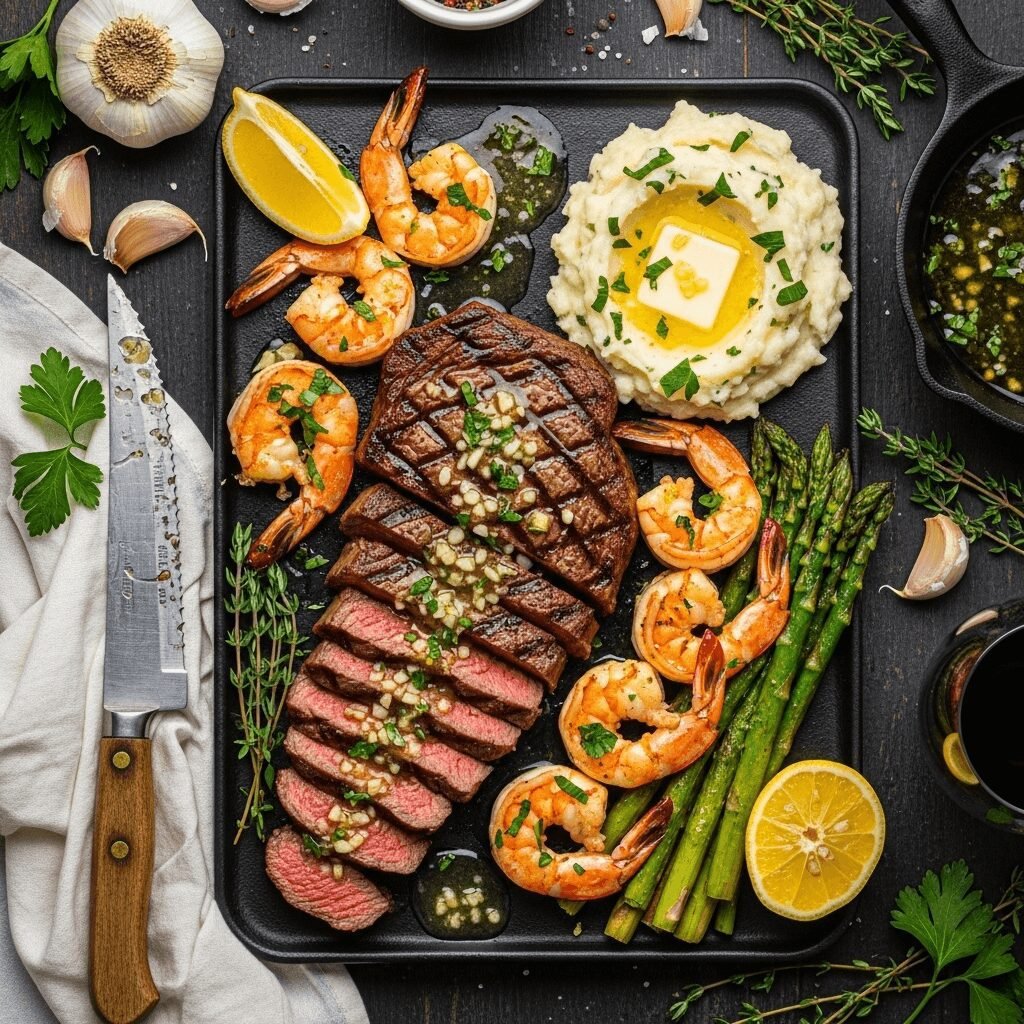

Get ready for the most indulgent, restaurant-quality dinner you can make at home in just 30 minutes! This Garlic Butter Steak and Shrimp Recipe is the ultimate surf and turf combination that brings together perfectly seared, juicy steak and succulent shrimp, all bathed in a rich, aromatic garlic butter sauce that’s absolutely heavenly. Imagine tender bites of ribeye or sirloin paired with sweet, plump shrimp, everything coated in a luscious butter sauce infused with fresh garlic, herbs, and a hint of lemon.
This recipe has become a beloved favorite for special occasions, date nights, anniversaries, and any time you want to treat yourself or your loved ones to something truly spectacular. It’s the kind of meal that feels like celebrating without requiring hours in the kitchen or advanced culinary skills. The combination of premium proteins with that incredible garlic butter creates a luxurious experience that rivals anything you’d order at a high-end steakhouse—but at a fraction of the cost and made exactly to your taste.
What makes this dish so special is the perfect marriage of flavors and textures. The steak provides rich, beefy satisfaction with a beautiful caramelized crust, while the shrimp adds sweet, delicate seafood flavor that contrasts beautifully. The garlic butter ties everything together, adding aromatic depth and richness that makes every bite absolutely irresistible. A touch of fresh lemon brightens the dish, cutting through the richness and adding that restaurant-quality finish.
Whether you’re planning a romantic dinner at home, celebrating a milestone, hosting a dinner party, or simply treating yourself to something special on a Friday night, this garlic butter steak and shrimp delivers impressive results with minimal effort. It’s fancy enough for special occasions yet straightforward enough for any home cook to master. Plus, everything cooks in one pan, making cleanup surprisingly easy for such an elegant meal!
History / Background
The concept of “surf and turf” – combining seafood and red meat on the same plate – has fascinating roots in American dining culture. While the exact origin is debated, most culinary historians trace the popularity of surf and turf combinations to American steakhouses and upscale restaurants in the 1960s, though the practice of pairing seafood with meat dates back much further in various cultures.
The term “surf and turf” itself is distinctly American, with “surf” representing the ocean (seafood) and “turf” representing the land (beef). This combination became a symbol of luxury and abundance during the post-World War II economic boom, when Americans had more disposable income and restaurants began offering increasingly elaborate and indulgent dining experiences. Steakhouses, particularly those along both coasts where fresh seafood was readily available, began featuring these combinations as premium menu items.
The classic pairing typically featured a high-quality steak – often filet mignon or New York strip – alongside lobster tail, the ultimate luxury seafood. However, as the concept gained popularity, variations emerged using different proteins. Shrimp became a popular and more affordable alternative to lobster, making surf and turf accessible to home cooks and mid-range restaurants while still delivering that special-occasion feeling.
The garlic butter preparation has its own rich heritage, drawing from French culinary traditions. French cuisine has long celebrated “beurre à l’ail” (garlic butter) as a classic sauce for both meat and seafood. French steakhouses made “entrecôte au beurre d’ail” (steak with garlic butter) famous, while “crevettes à l’ail” (garlic shrimp) became a bistro staple. American cooks adapted these techniques, creating the fusion we know today.
The tradition of cooking steak and shrimp in garlic butter specifically gained momentum in the 1970s and 1980s as home cooks sought to recreate restaurant experiences at home. Food magazines and cookbooks began featuring simplified versions of surf and turf that didn’t require separate preparations for each protein. The one-pan method we use today emerged from this desire for restaurant-quality results with home-cook practicality.
In recent years, the rise of food blogging and social media, particularly Pinterest and Instagram, has caused a resurgence in surf and turf recipes. Home cooks discovered that this impressive-looking dish is actually quite simple to execute, requiring only good ingredients, proper technique, and about 30 minutes. The visual appeal – beautiful seared steak alongside pink shrimp, all glistening with golden garlic butter – makes it incredibly popular on social media platforms.
Today, garlic butter steak and shrimp represents the best of American home cooking: taking inspiration from various culinary traditions, adapting them for accessibility and convenience, and creating something that feels special and celebratory while remaining achievable for everyday cooks. It’s comfort food elevated to luxury status, proving that with quality ingredients and simple techniques, anyone can create restaurant-worthy meals at home.
Why You’ll Love This Recipe
This garlic butter steak and shrimp is about to become your go-to recipe for every special occasion, and here’s exactly why it deserves a permanent spot in your recipe collection. First and foremost, it tastes absolutely incredible—the combination of perfectly seared steak, sweet shrimp, and that aromatic garlic butter creates flavor magic that’s simply unforgettable. This is the kind of meal that makes people feel celebrated and special.
Here’s why this recipe will become your favorite special-occasion dinner:
- Restaurant-Quality at Home: Tastes like a $50+ steakhouse meal but costs a fraction and lets you enjoy it in the comfort of your own home
- Impressive Yet Easy: Looks incredibly sophisticated and impressive, but the technique is straightforward enough for home cooks of any skill level
- Ready in 30 Minutes: From start to finish, this entire luxurious meal comes together in just half an hour—perfect when you want something special without spending all evening cooking
- Perfect for Date Night: The ultimate romantic dinner at home that shows effort and thoughtfulness without causing kitchen stress
- One-Pan Wonder: Everything cooks in a single skillet, meaning minimal cleanup despite the gourmet results
- Customizable Proteins: Works beautifully with different steak cuts and adapts easily to your preferences and budget
- Rich, Indulgent Flavors: The garlic butter sauce is absolutely divine—rich, aromatic, and adds luxury to both proteins
- Special Occasion Worthy: Perfect for anniversaries, Valentine’s Day, birthdays, celebrations, or any time you want to make a meal feel extra special
- Crowd-Pleaser: Everyone loves this combination—it appeals to meat lovers and seafood fans simultaneously
- Diet-Friendly: Naturally gluten-free, low-carb, keto-friendly, and packed with protein—indulgent yet fits many eating styles
- Impressive Presentation: The visual appeal is stunning—makes for gorgeous photos and beautiful plating
- Budget-Conscious Luxury: While it feels extravagant, choosing the right cuts and using shrimp instead of lobster keeps costs reasonable
- Adaptable to Skill Level: Beginner cooks can nail the basics, while experienced cooks can add their own chef-level touches
The textures in this dish are absolutely perfect—the steak develops a beautiful, caramelized crust while staying juicy and tender inside, the shrimp become sweet and slightly firm with a nice bite, and the garlic butter sauce ties everything together with silky richness. Every forkful delivers that satisfying combination of surf and turf that feels like a true celebration!
Ingredient Notes
Let’s break down what makes this garlic butter steak and shrimp so spectacularly delicious and why each ingredient matters:
Steak: Choose well-marbled cuts like ribeye (most flavorful and tender), New York strip (great balance of flavor and texture), sirloin (leaner but still delicious), or filet mignon (most tender, mild flavor). Look for steaks about 1 to 1½ inches thick for perfect cooking. Substitution: Any quality beef steak works; even flank steak sliced against the grain is delicious.
Shrimp: Large or jumbo shrimp (16-20 count or 21-25 count per pound) are ideal—they’re substantial, stay juicy, and won’t overcook as quickly as smaller shrimp. Buy them peeled and deveined to save prep time. Substitution: Scallops make an excellent alternative, or use lobster tail for ultimate luxury.
Butter: Unsalted butter is essential for creating that rich, luxurious sauce and helps achieve beautiful browning on both proteins. It’s the foundation of the entire flavor profile. Substitution: Ghee for a nuttier flavor and higher smoke point, though regular butter is traditional and preferred.
Garlic: Fresh garlic is absolutely non-negotiable for this recipe. Minced garlic infuses the butter with aromatic, savory flavor that defines the dish. Use plenty—it’s a garlic butter sauce, after all! Substitution: In an absolute emergency, use garlic powder (1 teaspoon per 3-4 cloves), but fresh is vastly superior.
Fresh Herbs: Parsley is traditional and adds bright, fresh flavor and color. Thyme or rosemary add earthy, aromatic notes that complement beef beautifully. Substitution: Use any fresh herbs you prefer—basil, chives, or oregano all work nicely.
Lemon: Fresh lemon juice brightens the rich butter sauce, adds acidity that balances the richness, and complements both seafood and beef. It’s essential for preventing the dish from feeling heavy. Substitution: Fresh lime juice or white wine can provide similar acidity.
Olive Oil: Used for the initial searing to prevent butter from burning at high heat. Olive oil has a higher smoke point than butter, allowing proper caramelization. Substitution: Avocado oil, vegetable oil, or any neutral high-heat oil.
Paprika: Adds subtle sweetness, color, and helps create that beautiful crust on the steak. Smoked paprika adds extra depth. Substitution: Cayenne for heat, or omit if you prefer simpler seasoning.
Salt and Black Pepper: Essential for seasoning both proteins properly. Don’t skimp—well-seasoned steak and shrimp make all the difference. Use coarse sea salt or kosher salt for best results.
Red Pepper Flakes (optional): Adds subtle warmth and complexity without making the dish spicy. Just a pinch elevates the flavor. Substitution: Cayenne pepper or hot sauce for more heat, or omit entirely.
White Wine (optional but recommended): Deglazes the pan, adds depth and acidity to the sauce, and creates a more complex flavor profile. Substitution: Chicken broth with a splash of lemon juice, or simply omit.
Equipment Needed
You’ll need minimal equipment for this impressive recipe:
- Large Cast Iron Skillet or Heavy-Bottomed Stainless Steel Pan (12-inch): Essential for achieving proper searing and even heat distribution. Cast iron is ideal for the high heat needed.
- Tongs: For flipping steak and handling shrimp without piercing them (which releases juices)
- Meat Thermometer: Crucial for checking steak doneness accurately—takes the guesswork out completely
- Sharp Knife: For mincing garlic and chopping fresh herbs
- Cutting Board: For prep work and resting the steak after cooking
- Measuring Spoons: For accurate seasoning and butter portions
- Small Bowl: For mixing seasonings or holding prepped ingredients
- Paper Towels: Essential for patting steak and shrimp dry before cooking (crucial for proper searing)
- Serving Platter or Individual Plates: For beautiful presentation of your masterpiece
- Spoon or Basting Brush: For spooning or brushing the garlic butter over the proteins
That’s all you need! This is a straightforward, one-pan recipe that doesn’t require specialized equipment. If you have a good skillet and basic kitchen tools, you’re ready to create steakhouse-quality surf and turf!
Garlic Butter Steak and Shrimp Recipe
- Total Time: 28 minutes
- Yield: 4 servings 1x
- Diet: Gluten Free
Description
Perfectly seared steak and succulent shrimp cooked together in a rich garlic butter sauce. This restaurant-quality surf and turf dinner is ready in just 30 minutes and delivers steakhouse flavors at home. The combination of tender beef, sweet shrimp, and aromatic garlic butter creates an unforgettable meal that’s perfect for special occasions or whenever you want to treat yourself to something extraordinary.
Ingredients
For the Steak:
- 2 ribeye or New York strip steaks (about 8-10 oz each, 1 to 1½ inches thick)
- 2 tablespoons olive oil
- 1 teaspoon salt
- ½ teaspoon black pepper
- ½ teaspoon paprika
- ½ teaspoon garlic powder
For the Shrimp:
- 1 lb large shrimp (16-20 count), peeled and deveined, tails on or off
- Salt and black pepper to taste
For the Garlic Butter Sauce:
- 4 tablespoons unsalted butter, divided
- 6 cloves garlic, minced (about 2 tablespoons)
- ¼ cup white wine (optional but recommended)
- 2 tablespoons fresh lemon juice (about ½ lemon)
- 2 tablespoons fresh parsley, chopped
- 1 tablespoon fresh thyme leaves (or 1 teaspoon dried)
- ¼ teaspoon red pepper flakes (optional)
- Lemon wedges for serving
Instructions
- Prepare the Proteins: Remove steaks from refrigerator 30 minutes before cooking to bring to room temperature—this ensures even cooking. Pat steaks and shrimp completely dry with paper towels (moisture prevents proper searing). Season steaks generously on both sides with salt, black pepper, paprika, and garlic powder, pressing seasonings into the meat. Season shrimp lightly with salt and pepper. Set aside.
- Preheat the Pan: Heat a large cast iron skillet or heavy-bottomed pan over medium-high heat for 2-3 minutes until very hot. Add olive oil and swirl to coat the pan. The oil should shimmer and move easily when the pan is tilted.
- Sear the Steaks: Carefully place steaks in the hot pan. Cook without moving for 4-5 minutes until a deep brown crust forms on the bottom. Flip using tongs and cook the second side for 4-5 minutes for medium-rare (internal temp 130-135°F), 5-6 minutes for medium (140-145°F), or 6-7 minutes for medium-well (150-155°F). Add 1 tablespoon of butter to the pan during the last minute and baste the steaks with the melted butter. Remove steaks to a plate, tent loosely with foil, and let rest for 5-10 minutes (don’t skip this—it’s crucial!).
- Cook the Shrimp: In the same skillet (don’t wipe it out—those browned bits add flavor!), reduce heat to medium. Add 1 tablespoon of butter. Once melted and sizzling, add shrimp in a single layer (don’t overcrowd—work in batches if needed). Cook for 2 minutes per side until pink, opaque, and slightly curled. Remove shrimp to the plate with the steak.
- Make the Garlic Butter Sauce: Reduce heat to medium-low. Add remaining 2 tablespoons of butter to the skillet. Once melted, add minced garlic and cook for 30-60 seconds, stirring constantly, until fragrant but not browned. If using wine, add it now and let it simmer for 1-2 minutes, scraping up any browned bits from the bottom of the pan.
- Finish the Sauce: Add lemon juice, fresh parsley, thyme, and red pepper flakes (if using). Stir well and let the sauce simmer for 1 minute until slightly thickened. Taste and adjust seasoning with salt and pepper if needed.
- Combine and Serve: Return the rested steak and shrimp (along with any accumulated juices) to the skillet. Spoon the garlic butter sauce generously over everything, coating thoroughly. Let them warm in the sauce for 1-2 minutes. Transfer to serving plates or a platter, drizzle with remaining sauce from the pan, and garnish with additional fresh parsley and lemon wedges. Serve immediately while hot.
Notes
- Steak Temperature Guide: Rare (120-125°F), Medium-Rare (130-135°F), Medium (140-145°F), Medium-Well (150-155°F), Well-Done (160°F+). Use a meat thermometer for accuracy!
- Resting is Crucial: Never skip resting the steak. This allows juices to redistribute throughout the meat, ensuring every bite is juicy rather than having all the juice run onto the plate.
- Don’t Overcook Shrimp: Shrimp cook in just 2 minutes per side. Overcooked shrimp become rubbery and tough. Remove as soon as they’re pink and opaque.
- Butter Burning: If butter starts smoking or burning, immediately reduce heat. Burnt butter tastes bitter and ruins the sauce.
- Wine Substitution: If omitting wine, use 2 tablespoons chicken broth plus 1 extra tablespoon lemon juice for similar depth and acidity.
- Scaling the Recipe: This easily doubles or triples for larger gatherings. Just work in batches to avoid overcrowding the pan.
- Prep Time: 10 minutes
- Cook Time: 15-18 minutes
- Category: Dinner, Main Course
- Method: Stovetop, Pan-Seared
- Cuisine: American, Steakhouse
Nutrition
- Serving Size: 1 steak (5 oz cooked) + ¼ lb shrimp with sauce
- Calories: 485
- Sugar: 1g
- Sodium: 895mg
- Fat: 32g
- Saturated Fat: 14g
- Unsaturated Fat: 16g
- Trans Fat: 0g
- Carbohydrates: 3g
- Fiber: 0g
- Protein: 45g
- Cholesterol: 285mg
Nutrition information is approximate and calculated per serving based on 4 servings total. Actual values may vary based on specific cuts of meat, shrimp size, and exact portions. Both steak and shrimp are excellent sources of protein, vitamin B12, iron, and omega-3 fatty acids.
Tips & Variations
This versatile surf and turf adapts beautifully to different tastes and preferences! Here are fantastic ways to customize it:
Cajun Surf and Turf: Season both steak and shrimp generously with Cajun or Creole seasoning instead of paprika and garlic powder for a spicy Southern twist with complex, smoky flavors.
Italian Herb Version: Add fresh rosemary, oregano, and basil to the garlic butter sauce. Finish with a sprinkle of grated Parmesan cheese for Italian steakhouse vibes.
Lemon Pepper Style: Increase lemon juice to 3 tablespoons and add 2 teaspoons of coarsely ground black pepper for a bright, peppery version that’s incredibly refreshing.
Surf and Turf Skewers: Cut steak into 1-inch cubes and thread onto skewers alternating with shrimp. Grill or broil, then drizzle with garlic butter—perfect for outdoor entertaining.
Asian-Inspired: Replace butter with sesame oil and olive oil, add fresh ginger with the garlic, use soy sauce instead of wine, and finish with sliced green onions and sesame seeds.
Spicy Garlic Butter: Add 1-2 teaspoons of hot sauce or sriracha to the garlic butter, increase red pepper flakes to ½ teaspoon, or add sliced jalapeños for serious heat.
Herb-Crusted: After searing, press a mixture of panko breadcrumbs, Parmesan, and fresh herbs onto the steak before the final cooking for added texture and flavor.
Balsamic Reduction: Drizzle finished dish with balsamic glaze or reduction for sweet-tart complexity that pairs beautifully with both proteins.
Scallops Instead of Shrimp: Substitute large sea scallops for an even more luxurious version. Pat them very dry and sear 2-3 minutes per side.
Budget-Friendly: Use sirloin steak instead of ribeye, or even well-seasoned flank steak sliced thin against the grain. Still delicious!
Creamy Version: Add 2-3 tablespoons of heavy cream to the garlic butter sauce for a richer, creamier finish that’s absolutely decadent.
Pro Chef Tips
Want to elevate your surf and turf from delicious to absolutely restaurant-perfect? These professional techniques make all the difference:
Bring Steak to Room Temperature: This is one of the most important steps that home cooks often skip. Cold steak hitting a hot pan results in uneven cooking—overcooked exterior, undercooked interior. Let it sit out for 30-45 minutes before cooking for perfectly even, edge-to-edge doneness.
Dry, Dry, Dry: Moisture is the enemy of a good sear. Pat both steak and shrimp completely dry with paper towels multiple times until they feel tacky. Wet proteins steam instead of sear, resulting in gray, rubbery texture instead of that beautiful caramelized crust.
Season Generously and in Advance: Don’t be timid with salt and pepper. Thick steaks need generous seasoning to penetrate. Season at least 30 minutes before cooking (or up to 24 hours ahead for even better flavor penetration). The salt helps draw moisture to the surface, which then evaporates, concentrating flavor and improving crust formation.
Get Your Pan SCREAMING Hot: The pan should be hot enough that a drop of water immediately evaporates and dances across the surface. This high heat creates immediate searing and caramelization. For cast iron, preheat for a full 3-5 minutes over medium-high heat.
Don’t Move the Meat: Once you place steak in the pan, resist every urge to move, peek under, or flip it prematurely. Let it sit completely undisturbed for the full cooking time. The steak will naturally release from the pan once a proper crust forms. If it’s sticking, it needs more time.
Use a Meat Thermometer: Stop guessing! An instant-read thermometer takes all the guesswork out of cooking steak perfectly. Insert it horizontally into the side of the steak at the thickest point for the most accurate reading. Remember, steak continues cooking 5-10 degrees after removing from heat (carryover cooking), so pull it off heat 5 degrees before your target temperature.
Master the Rest: Resting isn’t optional—it’s essential. When you cut into steak immediately after cooking, all the juices run out onto the plate instead of staying in the meat. Resting allows muscle fibers to relax and reabsorb juices, ensuring every bite is moist and flavorful. Tent loosely with foil (don’t wrap tightly or you’ll steam it and soften the crust) and let it rest 5-10 minutes.
Baste for Extra Flavor: During the last minute of cooking steak, tilt the pan slightly to pool the butter and rendered fat. Use a spoon to continuously baste the top of the steak with this hot butter. This bastes the surface, adds flavor, and helps the top cook evenly.
Don’t Overcrowd: Whether cooking steak or shrimp, leave space between pieces. Crowded pans trap steam, preventing proper browning. If your pan isn’t big enough for everything, work in batches. Those few extra minutes ensure perfect results.
Reserve Resting Juices: When steak rests, it releases flavorful juices onto the plate. Don’t discard these! Add them back to the garlic butter sauce for extra beefy flavor and richness.
Bloom Your Garlic: When making the garlic butter sauce, let the minced garlic cook gently in the butter for 30-60 seconds to “bloom” and release its aromatic compounds. Just watch carefully—garlic goes from perfect to burnt in seconds.
Deglaze for Depth: Using wine (or broth) to deglaze the pan isn’t just about loosening stuck bits. Those caramelized bits (called fond) are concentrated flavor bombs. Scraping them up and incorporating them into your sauce adds incredible depth and complexity.
Common Mistakes to Avoid
Even this straightforward recipe can go wrong without proper technique. Here’s how to avoid the most common pitfalls:
Mistake #1: Overcooking the Steak – This is the biggest error that ruins an otherwise perfect meal. Overcooked steak becomes tough, dry, and chewy instead of tender and juicy. The solution: invest in a $15 instant-read thermometer and actually use it! Pull steak from heat 5 degrees before your target temperature since it continues cooking as it rests. For medium-rare (most recommended), remove at 130°F and it’ll climb to 135°F while resting. Remember, you can always cook steak more if it’s underdone, but you can never reverse overcooking.
Mistake #2: Not Letting Steak Rest – Cutting into steak immediately causes all those precious juices to flood onto your cutting board instead of staying in the meat where they belong. This is why restaurant steaks are so juicy while home-cooked ones often seem dry even when cooked to the same temperature. The solution is simple: patience. Let that steak rest for 5-10 minutes (larger steaks need longer). I know it’s tempting to dive in immediately, but this wait time is what separates okay steak from incredible steak.
Mistake #3: Cooking Shrimp Too Long – Shrimp go from perfectly cooked to rubbery in literally 30 seconds. Overcooked shrimp are tough, chewy, and unpleasant. Large shrimp need only 2 minutes per side—that’s it! The shrimp are done when they turn completely pink and opaque and curl into a loose “C” shape. If they’re tightly curled into an “O,” they’re overcooked. Set a timer and watch them carefully.
Mistake #4: Using a Cold Pan – Placing steak in an insufficiently heated pan results in sticking, uneven cooking, and a pale, gray exterior instead of that gorgeous brown crust. The solution: preheat your pan properly! Cast iron especially needs 3-5 minutes over medium-high heat to reach the right temperature. Test by flicking a drop of water into the pan—it should immediately sizzle and evaporate. Only then is your pan ready for steak.
Mistake #5: Burning the Garlic – Garlic goes from perfectly fragrant to burnt and bitter in seconds, especially in a hot pan. Burnt garlic ruins the entire sauce with an acrid, unpleasant taste. The key is temperature control and timing. Lower the heat to medium or medium-low before adding garlic, cook it for only 30-60 seconds while stirring constantly, and never walk away. If you see it starting to brown, immediately remove the pan from heat and add liquid (wine or lemon juice) to stop the cooking.
Mistake #6: Crowding the Pan – Whether searing steak or cooking shrimp, overcrowding causes steaming instead of searing because the proteins release moisture that can’t evaporate quickly enough. This results in pale, rubbery texture. Always leave space between pieces. If your pan isn’t large enough, cook in batches. Yes, it takes a few extra minutes, but the superior results are absolutely worth it.
Mistake #7: Using Low-Quality Butter – Since butter is a primary flavor component in this dish, quality matters enormously. Cheap margarine or butter substitutes simply don’t deliver the same rich, luxurious flavor. Use real, unsalted butter—preferably European-style with higher butterfat content if you really want restaurant quality.
Storage & Meal Prep
While this dish is absolutely best enjoyed fresh, you can store leftovers with proper care:
Refrigerator Storage: Transfer cooled steak and shrimp to separate airtight containers (they store better separately). Drizzle any remaining garlic butter sauce over both. Refrigerate for up to 3 days. Note that steak quality declines when refrigerated—it’s best consumed within 24-48 hours. Shrimp should be eaten within 2 days for optimal quality and safety.
Reheating Instructions:
- Oven Method (Best for Steak): Preheat oven to 250°F. Place steak in a baking dish, add a splash of beef broth, cover tightly with foil, and heat for 20-30 minutes until warmed through. This gentle method prevents overcooking and drying out.
- Stovetop (Best for Shrimp): Heat a skillet over low heat with a tablespoon of butter. Add shrimp and warm gently for 2-3 minutes, tossing frequently. Don’t overheat or they’ll become rubbery.
- Microwave (Quick but Not Ideal): Place in a microwave-safe dish, cover with a damp paper towel, and heat at 50% power in 30-second intervals. Microwaving tends to overcook and toughen both proteins.
- Sous Vide (Professional Method): If you have an immersion circulator, reheat steak in a bag at 130°F for 30 minutes—it’ll taste freshly cooked!
Cold Options: Honestly, leftover steak is fantastic served cold! Slice it thin and serve over salad, make steak sandwiches, or enjoy as-is. Cold shrimp are also excellent in shrimp cocktail or salads.
Food Safety Notes:
- Never leave cooked steak or shrimp at room temperature for more than 2 hours (1 hour if room temperature exceeds 90°F).
- Always refrigerate within 2 hours of cooking.
- Cooked beef is safe up to 3-4 days refrigerated; cooked shrimp 2 days maximum.
- If food smells off or looks questionable, discard it—better safe than sorry.
- Always reheat to at least 165°F for food safety.
Best Practice: This is really a “cook and serve immediately” dish for optimal results. The entire recipe takes only 30 minutes, so consider making it fresh when you want it rather than relying on leftovers.
Make-Ahead & Freezer Notes
Planning ahead? Here’s what works (and what doesn’t):
Make-Ahead Options:
- Season Steak in Advance: Season steaks with the dry rub up to 24 hours ahead and refrigerate uncovered. This dry-brining technique deeply seasons the meat and dries the surface for even better searing. Bring to room temperature before cooking.
- Prep the Shrimp: Clean, devein, and dry shrimp up to 24 hours ahead. Store covered in the refrigerator on paper towels to absorb moisture.
- Garlic Butter: Make the garlic butter sauce (minus fresh herbs) up to 3 days ahead. Refrigerate in an airtight container, then gently rewarm when ready to serve.
- Chop Herbs and Garlic: Prep all your aromatics up to 1 day ahead and store in separate airtight containers in the refrigerator.
Freezing Raw Steak:
- Quality steaks can be frozen for up to 6 months when properly wrapped. Wrap tightly in plastic wrap, then aluminum foil, or use vacuum-sealed bags.
- Thaw frozen steaks overnight in the refrigerator, never at room temperature.
- Pat completely dry after thawing before proceeding with the recipe.
Freezing Raw Shrimp:
- Most “fresh” shrimp were previously frozen anyway. Raw shrimp freeze beautifully for up to 3 months.
- Freeze in a single layer on a baking sheet, then transfer to freezer bags.
- Thaw overnight in the refrigerator or use the quick-thaw method (submerge sealed shrimp in cold water for 15-20 minutes).
Freezing Cooked Steak and Shrimp (Not Recommended):
- While technically possible, I strongly advise against it. The texture of both proteins deteriorates significantly when frozen after cooking—steak becomes tough and dry, shrimp turn rubbery and mushy.
- If you must freeze leftovers, wrap tightly and freeze for up to 1 month. Thaw in refrigerator and reheat very gently, but expect significant quality loss.
Best Practice: Since this recipe is so quick (30 minutes total), I strongly recommend making it fresh rather than attempting make-ahead or freezing. The minimal time investment ensures optimal taste and texture that can’t be matched with frozen and reheated versions.
Serving Suggestions
This luxurious surf and turf pairs beautifully with countless side dishes! Here are winning combinations:
Classic Steakhouse Sides:
- Garlic Mashed Potatoes: Creamy, buttery potatoes are the ultimate comfort pairing and soak up the garlic butter sauce perfectly
- Baked Potato: Loaded with butter, sour cream, chives, and bacon—classic steakhouse style
- Creamed Spinach: Rich, decadent, and traditional alongside steak
- Sautéed Mushrooms: Earthy mushrooms in butter complement beef beautifully
Lighter Vegetable Sides:
- Roasted Asparagus: Elegant, seasonal, and the perfect texture contrast to tender steak and shrimp
- Grilled Broccolini: Slightly charred and drizzled with lemon, it adds freshness and color
- Brussels Sprouts: Roasted until crispy and caramelized, they provide a sophisticated side
- Green Beans Almondine: Classic French preparation that feels restaurant-quality
- Roasted Vegetables: Carrots, bell peppers, and zucchini add color, nutrition, and variety
- Starch Options:
- Garlic Herb Rice: Fluffy rice infused with garlic and fresh herbs soaks up the delicious butter sauce
- Risotto: Creamy Parmesan or mushroom risotto elevates the meal to fine-dining status
- Twice-Baked Potatoes: Loaded with cheese, bacon, and sour cream for ultimate indulgence
- French Fries: Classic steakhouse-style thick-cut fries or truffle fries for a gourmet touch
- Cauliflower Mash: Low-carb alternative that’s creamy and delicious
Salad Options:
- Caesar Salad: Crisp romaine with creamy dressing, Parmesan, and croutons—an absolute classic
- Wedge Salad: Iceberg lettuce with blue cheese dressing, bacon, and tomatoes—steakhouse traditional
- Arugula Salad: Peppery greens with lemon vinaigrette provide a fresh, light contrast
- Caprese Salad: Fresh mozzarella, tomatoes, and basil with balsamic for Italian-inspired elegance
Bread Options:
- Garlic Bread: Essential for soaking up every drop of that incredible garlic butter sauce
- Dinner Rolls: Warm, buttery rolls are always welcome
- Texas Toast: Thick-cut, buttery toast that’s substantial enough to hold up to the sauce
- Sourdough: Crusty artisan bread for an upscale touch
Complete Meal Ideas:
- Romantic Date Night: Surf and turf + garlic mashed potatoes + roasted asparagus + Caesar salad + red wine + chocolate lava cake
- Anniversary Dinner: Surf and turf + loaded baked potato + creamed spinach + wedge salad + champagne + crème brûlée
- Special Celebration: Surf and turf + truffle fries + grilled broccolini + arugula salad + cocktails + cheesecake
- Steakhouse at Home: Surf and turf + twice-baked potato + sautéed mushrooms + French onion soup starter + red wine + New York cheesecake
Beverage Pairings:
- Red Wine: Cabernet Sauvignon, Malbec, or Merlot pair beautifully with steak
- White Wine: Chardonnay or Sauvignon Blanc complement the shrimp and butter sauce
- Rosé: Offers a middle ground that works with both proteins
- Cocktails: Classic martini, Manhattan, or Old Fashioned for sophisticated sipping
- Beer: Porter, stout, or amber ale provide robust flavors that stand up to rich foods
- Non-Alcoholic: Sparkling water with lemon, iced tea, or craft sodas
FAQs Section
Q: What’s the best cut of steak to use for this recipe?
A: Ribeye is my top choice for maximum flavor and tenderness—the marbling melts during cooking, creating incredibly juicy, flavorful steak. New York strip offers excellent beefy flavor with slightly less fat, making it a great balance. Filet mignon is the most tender but has milder flavor—perfect if you prefer texture over robust taste. Sirloin is the most budget-friendly option and still delicious when cooked properly. For best results with any cut, choose steaks 1 to 1½ inches thick so you can develop a good crust while keeping the interior at your preferred doneness.
Q: How do I know when my steak is cooked to the right temperature?
A: The only truly reliable method is using an instant-read meat thermometer inserted horizontally into the thickest part of the steak. Here’s your guide: Rare (120-125°F), Medium-Rare (130-135°F, recommended for optimal tenderness and flavor), Medium (140-145°F), Medium-Well (150-155°F), Well-Done (160°F+). Remember that steak continues cooking 5-10 degrees after you remove it from heat (carryover cooking), so pull it off the heat about 5 degrees before your target temperature. The “poke test” (comparing the firmness to different parts of your hand) is unreliable and I don’t recommend it for beginners.
Q: Can I use frozen shrimp for this recipe?
A: Absolutely! In fact, most “fresh” shrimp at grocery stores were previously frozen. Just ensure they’re completely thawed before cooking—ideally overnight in the refrigerator, or use the quick-thaw method (place sealed shrimp in a bowl of cold water for 15-20 minutes). Once thawed, pat them extremely dry with paper towels multiple times. Frozen shrimp release more moisture than fresh, so thorough drying is crucial for proper searing. Never cook shrimp directly from frozen for this recipe as they won’t sear properly and will release too much water, resulting in steaming rather than searing.
Q: My garlic burned and tastes bitter. How do I prevent this?
A: Garlic burns very easily, especially in a hot pan, and burnt garlic tastes acrid and bitter, ruining the entire sauce. The key is temperature and timing: After cooking the steak and shrimp, reduce heat to medium-low before adding butter and garlic. Cook the minced garlic for only 30-60 seconds while stirring constantly—you want it fragrant and softened, not browned. If it starts turning brown, immediately remove the pan from heat and add liquid (wine, broth, or lemon juice) to stop the cooking. Never walk away from garlic in a hot pan—it needs your constant attention. Using larger garlic pieces (sliced instead of minced) also helps prevent burning.
Q: Can I make this recipe without alcohol?
A: Yes! The white wine adds acidity and depth to the sauce, but it’s not essential. Replace the ¼ cup of wine with an equal amount of chicken or beef broth, then add an extra tablespoon of fresh lemon juice to provide the acidity that wine would contribute. This substitution maintains the flavor balance and sauce consistency. Alternatively, you can simply increase the lemon juice to 3 tablespoons total and skip adding any additional liquid. The dish remains delicious either way!
Q: How do I prevent my steak from being tough?
A: Tough steak usually results from one of three issues: First, overcooking—this is the most common culprit. Use a meat thermometer and don’t cook past medium (145°F). Second, not resting—cutting into steak immediately causes it to lose moisture and seem tougher. Always rest for 5-10 minutes. Third, cutting with the grain instead of against it—always slice perpendicular to the muscle fibers, which shortens them and makes each bite more tender. Also, choose naturally tender cuts (ribeye, strip, tenderloin) rather than tougher cuts like flank or skirt steak, which require different cooking methods.
Q: Can I cook this on a grill instead of in a skillet?
A: Definitely! Grilling adds wonderful smoky flavor. Preheat your grill to high heat (450-500°F). Oil the grates well, then grill steaks for 4-5 minutes per side for medium-rare, using the same temperature guidelines. Grill shrimp in a grill basket or on skewers for 2-3 minutes per side. Make the garlic butter sauce on the stovetop in a small saucepan, then drizzle it over the grilled steak and shrimp. The only downside is you miss out on incorporating those flavorful browned bits (fond) from the pan into your sauce, but the smoky grilled flavor more than compensates!
Q: What should I do if my shrimp are different sizes?
A: If you have a mix of sizes, cook them in batches by size—larger shrimp first (they take longer), then smaller shrimp. Alternatively, remove smaller shrimp as soon as they’re done (pink and opaque) while leaving larger ones to finish cooking. Large shrimp (16-20 count) take about 2 minutes per side, while medium shrimp (31-40 count) need only about 1-1½ minutes per side. Watch for the visual cues: shrimp are done when completely pink and opaque throughout and curled into a loose “C” shape.
Conclusion
And there you have it—your complete guide to creating the most spectacular Garlic Butter Steak and Shrimp that’ll have everyone at your table absolutely blown away! This recipe proves that restaurant-quality surf and turf doesn’t require culinary school training, hours of preparation, or a massive budget. With just 30 minutes, one skillet, quality ingredients, and proper technique, you can serve an impressive, luxurious meal that rivals anything from an upscale steakhouse.
The magic of this dish lies in its perfect combination of premium proteins and that irresistible garlic butter sauce. The steak delivers rich, satisfying beef flavor with a beautiful caramelized crust, while the sweet, tender shrimp provide delicate seafood contrast. That aromatic garlic butter ties everything together, creating layers of flavor that make every single bite absolutely unforgettable. Add a squeeze of fresh lemon and a sprinkle of herbs, and you’ve got a meal that looks and tastes like a special celebration.
What makes this recipe truly special is how it transforms ordinary weeknights into something extraordinary. Whether you’re celebrating an anniversary, planning a romantic date night at home, marking a birthday, or simply treating yourself because you deserve it, this surf and turf delivers that “special occasion” feeling without the stress, expense, or time commitment of dining out. Plus, you get to enjoy it in the comfort of your own home, exactly the way you like it!
Remember, the keys to success are simple: bring your steak to room temperature, pat everything dry, get your pan screaming hot, don’t move the steak while it sears, use a meat thermometer for perfect doneness, and always let the steak rest. Follow these fundamental techniques, and you’ll achieve perfect results every single time. Even if you’ve never cooked steak before, this recipe sets you up for success!
Now it’s time to treat yourself to this incredible meal! Fire up that skillet, grab some quality steak and shrimp, and prepare to impress yourself (and anyone lucky enough to join you for dinner). The satisfaction of creating restaurant-quality surf and turf at home is truly unbeatable.
I can’t wait to hear about your garlic butter steak and shrimp experience! Please drop a comment below and tell me all about it—did you use ribeye or another cut? What sides did you pair it with? How did your date night or celebration go? And if you loved this recipe as much as I do, please pin it to your favorite Pinterest boards so you can find it easily for your next special occasion. Share it with friends who appreciate good food, and help spread the joy of creating restaurant-quality meals at home!
Happy cooking, friends! May your steak be perfectly seared, your shrimp tender and sweet, and your garlic butter sauce absolutely divine! Here’s to celebrating life’s special moments with incredible food!