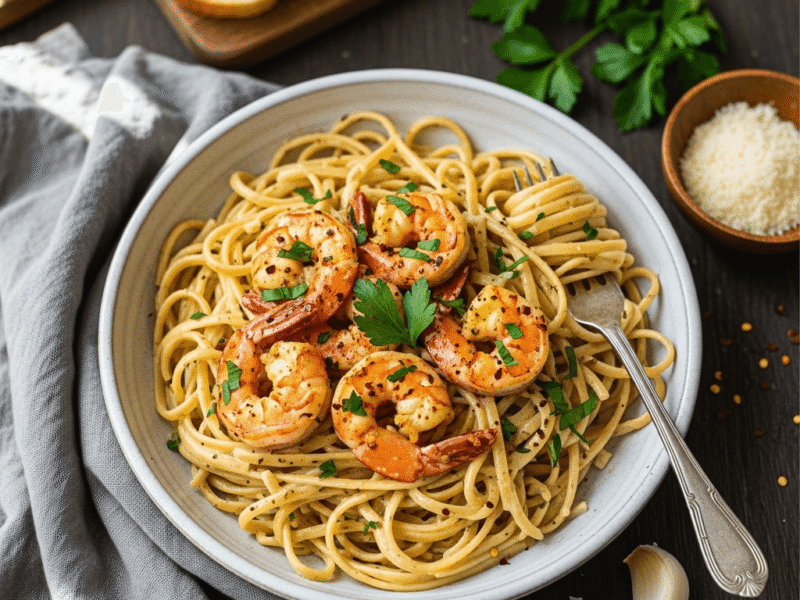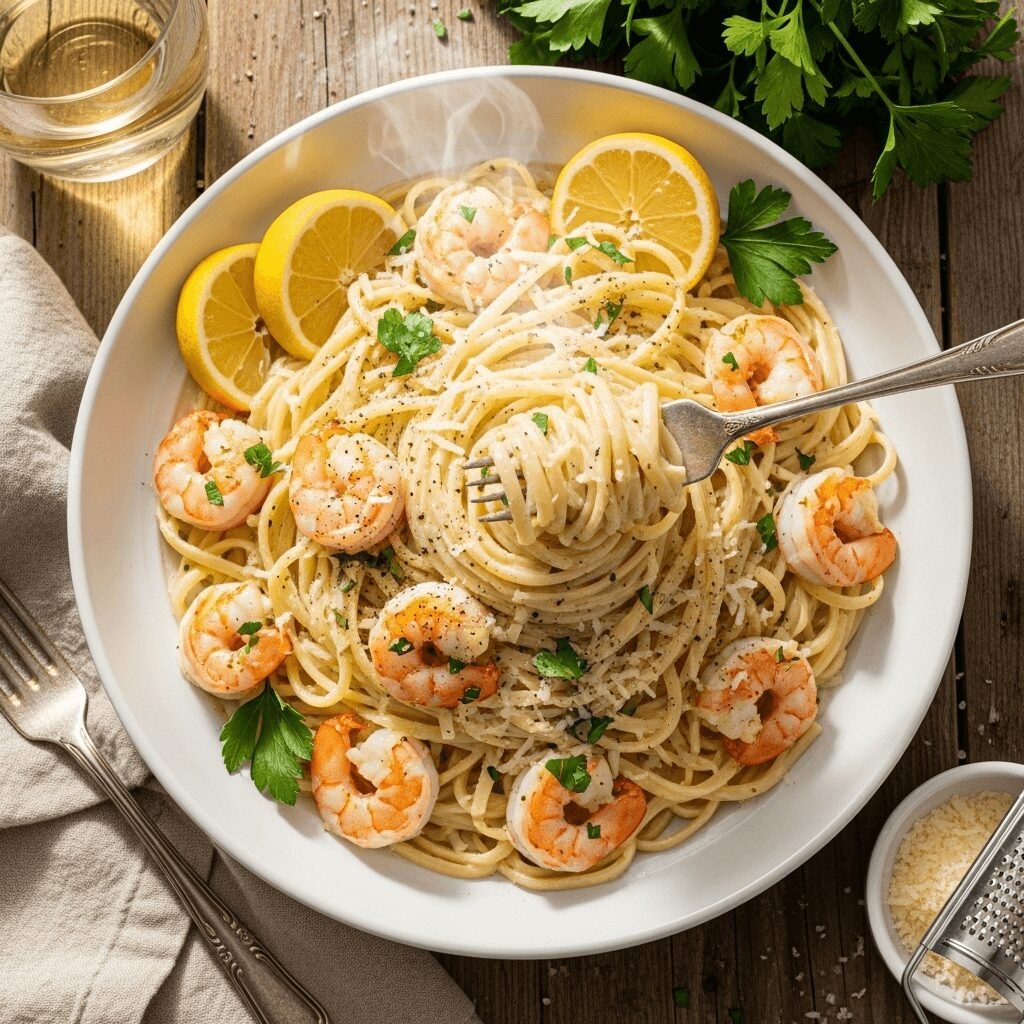

Get ready to fall in love with this Creamy Lemon Garlic Shrimp Linguine—a restaurant-quality pasta dish that brings together succulent shrimp, silky cream sauce, bright lemon, and aromatic garlic in perfect harmony! Imagine twirling your fork through tender linguine coated in a luxurious, velvety sauce that’s rich but not heavy, studded with plump, perfectly cooked shrimp, and brightened with fresh lemon that cuts through the richness in the most delicious way. This isn’t just another pasta recipe; it’s an elegant, impressive meal that tastes like it took hours but actually comes together in just 30 minutes, making it perfect for everything from romantic date nights to special family dinners.
What makes this creamy shrimp linguine absolutely irresistible is the perfect balance of flavors and textures. The shrimp are tender and sweet with a hint of garlic, the cream sauce is silky and rich with just enough body to cling to every strand of pasta, and the fresh lemon adds brightness that transforms this from simply delicious to absolutely extraordinary. Garlic provides aromatic depth, white wine adds sophisticated complexity, and fresh parsley brings a pop of color and herbaceous freshness that makes each bite feel restaurant-quality.
This recipe is perfect for date nights when you want to impress without spending hours in the kitchen, special occasions like anniversaries or Valentine’s Day when you need something romantic and memorable, weeknight dinners when you’re craving something more exciting than your usual rotation, or entertaining guests when you want them to think you’re a culinary genius (even if you’re not!). It’s also wonderfully versatile—serve it as-is for a complete meal, add vegetables for extra nutrition, or adjust the richness to suit your preferences. Whether you’re an experienced home cook or just starting your pasta journey, this easy shrimp linguine delivers elegance, comfort, and pure deliciousness every single time.
History & Background: Where Italy Meets American Comfort
Creamy Lemon Garlic Shrimp Linguine represents a beautiful fusion of Italian pasta-making tradition with American tastes for rich, creamy sauces. To understand this dish, we need to explore both its Italian roots and its American evolution.
In Italy, pasta with seafood (pasta ai frutti di mare) is a coastal tradition, particularly popular in regions like Campania, Sicily, and the Veneto where fresh seafood meets centuries-old pasta-making heritage. Classic Italian seafood pasta dishes like linguine alle vongole (with clams) or spaghetti ai gamberi (with shrimp) typically feature olive oil, garlic, white wine, and sometimes tomatoes—but rarely cream. Traditional Italian cooking philosophy emphasizes letting quality ingredients shine with minimal intervention, and cream-based sauces are actually quite uncommon in authentic Italian seafood preparations.
The addition of cream to seafood pasta is largely an Italian-American innovation that emerged as Italian immigrants adapted their cooking to American tastes and available ingredients. In the mid-20th century, as Italian restaurants proliferated across America, chefs began creating dishes that appealed to American diners who expected and enjoyed rich, creamy sauces. Dishes like Fettuccine Alfredo (which is actually quite different in Italy than its American incarnation) paved the way for cream-based pasta sauces to become synonymous with “Italian” food in America.
Shrimp became a natural choice for Italian-American seafood pasta because it was (and is) widely available, affordable, and universally loved in American cuisine. The combination of shrimp with garlic has long been popular—think shrimp scampi, another Italian-American classic that features shrimp sautéed in garlic butter and white wine.
The lemon element brings both Italian and Mediterranean influence. Lemon is ubiquitous in Italian coastal cooking, used to brighten seafood and cut through richness. The tradition of finishing seafood with fresh lemon juice is authentically Italian, and it’s what transforms this cream-based dish from heavy to balanced—adding that crucial acidity that makes you want to take another bite instead of feeling overwhelmed by richness.
Today, this style of creamy lemon garlic shrimp pasta has become a beloved fixture in American home cooking and casual Italian restaurants. It’s become a Pinterest and food blog favorite because it successfully bridges multiple desires: the comfort of creamy pasta, the elegance of seafood, the brightness of fresh citrus, and the practicality of a 30-minute meal. It represents modern home cooking at its best—taking inspiration from multiple culinary traditions to create something that’s familiar, achievable, and absolutely delicious.
Why You’ll Love This Creamy Lemon Garlic Shrimp Linguine
This recipe delivers restaurant-quality results that will have everyone convinced you’re a gourmet chef, all while being surprisingly simple and quick to prepare. The combination of creamy richness with bright lemon creates a perfectly balanced dish that’s satisfying without being heavy, elegant without being fussy.
Here’s why this easy shrimp pasta will become your new favorite:
- Ready in 30 Minutes: From start to finish, this impressive dinner comes together faster than delivery
- Restaurant-Quality at Home: Tastes like an expensive Italian restaurant but costs a fraction of the price
- One-Pot Wonder: Everything comes together in essentially one pan for minimal cleanup
- Date Night Perfect: Romantic, elegant, and impressive without requiring advanced skills
- Crowd-Pleaser: Everyone from kids to grandparents loves this creamy, flavorful pasta
- Naturally Elegant: Looks gorgeous plated individually or served family-style
- Customizable: Easy to adjust richness, add vegetables, or modify spice levels
- Budget-Friendly: Uses affordable ingredients to create an upscale dining experience
- Perfect for Entertaining: Make-ahead components let you look effortless while hosting
- Balanced Flavors: Lemon brightens the cream, preventing that heavy, overly-rich feeling
- Pescatarian-Friendly: Perfect for those who eat seafood but not meat
- Special Yet Achievable: Feels like a special occasion meal but is easy enough for any night
Ingredient Notes: Quality Makes the Difference
Understanding your ingredients helps you achieve restaurant-quality results and make smart substitutions. Here’s what goes into this delicious creamy lemon garlic shrimp linguine and why each component matters:
Linguine: This flat pasta is traditional with seafood and cream sauce—its shape captures sauce beautifully. Fettuccine, spaghetti, or angel hair also work. Use regular pasta, whole wheat for extra fiber, or gluten-free pasta if needed. Fresh pasta cooks faster (3-4 minutes) and has luxurious texture, but dried pasta works perfectly.
Shrimp: Large shrimp (16-20 count per pound or 21-25 count) are ideal—they’re easier to cook perfectly without overcooking. Buy them peeled and deveined to save time. Fresh or properly thawed frozen shrimp both work excellently. Pat them completely dry before cooking for proper searing. Wild-caught have superior flavor, but quality frozen shrimp work beautifully.
Heavy Cream: Creates that luxurious, silky sauce. Heavy cream has the fat content needed for proper texture and richness without curdling. Half-and-half can substitute for lighter version (sauce will be thinner), or use whole milk (will need cornstarch for thickening). For dairy-free, coconut cream works but changes the flavor profile.
Parmesan Cheese: Use authentic Parmigiano-Reggiano or good-quality Parmesan, freshly grated from a block. Pre-shredded cheese contains anti-caking agents that prevent smooth melting and create grainy sauce. The cheese adds nutty, salty richness and helps thicken the sauce naturally.
Fresh Lemons: Both zest and juice are essential. Zest contains aromatic oils that provide intense lemon flavor, while juice adds brightness and acidity. Always use fresh lemons—bottled lemon juice tastes flat and artificial. You’ll need 2-3 lemons: zest from 1-2, juice from 2-3.
Garlic: Fresh minced garlic is absolutely essential for proper flavor. Use at least 5-6 cloves—this dish can handle bold garlic! Jarred minced garlic or garlic powder can’t provide the pungent, aromatic depth of fresh garlic.
White Wine: Dry white wine (Pinot Grigio, Sauvignon Blanc, Chardonnay) adds acidity, depth, and sophistication. The alcohol cooks off, leaving complex flavor. Chicken or seafood broth can substitute if you prefer no alcohol, though you’ll miss some complexity.
Butter: Unsalted butter adds richness and helps create a silky, emulsified sauce. It also helps cook the shrimp and garlic perfectly. Olive oil can partially substitute but won’t provide the same luxurious mouthfeel.
Chicken or Seafood Broth: Adds savory depth and helps achieve perfect sauce consistency. Low-sodium is preferred so you control salt levels. Seafood broth creates more authentic flavor, but chicken broth works perfectly and is more readily available.
Fresh Parsley: Flat-leaf Italian parsley adds color, freshness, and herbaceous notes that elevate the dish. It’s primarily for finishing and garnish. Basil can substitute for different flavor profile, or use a combination.
Red Pepper Flakes: Optional but recommended for subtle warmth that balances richness. Adjust to your heat preference or omit for mild version.
Equipment Needed
You’ll need these basic kitchen tools to create this restaurant-quality creamy lemon garlic shrimp linguine:
- Large pot (for boiling pasta)
- Large skillet or sauté pan (12-inch, deep sides are ideal for tossing pasta)
- Colander (for draining pasta)
- Sharp knife and cutting board (for mincing garlic, chopping parsley)
- Wooden spoon or silicone spatula (for stirring)
- Tongs or pasta fork (for tossing linguine with sauce)
- Measuring cups and spoons
- Box grater or microplane (for Parmesan and lemon zest)
- Citrus juicer or reamer (optional but helpful)
- Paper towels (for drying shrimp—very important!)
- Ladle (for adding pasta water to sauce)
Creamy Lemon Garlic Shrimp Linguine Recipe
- Total Time: 30 minutes
- Yield: 4 servings 1x
- Diet: Gluten Free
Description
This Creamy Lemon Garlic Shrimp Linguine is restaurant-quality Italian comfort food ready in 30 minutes! Tender shrimp and silky pasta in a rich, garlicky cream sauce brightened with fresh lemon. Perfect for date nights, special dinners, or impressing guests!
Ingredients
For the Pasta:
- 12 oz linguine pasta
- 1 tablespoon salt (for pasta water)
For the Shrimp and Sauce:
- 1½ lbs large shrimp (16-20 count), peeled and deveined
- Salt and black pepper to taste
- 3 tablespoons butter, divided
- 2 tablespoons olive oil
- 6 cloves garlic, minced
- ½ cup dry white wine (or chicken/seafood broth)
- 1½ cups heavy cream
- ½ cup chicken or seafood broth
- 1 cup freshly grated Parmesan cheese
- Zest of 1 large lemon
- 3 tablespoons fresh lemon juice (from 1-2 lemons)
- ¼ teaspoon red pepper flakes (optional, adjust to taste)
- ¼ cup fresh parsley, chopped
- Extra lemon wedges for serving
Instructions
- Cook the Pasta: Bring a large pot of water to boil. Add 1 tablespoon salt. Cook linguine according to package directions until al dente (usually 9-11 minutes). Before draining, reserve 1 cup of pasta cooking water. Drain pasta and set aside.
- Prep the Shrimp: While pasta cooks, pat shrimp completely dry with paper towels (this is crucial for good searing!). Season both sides with salt and black pepper. Set aside.
- Sear the Shrimp: In a large, deep skillet, heat 1 tablespoon butter and olive oil over medium-high heat. Once hot and shimmering, add shrimp in a single layer (work in batches if necessary to avoid overcrowding). Cook for 2 minutes per side until pink, opaque, and just cooked through. Don’t overcook or they’ll be rubbery! Transfer cooked shrimp to a plate and set aside.
- Build the Sauce Base: In the same skillet, reduce heat to medium. Add remaining 2 tablespoons butter and minced garlic. Sauté for 1 minute until fragrant and golden, stirring constantly to prevent burning.
- Deglaze with Wine: Pour in white wine (or broth) and scrape up any browned bits from the bottom of the pan. Let simmer for 2-3 minutes until reduced by about half. The alcohol will cook off, leaving rich flavor.
- Create the Creamy Sauce: Add heavy cream and broth, stirring to combine. Bring to a gentle simmer and cook for 3-4 minutes, stirring occasionally, until sauce begins to thicken slightly. Don’t let it boil vigorously or the cream may separate.
- Add Cheese and Lemon: Remove from heat. Stir in grated Parmesan cheese until melted and smooth. Add lemon zest, lemon juice, and red pepper flakes if using. Taste and adjust seasoning with salt and pepper. The sauce should be creamy, tangy, and well-seasoned.
- Combine Everything: Add the cooked linguine and shrimp back to the skillet. Using tongs, toss everything together until pasta is evenly coated with sauce and shrimp are distributed throughout. If sauce seems too thick, add reserved pasta water a few tablespoons at a time until you reach desired consistency—the sauce should cling to pasta but flow nicely.
- Finish and Serve: Stir in fresh parsley. Serve immediately in bowls or on plates, garnished with extra Parmesan, parsley, lemon wedges, and black pepper if desired. Enjoy while hot!
Notes
- Don’t Skip Pasta Water: The starchy water helps sauce cling to pasta and adjusts consistency perfectly.
- Fresh Parmesan Only: Pre-shredded cheese won’t melt smoothly due to anti-caking additives.
- Shrimp Cooking: They cook very fast! Remove as soon as they turn pink to avoid rubbery texture.
- Wine Substitute: Use chicken or seafood broth plus extra lemon juice if omitting wine.
- Make it Gluten-Free: Use your favorite gluten-free linguine and cook according to package directions.
- Sauce Too Thick?: Add more pasta water or broth. Too thin? Simmer uncovered to reduce.
- Prep Time: 10 minutes
- Cook Time: 20 minutes
- Category: Main Dish / Dinner
- Method: Stovetop
- Cuisine: Italian-American
Nutrition
- Serving Size: Approximately 2 cups
- Calories: 720
- Sugar: 3g
- Sodium: 780mg
- Fat: 36g
- Saturated Fat: 20g
- Unsaturated Fat: 14g
- Trans Fat: 0g
- Carbohydrates: 62g
- Fiber: 3g
- Protein: 38g
- Cholesterol: 285mg
Nutrition information is approximate and calculated based on standard ingredient measurements. Values will vary depending on specific brands used and modifications made to the recipe.
Tips & Variations: Make It Your Own
Seafood Variations:
- Use scallops instead of or in addition to shrimp
- Add chunks of salmon or white fish (cod, halibut)
- Include crab meat for luxurious touch
- Try a mixed seafood medley with mussels and clams
- Use lobster tail meat for ultimate indulgence
Vegetable Additions:
- Add baby spinach or arugula (wilts right into hot pasta)
- Include cherry tomatoes (halved) for freshness and color
- Toss in asparagus pieces (blanch first) for spring elegance
- Add sun-dried tomatoes for tangy sweetness
- Include peas (fresh or frozen) for pops of sweetness
- Mix in artichoke hearts for Mediterranean flair
Make It Lighter:
- Use half-and-half instead of heavy cream
- Reduce butter to 2 tablespoons total
- Use less Parmesan (½ cup still tastes great)
- Add extra vegetables and reduce pasta slightly
- Substitute zucchini noodles for half the pasta
Flavor Variations:
- Spicy: Double the red pepper flakes or add diced jalapeño
- Herb-Infused: Add fresh basil, thyme, or tarragon
- Cajun: Season shrimp with Cajun spices before cooking
- Mediterranean: Add kalamata olives and feta cheese
- Truffle: Finish with truffle oil for luxurious earthiness
Dietary Modifications:
- Dairy-Free: Use coconut cream and nutritional yeast instead of cream and Parmesan
- Lower-Carb: Replace pasta with zucchini noodles or shirataki noodles
- Gluten-Free: Use gluten-free pasta (cook according to package directions)
Pro Chef Tips: Restaurant-Quality at Home
- Pat Shrimp Completely Dry: This is the golden rule for perfect shrimp! Excess moisture creates steam instead of a beautiful sear. Use paper towels to thoroughly pat each shrimp dry on both sides. Dry shrimp = gorgeous golden color. Wet shrimp = pale, rubbery texture.
- Don’t Overcook the Shrimp: Shrimp go from perfectly cooked to rubbery in seconds! Large shrimp need only 2 minutes per side—they’re done when they turn pink and opaque. If they curl into a tight “O” shape, they’re overcooked. Cook just until they form a “C” shape, then immediately remove from heat.
- Reserve Pasta Water: Never forget this crucial step! Starchy pasta water is the secret ingredient that helps sauce cling to pasta and adjusts consistency perfectly. The starch acts as an emulsifier, creating silky, cohesive sauce. Always reserve at least 1 cup before draining.
- Cook Pasta Al Dente: Slightly undercooked pasta (“al dente” means “to the tooth”) is essential. It should have a slight firmness when you bite down. The pasta continues cooking when tossed with hot sauce, and al dente pasta holds sauce better than soft, overcooked noodles.
- Remove from Heat Before Adding Cheese: When your sauce is hot, remove it from direct heat before adding Parmesan. High heat causes cheese proteins to seize up and separate, creating grainy, broken sauce instead of smooth creaminess. Residual heat melts cheese perfectly without breaking the sauce.
- Balance is Key: The lemon juice at the end is what makes this dish special! It cuts through richness, brightens flavors, and makes you want another bite instead of feeling overwhelmed. Don’t skip it—that final squeeze of fresh lemon transforms the dish from good to extraordinary.
- Toss, Don’t Top: For maximum flavor, toss pasta directly in the sauce rather than plating pasta and pouring sauce over top. This ensures every strand gets coated evenly, and pasta absorbs some sauce for better flavor integration.
- Serve Immediately: Cream-based pasta dishes are best enjoyed right away. The sauce thickens as it sits, and pasta continues absorbing liquid. Have everything else ready—table set, salad tossed, bread warmed—before you finish the pasta so you can serve at peak deliciousness.
Common Mistakes to Avoid
Not Reserving Pasta Water: Many home cooks forget this step and end up with sauce that’s either too thick (and they can’t thin it) or doesn’t cling to pasta properly. Starchy pasta water is irreplaceable for adjusting consistency and helping sauce adhere. Set a measuring cup near the pot as a visual reminder.
Using Pre-Shredded Cheese: Pre-shredded Parmesan contains cellulose and potato starch as anti-caking agents. These additives prevent the cheese from melting smoothly, creating grainy, separated sauce instead of silky creaminess. Block cheese takes 2 extra minutes to grate but makes a dramatic difference in texture.
Overcooking the Shrimp: This is the #1 shrimp mistake! They cook incredibly fast—usually just 4 minutes total. Overcooked shrimp are tough, rubbery, and chewy instead of tender and sweet. Remove shrimp from heat as soon as they turn pink and opaque—they continue cooking from residual heat.
Burning the Garlic: Garlic burns easily at high heat, turning bitter and acrid in seconds. This ruins the entire dish with unpleasant flavor that can’t be fixed. Always add garlic after reducing heat, cook for only 1 minute until fragrant (not brown), and stir constantly.
Boiling the Cream Sauce: When cream boils vigorously, it can separate or curdle, creating broken sauce with visible fat globules. Always use gentle heat once cream is added, maintaining a low simmer. This preserves the smooth, emulsified texture that makes cream sauce luxurious.
Storage & Meal Prep: Keeping It Fresh
Refrigerator Storage: Store leftover creamy lemon garlic shrimp linguine in an airtight container in the refrigerator for up to 2-3 days. The sauce will thicken considerably as it sits (pasta absorbs liquid), and the lemon flavor may intensify. While still delicious, this dish truly shines when served fresh.
Reheating Instructions:
- Stovetop Method (Best): Place pasta in a skillet over medium-low heat. Add 2-4 tablespoons of cream, milk, or broth to loosen the sauce. Stir gently for 3-5 minutes until warmed through. Don’t overheat or shrimp will become rubbery.
- Microwave Method: Transfer to microwave-safe bowl, add a splash of cream or milk, cover loosely, and microwave on 50% power in 1-minute intervals, stirring between, until hot. Lower power prevents overcooking the shrimp.
Meal Prep Considerations: While this dish can be stored, it’s honestly best enjoyed fresh. If meal prepping:
- Cook and store for up to 2 days maximum
- Store in portioned containers (about 2 cups each)
- Add liquid when reheating to restore creamy consistency
- Consider the shrimp texture will soften with storage
Honest Assessment: Since this dish takes only 30 minutes from start to finish, I recommend making it fresh rather than relying on leftovers. The texture of fresh-cooked shrimp and the brightness of just-added lemon are absolutely worth the minimal time investment!
Make-Ahead & Freezer Notes
Make-Ahead Options:
Option 1 – Prep Components (Best Method):
- Clean, devein, and portion shrimp up to 24 hours ahead; store covered in refrigerator
- Mince garlic, grate Parmesan, and chop parsley up to 2 days ahead; store separately
- Zest and juice lemons; refrigerate in separate containers for up to 3 days
- When ready to cook, everything comes together in 20 minutes
Option 2 – Partial Preparation: Make the cream sauce base (through step 6) up to 2 days ahead. Cool and refrigerate. When ready to serve, reheat sauce gently, cook fresh pasta and shrimp, then combine. This saves about 10 minutes of active cooking.
Freezing Instructions: Not Recommended. Cream-based pasta sauces don’t freeze well—the dairy separates and becomes grainy when thawed, and reheated shrimp become rubbery. The texture suffers significantly.
If You Must Freeze:
- Cool completely and freeze in airtight containers for up to 1 month
- Thaw overnight in refrigerator
- Expect significant texture changes—sauce may separate, shrimp will be softer
- Reheat very gently, whisking vigorously to try recombining sauce
- Add fresh cream to help restore texture
My Strong Recommendation: This 30-minute dish is best made fresh. The superior texture and flavor of just-cooked pasta and shrimp are absolutely worth the minimal time. Keep ingredients on hand for a quick, impressive dinner anytime!
Serving Suggestions: Complete Your Italian Experience
This elegant creamy lemon garlic shrimp linguine is substantial enough to be a complete meal, but these accompaniments create a full restaurant-quality dinner:
Salads:
- Simple arugula salad with lemon vinaigrette and shaved Parmesan
- Classic Caesar salad with homemade croutons
- Caprese salad with fresh mozzarella, tomatoes, and basil
- Mixed greens with balsamic vinaigrette
- Spinach salad with pine nuts and cranberries
Bread:
- Crusty Italian bread or ciabatta for soaking up sauce
- Garlic bread (can never have too much garlic!)
- Warm focaccia bread
- Breadsticks or grissini
- Garlic knots
Vegetable Sides:
- Roasted asparagus with Parmesan
- Sautéed broccolini with garlic
- Roasted Brussels sprouts
- Grilled zucchini
- Steamed green beans with lemon
Wine Pairings:
- White Wine: Pinot Grigio, Sauvignon Blanc, or Chardonnay (what you cooked with!)
- Light Options: Prosecco or Champagne for celebrations
- Italian Whites: Soave, Vermentino, or Gavi
Non-Alcoholic Beverages:
- Sparkling water with lemon
- Italian lemon soda (San Pellegrino Limonata)
- Iced tea (unsweetened or lightly sweetened)
- Sparkling grape juice
Complete Menu Ideas:
- Date Night: Caesar salad + shrimp linguine + tiramisu + wine
- Family Dinner: This pasta + simple green salad + garlic bread
- Dinner Party: Bruschetta appetizer + shrimp linguine + panna cotta dessert
- Casual Entertaining: This pasta + arugula salad + Italian bread + gelato
Perfect Occasions:
- Romantic date nights at home
- Anniversary or Valentine’s Day dinners
- Special birthday celebrations
- Impressive weeknight meals
- Entertaining guests
- Celebration dinners
- Any time you want to feel fancy!
Frequently Asked Questions
Can I use frozen shrimp? Absolutely! Frozen shrimp are often fresher than “fresh” shrimp since they’re frozen immediately after harvest. Thaw completely (overnight in fridge or 20 minutes in cold water), then pat VERY dry with paper towels before cooking. The drying step is even more crucial with previously frozen shrimp.
Why did my sauce turn out grainy? Grainy sauce results from adding cheese while sauce is too hot (remove from heat first), using pre-shredded cheese with anti-caking agents (always grate from a block), or overheating after adding cheese. To fix grainy sauce, remove from heat and whisk in 2-3 tablespoons of warm cream—sometimes this brings it back together.
Can I make this without wine? Yes! Substitute with chicken or seafood broth. Add an extra tablespoon of lemon juice to compensate for the acidity wine provides. The dish will still be delicious, just slightly less complex in flavor.
How do I prevent cream from curdling? Cream curdles when exposed to high heat or excessive acidity. Prevent this by using gentle heat once cream is added (low simmer, not rolling boil), adding lemon juice at the very end after removing from heat, and not letting sauce boil vigorously. If separation occurs, remove from heat immediately and whisk vigorously.
Can I use different pasta shapes? Definitely! While linguine is traditional, fettuccine, spaghetti, angel hair, or even penne work beautifully. Choose based on preference—long pasta is elegant and traditional, while short pasta is easier to eat and captures more sauce in the tubes.
My sauce is too thick/too thin. How do I fix it? Too thick: Add reserved pasta water, extra broth, or cream a few tablespoons at a time while stirring until you reach desired consistency. Too thin: Simmer uncovered for 2-3 minutes to reduce and concentrate, or add a bit more Parmesan which naturally thickens sauce.
Can I make this dairy-free? You can substitute coconut cream for heavy cream and nutritional yeast for Parmesan, but the flavor and texture will be quite different. The coconut cream version won’t have that tangy Parmesan richness. For best dairy-free results, consider a different recipe designed without dairy rather than adapting this one.
Conclusion: Your New Special Occasion Go-To
This Creamy Lemon Garlic Shrimp Linguine is about to become your secret weapon for impressive dinners that look and taste like you spent hours in the kitchen but actually come together in just 30 minutes! It proves that restaurant-quality, elegant meals don’t require culinary school, expensive ingredients, or complicated techniques—just good shrimp, quality pasta, fresh lemon, and a little know-how create something truly spectacular.
What makes this recipe invaluable is how it delivers both comfort and sophistication in one beautiful bowl. The rich, creamy sauce satisfies those comfort food cravings, while the bright lemon and tender shrimp elevate it to special-occasion status. Whether you’re cooking for a romantic date night, celebrating an anniversary, impressing dinner guests, or just treating yourself to something delicious, this easy shrimp linguine delivers elegance and flavor every single time.
Ready to make restaurant-quality pasta at home? Try this Creamy Lemon Garlic Shrimp Linguine tonight! Your dinner companions will be amazed, and you’ll feel like a culinary genius. Don’t forget to snap a photo of your beautiful creation and share it on Pinterest—I’d love to see how yours turns out! Drop a comment below with your favorite way to customize this recipe, and save it so you can make it again and again. Happy cooking!