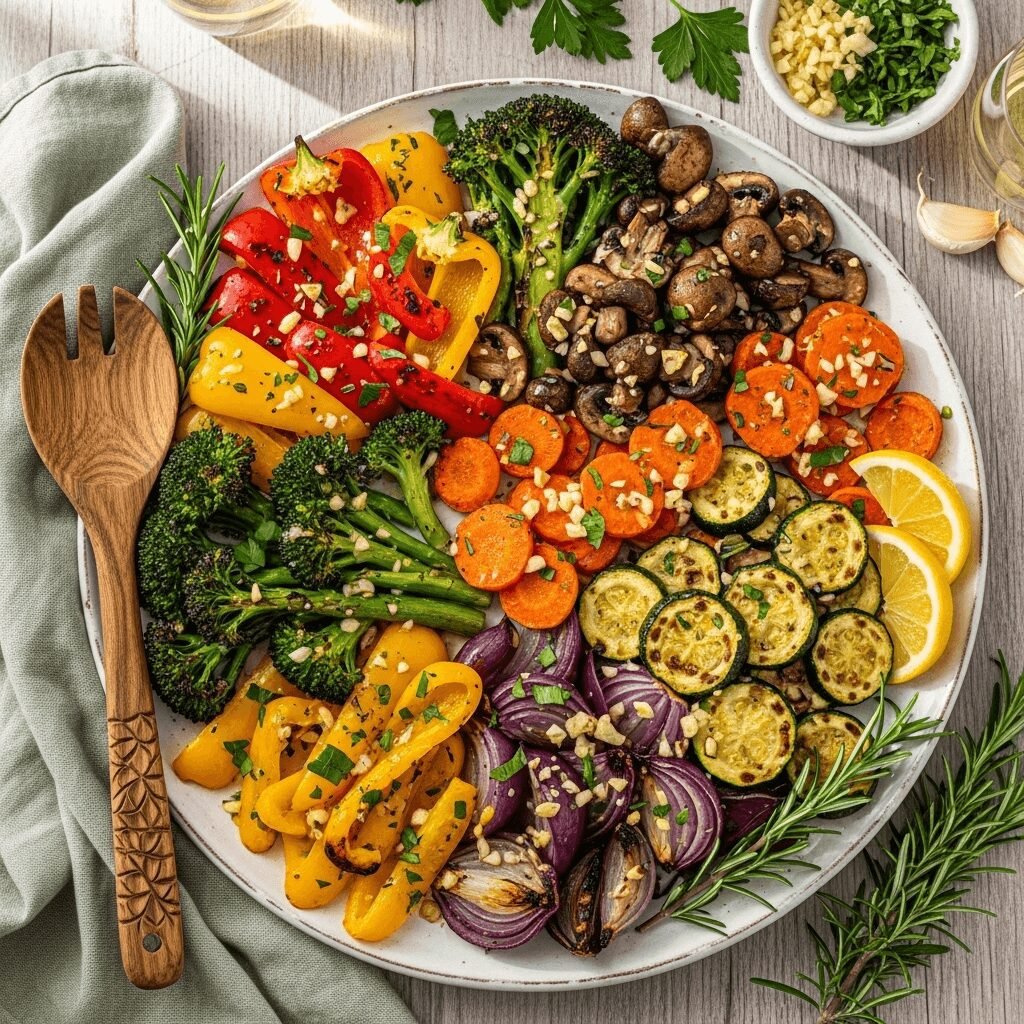

Garlic Butter Roasted Vegetables is the ultimate side dish that transforms ordinary vegetables into something absolutely extraordinary. This recipe features a colorful medley of fresh vegetables – think vibrant bell peppers, tender zucchini, sweet carrots, and earthy mushrooms – all roasted to caramelized perfection and tossed in a luscious garlic butter sauce that makes everything taste incredible. It’s the kind of dish that makes even the pickiest eaters ask for seconds and turns vegetable skeptics into veggie lovers.
What makes this recipe so universally beloved is its incredible versatility and foolproof nature. Whether you’re planning a weeknight family dinner, hosting a holiday feast, meal prepping for the week, or looking for a healthy side dish that doesn’t sacrifice flavor, these Garlic Butter Roasted Vegetables deliver every single time. The high heat of roasting caramelizes the natural sugars in the vegetables, creating those crispy, golden edges that everyone fights over, while the garlic butter adds richness and depth that elevates the entire dish. Serve them alongside grilled chicken, roasted salmon, holiday turkey, or even as a standalone vegetarian main course over quinoa or pasta. This recipe is about to become your most-used side dish – I guarantee it!
History / Background
Roasting vegetables is one of humanity’s oldest cooking methods, dating back to the discovery of fire itself. Ancient civilizations across every continent have roasted root vegetables and seasonal produce over open flames, recognizing that this dry-heat cooking method intensifies flavors and creates irresistible textures. The technique of roasting vegetables became particularly refined in European cooking traditions, where root vegetables like carrots, parsnips, and turnips were staples that needed to last through harsh winters.
The addition of butter to roasted vegetables is a distinctly French culinary influence. French cuisine has long celebrated the marriage of vegetables and butter, with classic preparations like “légumes glacés” (glazed vegetables) showcasing how fat enhances and carries the natural flavors of produce. The French understood that butter doesn’t mask vegetables – it amplifies their inherent sweetness and adds a luxurious mouthfeel that makes simple ingredients taste extraordinary.
Garlic’s pairing with butter and vegetables represents the beautiful intersection of French technique with Mediterranean ingredients. Garlic has been cultivated for over 7,000 years and features prominently in cuisines from Asia to Europe. The combination of garlic and butter became especially popular in American home cooking during the mid-20th century, as international ingredients became more accessible and home cooks began experimenting with flavor combinations from different cultures.
Today’s Garlic Butter Roasted Vegetables recipe represents modern American home cooking at its best – taking simple, wholesome ingredients and preparing them in a way that’s both healthy and incredibly delicious. The rise of sheet pan dinners and one-pan meals in the 2010s brought roasted vegetables back into the spotlight, with Pinterest and food blogs showcasing how easy and impressive these dishes can be. This recipe has become a staple in households across America precisely because it delivers restaurant-quality results with minimal effort, making it perfect for our busy, health-conscious, flavor-focused modern lifestyle.
Why You’ll Love This Recipe
Garlic Butter Roasted Vegetables is one of those magical recipes that checks absolutely every box for the modern home cook. It’s healthy without being boring, easy without being basic, and impressive without being complicated.
Here’s why this recipe deserves a permanent spot in your weekly rotation:
- Foolproof & Beginner-Friendly – If you can chop vegetables and turn on an oven, you can master this recipe. There’s virtually no way to mess it up!
- Packed with Nutrition – You’re getting a rainbow of vitamins, minerals, fiber, and antioxidants in every colorful bite, making it as good for your body as it is for your taste buds
- Incredible Flavor – The combination of caramelized edges, buttery richness, and aromatic garlic creates layers of flavor that taste like they took hours to achieve
- Endless Customization – Use whatever vegetables you have on hand, adjust seasonings to your preference, and make it your own every single time
- Perfect for Meal Prep – These vegetables reheat beautifully and stay delicious for days, making your weekly meal prep infinitely easier
- Budget-Friendly – Vegetables are among the most affordable ingredients at the grocery store, and this recipe makes them taste like a million bucks
- Naturally Gluten-Free & Vegetarian – Accommodates multiple dietary needs without any special modifications or substitutions
- Kid-Approved – The sweet caramelization and buttery coating make vegetables appealing even to picky eaters
- Impressive Presentation – Those golden, roasted edges and glistening garlic butter make this dish look restaurant-worthy with zero effort
- Minimal Cleanup – One sheet pan means less time scrubbing and more time enjoying your delicious creation
Ingredient Notes
Let’s dive into what makes these Garlic Butter Roasted Vegetables so incredibly delicious. Each ingredient plays an important role in building those complex, crave-worthy flavors.
Mixed Vegetables (6-8 cups total) – This is where you can truly customize! I recommend using a colorful variety like bell peppers, zucchini, yellow squash, carrots, broccoli, cauliflower, red onion, and mushrooms. Choose vegetables with similar cooking times or cut harder vegetables smaller so everything finishes together. Fresh is ideal, but frozen vegetables work too – just make sure they’re completely thawed and patted very dry.
Olive Oil (3 tablespoons) – Essential for the initial roasting. Olive oil has a high enough smoke point for roasting and adds its own subtle fruity flavor. You can substitute with avocado oil or vegetable oil if preferred, though olive oil is traditional and tastes best.
Butter (4 tablespoons or ½ stick) – This is what transforms good roasted vegetables into absolutely incredible ones. Real butter is non-negotiable for the best flavor. The butter melts into all the nooks and crannies, creating a luscious coating. For dairy-free needs, use vegan butter or add an extra tablespoon of olive oil (though you’ll lose that signature buttery richness).
Fresh Garlic (6-8 cloves, minced) – Fresh garlic is absolutely essential here. As it roasts, it becomes sweet, mellow, and aromatic rather than harsh. The garlic infuses the butter and coats every vegetable. Jarred minced garlic simply won’t give you the same depth of flavor or the beautiful way fresh garlic caramelizes.
Fresh Herbs (2 tablespoons total) – I love using a combination of fresh thyme, rosemary, and parsley. Thyme and rosemary add earthy, woodsy notes that complement roasted vegetables perfectly, while parsley adds brightness and freshness at the end. You can use dried herbs in a pinch (use 1 tablespoon total), but fresh herbs make a noticeable difference.
Salt and Black Pepper – Season generously! Vegetables need more salt than you might think to really bring out their natural flavors. I recommend using kosher salt or sea salt for better control and more even distribution.
Optional Add-Ins: Red pepper flakes for heat, lemon zest for brightness, Parmesan cheese for umami, balsamic vinegar for tang, or honey for extra caramelization.
Equipment Needed
The beauty of this recipe is its simplicity – you need very basic kitchen equipment that you almost certainly already own:
- Large Rimmed Baking Sheet (18×13 inches) – Also called a half-sheet pan or sheet pan. The rim is important to contain the vegetables and prevent them from rolling off. You might need two sheets if making a large batch.
- Sharp Chef’s Knife – For efficiently chopping all those vegetables into uniform pieces.
- Large Cutting Board – Preferably a sturdy one that won’t slip while you’re chopping.
- Large Mixing Bowl – For tossing vegetables with olive oil and seasonings before roasting.
- Measuring Cups and Spoons – For accurate measurements of oil, butter, and herbs.
- Small Saucepan or Microwave-Safe Bowl – For melting the butter with garlic.
- Wooden Spoon or Silicone Spatula – For tossing vegetables and stirring the garlic butter.
- Parchment Paper or Aluminum Foil (optional) – Makes cleanup easier, though not strictly necessary.
- Kitchen Timer – To ensure vegetables roast to perfection without overcooking.
- Oven Mitts – For safely handling hot baking sheets.
Garlic Butter Roasted Vegetables Recipe
- Total Time: 45 minutes
- Yield: 6 servings 1x
- Diet: Gluten Free
Description
Garlic Butter Roasted Vegetables is a colorful medley of fresh vegetables roasted until caramelized and tender, then tossed in a rich garlic butter sauce. This easy side dish pairs perfectly with any main course and makes eating your veggies absolutely irresistible.
Ingredients
For the Roasted Vegetables:
- 2 cups bell peppers, cut into 1-inch pieces (use red, yellow, or orange)
- 2 cups zucchini, cut into ½-inch half moons
- 1½ cups carrots, peeled and cut into ½-inch slices
- 1½ cups broccoli florets
- 1 cup red onion, cut into 1-inch wedges
- 1 cup mushrooms, quartered (cremini or button)
- 3 tablespoons olive oil
- 1 teaspoon kosher salt
- ½ teaspoon black pepper
- 1 teaspoon dried Italian seasoning
For the Garlic Butter:
- 4 tablespoons unsalted butter
- 6-8 cloves garlic, minced
- 1 tablespoon fresh thyme leaves
- 1 tablespoon fresh rosemary, finely chopped
- ¼ teaspoon red pepper flakes (optional)
- 2 tablespoons fresh parsley, chopped (for garnish)
- Lemon wedges (optional, for serving)
Instructions
- Preheat Your Oven: Set your oven to 425°F (220°C). This high heat is crucial for achieving those beautiful caramelized edges. Position the oven rack in the center for even roasting. Line a large rimmed baking sheet with parchment paper if desired.
- Prepare the Vegetables: Wash and chop all your vegetables into roughly uniform sizes. Harder vegetables like carrots should be cut slightly smaller (about ½-inch) while softer vegetables like zucchini can be larger (¾ to 1-inch). This ensures everything cooks evenly. Pat vegetables dry with paper towels to remove excess moisture.
- Season the Vegetables: In a large mixing bowl, combine all the chopped vegetables. Drizzle with 3 tablespoons of olive oil, then sprinkle with salt, pepper, and Italian seasoning. Use your hands or a large spoon to toss everything together until every piece is evenly coated with oil and seasonings.
- Arrange on Baking Sheet: Spread the seasoned vegetables in a single layer on your prepared baking sheet. This is critical – don’t overcrowd! The vegetables should have space between them. Overcrowding creates steam, which prevents browning. Use two baking sheets if necessary.
- Roast Until Golden: Place the baking sheet in the preheated oven and roast for 25-30 minutes. Halfway through (around the 15-minute mark), remove the pan and use a spatula to flip and toss the vegetables. This ensures even browning on all sides. The vegetables are done when they’re tender and have golden-brown, slightly crispy edges.
- Make the Garlic Butter: While the vegetables are roasting, prepare your garlic butter. In a small saucepan over medium-low heat, melt the butter. Add the minced garlic, thyme, rosemary, and red pepper flakes if using. Cook gently for 2-3 minutes, stirring frequently, until the garlic is fragrant and just beginning to turn golden. Don’t let it brown too much or it will taste bitter. Remove from heat.
- Combine Everything: When the vegetables are perfectly roasted, remove the baking sheet from the oven. Immediately drizzle the warm garlic butter over the hot vegetables. Use a spatula to toss everything together, ensuring all the vegetables are coated in that glorious garlic butter.
- Garnish and Serve: Transfer the vegetables to a serving platter or serve directly from the baking sheet for a rustic presentation. Garnish generously with fresh chopped parsley. Serve with lemon wedges on the side for anyone who wants a bright, citrusy finish.
Notes
- Vegetable Timing: Different vegetables have different cooking times. If combining very hard vegetables (like butternut squash or sweet potatoes) with softer ones (like cherry tomatoes), add the softer vegetables halfway through roasting.
- Don’t Skip the Flip: Tossing the vegetables halfway through ensures even caramelization and prevents burning on one side.
- Butter Temperature: Add the garlic butter to hot vegetables right out of the oven. The heat helps the butter coat everything evenly and keeps it liquid enough to distribute.
- Scaling: This recipe doubles or triples easily for larger gatherings. Just use multiple baking sheets and rotate their positions halfway through roasting.
- Crispier Vegetables: For extra crispy vegetables, roast at 450°F instead of 425°F, watching carefully to prevent burning.
- Prep Time: 15 minutes
- Cook Time: 30 minutes
- Category: Side Dish
- Method: Roasting
- Cuisine: American
Nutrition
- Serving Size: About 1½ cups (⅙ of recipe)
- Calories: 165
- Sugar: 6g
- Sodium: 420mg
- Fat: 13g
- Saturated Fat: 5g
- Unsaturated Fat: 7g
- Trans Fat: 0g
- Carbohydrates: 13g
- Fiber: 4g
- Protein: 3g
- Cholesterol: 20mg
Nutrition information is approximate and will vary based on specific vegetables and ingredient choices used.
Tips & Variations
Mediterranean Style: Add cherry tomatoes, kalamata olives, crumbled feta cheese, and finish with a drizzle of balsamic glaze for a Mediterranean twist.
Asian-Inspired: Replace the Italian herbs with fresh ginger and sesame oil. Skip the butter and use all sesame oil, then finish with soy sauce, rice vinegar, and toasted sesame seeds.
Spicy Cajun: Toss vegetables with Cajun seasoning before roasting and add extra cayenne to the garlic butter for a spicy kick that pairs perfectly with grilled meats.
Parmesan Crusted: Sprinkle freshly grated Parmesan cheese over the vegetables during the last 5 minutes of roasting for a crispy, cheesy crust.
Honey Balsamic: Add 1 tablespoon honey and 1 tablespoon balsamic vinegar to the garlic butter for a sweet-tangy glaze that caramelizes beautifully.
Root Vegetable Version: Use heartier winter vegetables like sweet potatoes, butternut squash, parsnips, and turnips. Increase roasting time to 35-40 minutes.
Lower-Calorie Option: Skip the butter and use 4 tablespoons of olive oil total, adding the garlic directly to the vegetables before roasting.
Vegan Version: Replace the butter with vegan butter or additional olive oil infused with nutritional yeast for a cheesy flavor.
Pro Chef Tips
Cut Uniformly for Even Cooking: This is the single most important technique for perfect roasted vegetables. All pieces should be roughly the same size so they cook at the same rate. When in doubt, cut harder vegetables smaller than softer ones.
Don’t Skimp on Oil: Vegetables need enough oil to roast properly, not steam. Each piece should glisten with oil. Too little oil results in dry, shriveled vegetables. Too much makes them greasy. Three tablespoons for 6-8 cups of vegetables is the sweet spot.
Space Is Your Friend: Overcrowding is the enemy of caramelization. Vegetables release moisture as they cook, and if they’re too close together, that moisture steams them instead of evaporating. Give them room to breathe, and you’ll be rewarded with crispy, golden edges.
Use a Hot Oven: 425°F is the minimum for proper roasting. Any lower and you’re essentially baking, which won’t give you those caramelized edges. Some chefs go as high as 450°F for extra crispiness.
Don’t Stir Too Often: Let the vegetables sit undisturbed for the first 15 minutes to develop a good sear. Stirring too frequently prevents browning and results in mushy vegetables.
Add Delicate Herbs Last: Sturdy herbs like rosemary and thyme can handle high heat, but delicate herbs like parsley and basil should be added after roasting to preserve their fresh flavor and bright color.
Season in Layers: Season before roasting with salt, pepper, and dried herbs, then again after roasting with the garlic butter and fresh herbs. This builds complex, well-rounded flavor.
Use Fresh Garlic, But Time It Right: Fresh garlic added too early can burn and turn bitter. Cooking it gently in butter while vegetables roast is the perfect timing – it becomes sweet and aromatic without burning.
Let the Pan Do the Work: Resist the urge to check constantly. Opening the oven door releases heat and extends cooking time. Trust the process and check only once at the halfway point.
Common Mistakes to Avoid
Using Cold Vegetables: Room temperature vegetables roast more evenly than cold ones straight from the fridge. Let your vegetables sit out for 15-20 minutes before roasting, or add a few extra minutes to your cooking time if using cold vegetables.
Cutting Vegetables Too Large: Big chunks might look impressive, but they won’t cook through properly. Aim for 1-inch pieces or smaller. Remember, they’ll shrink slightly as they roast.
Not Drying Wet Vegetables: Excess moisture prevents browning and creates steam. After washing vegetables, thoroughly pat them dry with paper towels or a clean kitchen towel. This is especially important for mushrooms and vegetables that have been frozen.
Using a Cold Pan: Some cooks make the mistake of arranging vegetables on a cold pan and then putting it in a cold oven. Always preheat your oven first for best results.
Overcrowding the Pan: This is the number one mistake! When vegetables touch too much, they steam instead of roast. You should be able to see the pan between vegetable pieces. If your pan looks crowded, use a second sheet.
Not Adjusting for Different Vegetables: Cherry tomatoes, asparagus, and green beans need less time (15-20 minutes). Root vegetables like potatoes and beets need more time (40-50 minutes). Either group vegetables by cooking time or cut harder vegetables much smaller.
Adding Cheese Too Early: If you’re adding Parmesan or other cheese, wait until the last 5 minutes of roasting. Otherwise, it can burn and turn bitter.
Forgetting to Flip: That halfway-point toss is crucial for even caramelization. Set a timer so you don’t forget!
Storage & Meal Prep
Refrigerator Storage: Store leftover Garlic Butter Roasted Vegetables in an airtight container in the refrigerator for up to 5 days. Make sure they’ve cooled to room temperature before sealing to prevent condensation, which can make them soggy. Glass containers work particularly well for maintaining texture.
Reheating Instructions: The best way to reheat is in a 400°F oven for 8-10 minutes, which helps restore some of the crispy texture. Spread vegetables on a baking sheet in a single layer. You can also reheat in a skillet over medium-high heat for 5-6 minutes, stirring occasionally. Microwave reheating works in a pinch (1-2 minutes on high) but will result in softer vegetables without those crispy edges.
Meal Prep Strategy: These vegetables are absolute meal prep champions! Roast a double or triple batch on Sunday and portion into meal prep containers with your protein of choice. They pair beautifully with grilled chicken, baked salmon, turkey meatballs, or chickpeas. The flavors actually deepen overnight, making leftovers even more delicious.
Maintaining Texture: Reheated roasted vegetables will never be quite as crispy as fresh, but you can get close by reheating in a hot oven or skillet rather than the microwave. Add a tiny drizzle of oil before reheating to help restore moisture.
Lunch Box Friendly: These vegetables work wonderfully in cold lunch salads too. Toss them with mixed greens, quinoa, and your favorite protein for a satisfying cold lunch that requires no reheating.
Make-Ahead & Freezer Notes
Make-Ahead Prep: You can prep your vegetables up to 24 hours in advance. Chop everything, toss with olive oil and seasonings, and store in an airtight container or zip-top bag in the refrigerator. When ready to cook, spread on your baking sheet and roast as directed. This saves precious time on busy weeknights!
Garlic Butter Prep: Make the garlic butter up to 3 days ahead and store it in the refrigerator. Simply reheat gently before tossing with hot roasted vegetables.
Freezing Cooked Vegetables: While roasted vegetables can be frozen, I’ll be honest – they lose some of their texture and won’t be as crispy when reheated. If you do freeze them, spread cooled vegetables in a single layer on a baking sheet and freeze until solid (about 2 hours), then transfer to freezer-safe containers or bags. This prevents them from freezing in one big clump. They’ll keep for up to 3 months.
Freezing Raw Prepped Vegetables: This works better than freezing cooked vegetables. Chop your vegetables and freeze them raw in portioned bags. Don’t add oil or seasonings before freezing. When ready to cook, toss frozen vegetables with oil and seasonings and add 5-10 extra minutes to roasting time. Note that previously frozen vegetables release more moisture, so they may not get quite as crispy.
Best Reheating After Freezing: Thaw frozen cooked vegetables in the refrigerator overnight. Reheat in a 400°F oven for 10-12 minutes, spreading them in a single layer. A quick blast under the broiler for the last 1-2 minutes can help restore some crispiness, but watch carefully to prevent burning.
Serving Suggestions
Garlic Butter Roasted Vegetables are incredibly versatile and pair beautifully with virtually any main course. Here are my favorite ways to serve them:
With Proteins: These vegetables are the perfect sidekick to grilled steak, roasted chicken thighs, baked salmon, pork tenderloin, lamb chops, or turkey breast. The buttery richness complements lean proteins while the vegetables add color and nutrition to the plate.
Over Grains: Serve over fluffy quinoa, brown rice, couscous, farro, or wild rice pilaf for a satisfying vegetarian main course. Add chickpeas or white beans for extra protein.
With Pasta: Toss these vegetables with penne or rigatoni, adding extra Parmesan cheese and a splash of pasta water to create a light, vegetable-forward pasta dish.
As Part of a Bowl: Create Buddha bowls or grain bowls with these vegetables, adding hummus, tahini sauce, avocado, and your choice of protein for a complete, balanced meal.
With Eggs: Serve alongside scrambled eggs, frittata, or a breakfast hash for a hearty, vegetable-packed brunch.
Holiday Sides: These dressed-up vegetables are elegant enough for Thanksgiving, Christmas, or Easter dinner. They bring beautiful color to your holiday table and offer a lighter option alongside richer dishes.
With Breads: Serve with crusty bread, garlic bread, or warm pita to soak up that delicious garlic butter. For a lighter option, cauliflower breadsticks or zucchini bread complement the vegetable theme.
Complete Dinner Pairings: My favorite complete meal is Garlic Butter Roasted Vegetables with lemon herb chicken, mashed potatoes, and a crisp green salad. For seafood lovers, pair with garlic butter shrimp and rice pilaf. Vegetarians will love these vegetables with baked feta and crusty bread.
Beverage Pairings: These vegetables pair nicely with Pinot Noir, Sauvignon Blanc, or Chardonnay. For non-alcoholic options, try sparkling water with lemon or iced herbal tea.
FAQs Section
What vegetables work best for roasting? Almost any vegetable can be roasted! Best choices include bell peppers, zucchini, carrots, broccoli, cauliflower, Brussels sprouts, asparagus, mushrooms, onions, sweet potatoes, and butternut squash. Avoid high-water vegetables like cucumbers, lettuce, or celery, which become mushy when roasted.
Can I use frozen vegetables instead of fresh? Yes, but with some adjustments. Frozen vegetables contain more moisture and won’t get as crispy. Thaw them completely, then spread on paper towels and pat extremely dry. You may need to increase roasting time by 5-10 minutes and expect slightly less caramelization than with fresh vegetables.
Why aren’t my vegetables getting crispy? The most common culprits are overcrowding the pan (vegetables steam instead of roast), too much moisture (pat vegetables dry), oven temperature too low (needs to be at least 425°F), or not using enough oil. Make sure vegetables are in a single layer with space between them.
Do I need to peel vegetables before roasting? It depends! Carrots, zucchini, and bell peppers don’t need peeling – the skin adds texture and nutrients. Sweet potatoes and butternut squash can go either way depending on preference. Root vegetables like parsnips should be peeled. Always wash vegetables thoroughly regardless.
How do I know when vegetables are done roasting? Vegetables should be tender when pierced with a fork and have golden-brown, slightly crispy edges. They’ll have shrunk slightly and the edges may look caramelized. The exact time varies by vegetable and size of pieces – softer vegetables like zucchini cook faster (20-25 minutes) while harder ones like carrots need longer (30-35 minutes).
Can I make this recipe dairy-free? Absolutely! Replace the butter with additional olive oil or use vegan butter. You’ll lose some of that rich, buttery flavor, but the garlic-infused oil is still absolutely delicious. Add a squeeze of lemon juice at the end for extra richness.
What’s the best way to cut vegetables for even roasting? Aim for uniformity in size, not necessarily in shape. All pieces should be roughly 1 inch or smaller. The key is thickness rather than length – a carrot stick cut ½-inch thick will cook at the same rate as a 1-inch zucchini chunk. When combining hard and soft vegetables, cut harder ones smaller.
Can I add cheese to this recipe? Yes! Parmesan, feta, and goat cheese all work beautifully. Add grated Parmesan during the last 5 minutes of roasting or crumble feta or goat cheese over the hot vegetables right after they come out of the oven. The residual heat will slightly soften the cheese.
Conclusion
And there you have it – your complete guide to making absolutely perfect Garlic Butter Roasted Vegetables that will transform the way you think about eating your veggies! This recipe proves that healthy eating doesn’t have to mean sacrificing flavor or spending hours in the kitchen. With just a handful of simple ingredients and one sheet pan, you can create a side dish that’s so delicious, it might just steal the spotlight from your main course.
The beauty of this recipe lies in its incredible versatility. Make it exactly as written for a classic, crowd-pleasing side dish, or use it as a jumping-off point for your own creative variations. Switch up the vegetables based on what’s in season, adjust the herbs to match your main course, add cheese for extra indulgence, or keep it simple and let those caramelized vegetables shine. However you choose to make it, you’re guaranteed a nutritious, colorful, and absolutely delicious addition to any meal.
I’d love to hear how your Garlic Butter Roasted Vegetables turn out! Did you try any creative variations? Use any unexpected vegetable combinations? Snap a photo of your beautiful, golden-roasted creation and share it on Pinterest – don’t forget to tag me so I can admire your work! Leave a comment below telling me what you think, what vegetables are your favorites, and how you served them. Your feedback and creativity inspire other home cooks and help build this wonderful community of food lovers.
If this recipe made your life easier or your dinner table more delicious, please save it to your favorite Pinterest board so you can find it again whenever you need an easy, impressive side dish. Share it with friends who are always asking for healthy recipe ideas – they’ll thank you for introducing them to vegetables this delicious!
Here’s to making vegetables the star of the show, one perfectly roasted sheet pan at a time!